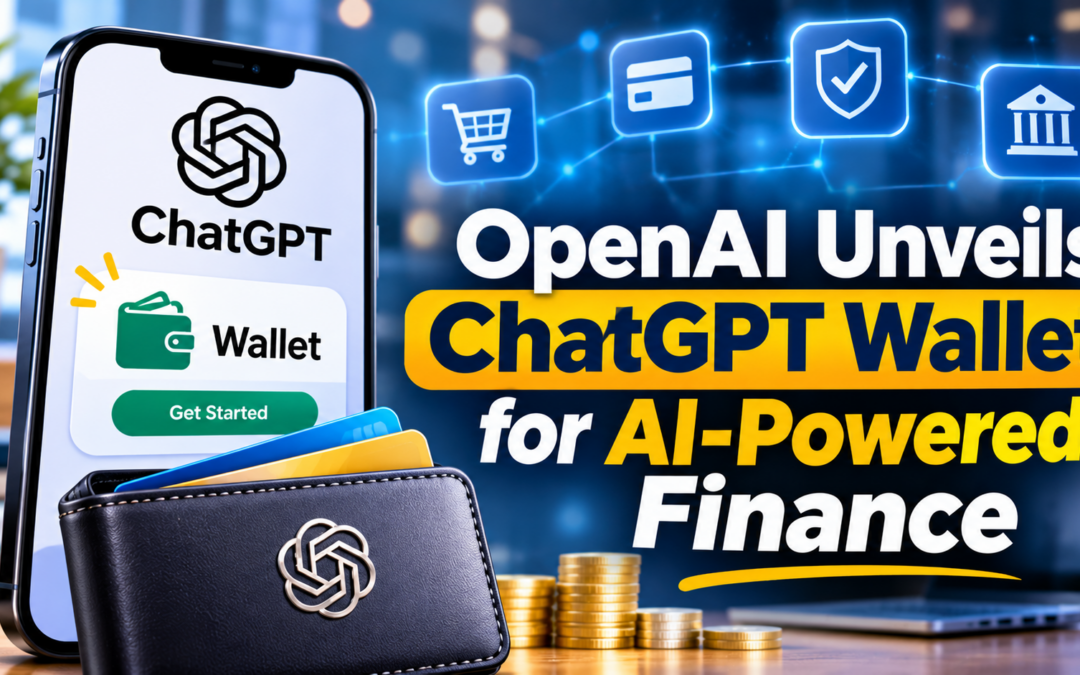
OpenAI has raised the bar for AI-driven finance by unveiling ChatGPT Wallet—a bold move blending conversational AI with blockchain-based payments and digital asset management. As generative AI moves deeper into daily business and consumer workflows, this integration signals a pivotal moment for developers and startups betting on seamless, AI-powered financial tools. With competition brewing across the AI and fintech landscapes, OpenAI’s latest launch pushes the industry to redefine how large language models interact with real-world assets and transactions.
- OpenAI’s ChatGPT Wallet brings cryptocurrency payments and asset management directly into ChatGPT’s interface.
- The new feature leverages Worldcoin infrastructure for secure digital identity and wallet integration.
- This release marks a significant step in merging generative AI with decentralized finance (DeFi), opening fresh possibilities for developers and founders.
- Industry observers see this launch as a catalyst for new financial applications and conversational commerce experiences.
- Security, privacy, and adoption challenges stand at the forefront as OpenAI and rivals race to build trusted AI-first financial tools.
Key Takeaways
OpenAI’s foray into digital wallets within ChatGPT moves generative AI beyond text and code—directly into financial transactions. The partnership with Worldcoin gives users a streamlined way to verify identity and manage assets securely, right in the familiar chatbot interface. Developers gain early access to programmable payment flows, bringing opportunities for DeFi integration and conversational commerce. At the same time, the move ratchets up pressure on competitors in both the AI and crypto sectors to deliver feature-packed, secure, and developer-friendly wallet solutions.
ChatGPT Wallet transforms AI chat from pure conversation into a control panel for managing money, raising the bar for real-world utility and user trust in generative AI.
OpenAI Moves From Conversation to Commerce
ChatGPT Wallet’s launch signals an ambition much broader than simple chatbot improvements. By embedding crypto payments, asset transfers, and smart contract support within its interface, OpenAI positions ChatGPT as a command center for both information and value exchange. This step addresses a recurring gap: AI models have until now remained largely detached from tangible, secure handling of user assets or transactions. That wall has now been breached. Whether triggering wallet payments via a natural language prompt or monitoring portfolio balances, users no longer need to exit the chat context for financial tasks.
Worldcoin Integration: Digital Identity Meets AI
OpenAI leverages the Worldcoin network to link digital identity with wallet access. This linkage ensures users can verify themselves and complete transactions inside ChatGPT with fewer security hurdles and friction. For developers, the Worldcoin platform provides an open, programmable base—blurring lines between AI assistants and financial services infrastructure. The rising trend of decentralized digital identity solutions converges here with conversational AI, amplifying both security and user control.
Combining secure digital identity with conversational AI builds a foundation where users can trust the agent—whether sending payments or managing investment portfolios in real time.
Developer Opportunities and Competitive Implications
For AI professionals and startup founders, the debut of ChatGPT Wallet introduces new APIs and event hooks into payment flows. This paves the way for a wave of GPTs and AI agents that can pay for services, execute buy/sell orders, and facilitate peer-to-peer transfers—all through chat. The resulting developer playground spans decentralized finance, e-commerce plugins, and on-demand financial analytics. Competing platforms from Anthropic, Google, and smaller LLM startups must now contend with a new standard of AI–blockchain integration.
Notable Industry Moves Beyond OpenAI
Competitors are not standing still. Several firms—such as Anthropic, Stability AI, and major fintechs—have already signaled interest or begun work on integrating wallets, payment rails, and digital asset management into their conversational AI tools. Meanwhile, Worldcoin’s ongoing expansion, despite privacy debates, cements the idea that decentralized infrastructure and identity verification will play a key role in the next wave of AI-enabled commerce.
AI-first wallets promise to shrink the distance between conversation and transaction, empowering startups to automate payment-based workflows in new and imaginative ways.
Risks, Challenges, and What Comes Next
Despite the hype, security and regulatory scrutiny stick out as looming concerns. Handling digital assets through AI increases the attack surface for potential exploits, especially as these systems scale. Consent, transparency, and privacy rights must remain front and center as wallets and digital IDs grow more tightly woven into AI ecosystems. Startups and enterprises working with these tools must approach integration with care—preferably by building and testing robust safeguards from the outset.
The Path Forward for Generative AI in Finance
The launch of ChatGPT Wallet puts generative AI squarely at the crossroads of conversation and financial action. As LLMs evolve to handle real-world assets, expect a growth surge in AI-driven commerce, programmable money, and smarter DeFi interfaces. The winners will be those who balance usability, security, and developer openness—reshaping how transactions and trust are built in the era of intelligent software.
Source: OpenAI