Tech teams and AI-focused startups increasingly rely on GitHub-style workflows and markdown documentation for rapid collaboration. Now, Google Workspace is jumping directly into this productivity battleground — with a major upgrade aimed at both software developers and professionals in AI-heavy organizations. Google Docs and Drive will soon support native editing, previewing, and collaboration on Markdown files, closing a long-standing gap in the workspace’s capabilities. As generative AI makes documentation central to building, training, and deploying LLMs, this move signals Google’s intent to create an environment where markdown meets mainstream productivity suites — and the implications are significant.
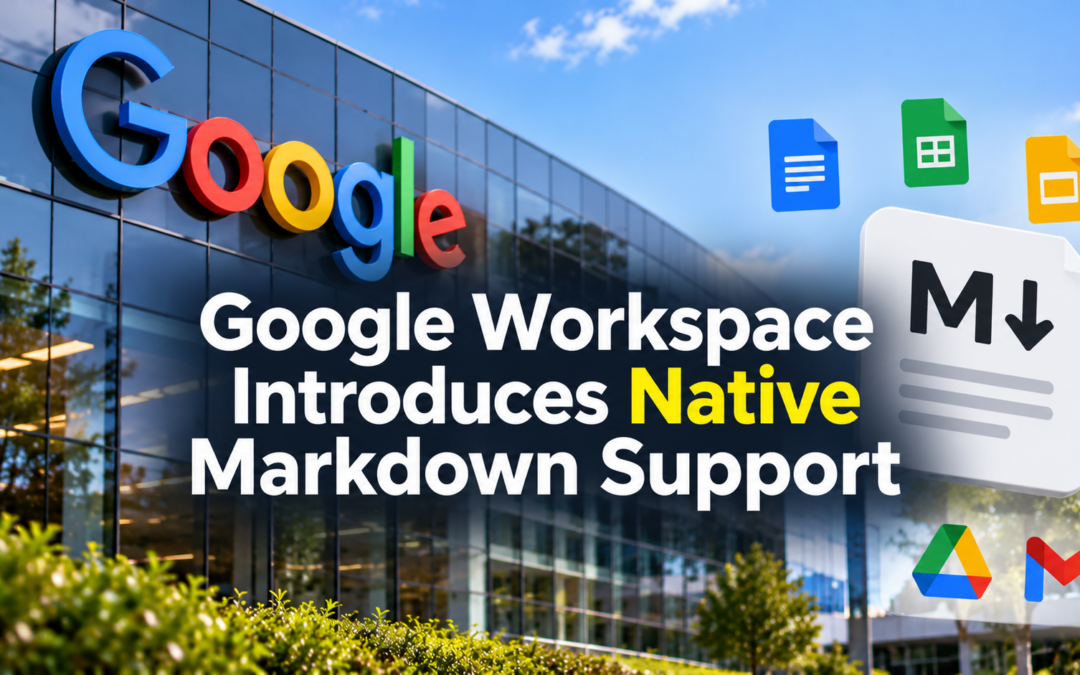
- Google Workspace is rolling out full Markdown support for Docs and Drive
- Real-time, multi-user editing and commenting come to .md files
- This bridges a gap between software documentation and AI productivity tools
- AI teams and open source projects can work more fluidly in enterprise settings
- Potential to challenge Notion, GitHub, and other markdown-first platforms
Key Takeaways
Google Workspace is set to natively handle .md files across Drive and Docs, empowering technical teams to edit and collaborate on Markdown without relying on third-party apps or workarounds. Software developers, data scientists, and AI professionals stand to benefit most, as this feature enables a seamless workflow from source code documentation to enterprise collaboration. The update promises to converge the accessibility of Google Docs with the flexibility of developer-centric markdown tools, creating fertile ground for more dynamic, AI-driven project environments.
“Native markdown support in Google Workspace doesn’t just add convenience—it redefines how AI teams integrate code, documentation, and collaboration in fast-paced digital workplaces.”
Google Embraces Markdown: What’s Changing
For the first time, users can preview and directly edit Markdown (.md) files inside Google Docs, all while retaining the expected real-time collaboration features such as comments and suggestions. Updated Drive integration means .md files stored in corporate cloud folders can be accessed, searched, and even version-controlled with familiarity and ease.
This capability addresses a frequent pain point for developers juggling multiple tools to bridge documentation (like README.md) with communication flows. It streamlines onboarding for AI and software teams that rely on markdown syntax to describe APIs, model parameters, and system architectures. According to BleepingComputer and Neowin, this marks a direct challenge to Notion and other productivity suites widely adopted for markdown-centric projects outside the Google ecosystem.
Implications for AI, LLMs, and Coding Workflows
AI professionals often require living documentation, experiment logs, and reproducible research written in markdown. With this update, Google Workspace users can:
- Directly open and edit repos’ .md files without exporting or converting
- Generate AI-related documentation (LLM architectures, dataset guides) collaboratively, in an interface familiar to non-developers
- Leverage Workspace’s version history, sharing, and comment threads on technical docs
“By merging markdown and Docs, Google is erasing barriers between AI research, code documentation, and team productivity—unleashing new hybrid workflows across technical and business realms.”
For startups, this reduces time spent toggling between GitHub and enterprise suites. For large organizations, it boosts the potential for generative AI systems that rely on standardized, easily parsed files during training and knowledge management.
Workspace’s Broader AI and Developer Strategy
This Markdown integration is not isolated; it fits within a growing suite of AI-powered updates to Google Workspace. With Gemini integration, AI-driven summarization, and smart search, Google is doubling down on tools tailored for software, data, and AI professionals. The move aligns with the surge in LLM-based internal chatbot development, where markdown is often the connective tissue between prompt templates, training documents, and output formatting.
Rivals like Notion, Obsidian, and GitHub have long focused on markdown-native workflows, but Google’s real-time collaborative layer, widespread enterprise adoption, and deep AI search features set it apart for organizations scaling their AI infrastructure.
What This Means for AI-Driven Teams
The ability to blend markdown technical docs directly with Google Docs’ collaboration paves the way for smoother hybrid teams, integrating software devs with product and AI specialists. As organizations accelerate LLM adoption and push generative AI into every digital corner, expect markdown to become an even more central piece of the digital workspace puzzle.
“Markdown’s mainstream arrival in Google Workspace will accelerate unified documentation standards for AI, democratizing access to technical workflows without sacrificing depth or precision.”
The Road Ahead
Google’s markdown support is more than a competitive feature—it’s a clear sign that the productivity wars are shifting toward AI-integrated, developer-first environments. Expect rapid expansion of markdown-driven processes across AI labs, open source projects, and product teams looking to blend code and collaboration. For startups and enterprises alike, the choice of documentation toolchain could soon matter as much as their model architecture.
Source: Google Workspace Updates Blog