Global competition in AI development has intensified as tech giants, governments, and startups stake their claim on transformative technologies like LLMs and generative AI. In a week filled with fresh announcements, new regulatory signals, and surprising research milestones, the pace of innovation shows no signs of slowing. Industry players that thrive now will be those agile enough to adapt to both evolving tools and a rapidly shifting policy landscape.
- Governments worldwide are ramping up AI regulation, setting new compliance challenges.
- Leading AI companies are unveiling enhanced LLM architectures and more specialized generative models.
- Startup funding pours into AI-driven enterprise tools, raising the stakes for market incumbents.
- Emerging research bridges interpretability gaps in black-box AI systems.
Key Takeaways and Analysis
AI innovation cycles have accelerated, with organizations facing a race to harness, govern, and monetize new capabilities. Regulatory pressure, funding trends, and breakthroughs in explainable AI are converging, setting the direction for the industry’s next phase.
“Agility and compliance are no longer optional in the AI landscape — they are prerequisites for meaningful participation.”
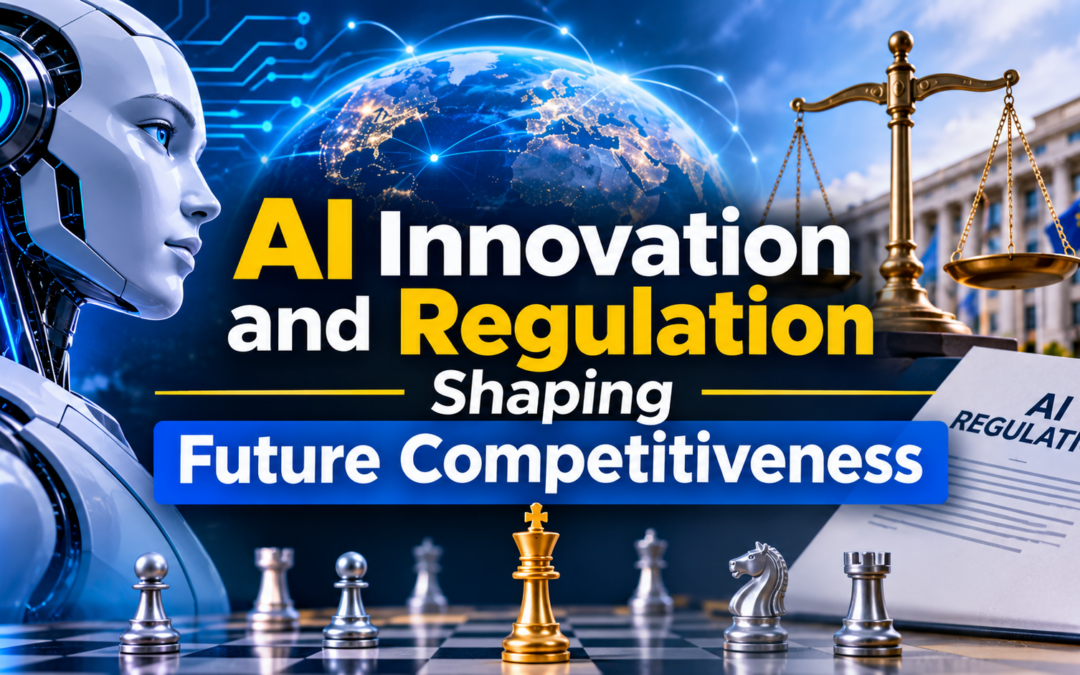
AI Regulation: The New Competitive Battlefield
Governments in the US, EU, and Asia are stepping up regulatory action to safeguard against potential misuse of generative AI and LLMs. The European Union’s AI Act is slated to come into force in 2025, with provisions that will impact not only local but also global technology firms. Meanwhile, the United States is debating new safety and transparency mandates for both foundational and application-layer AI.
“Compliance is becoming a dimension of competitive advantage — startups able to build AI products with regulatory-readiness from day one will outpace slower-moving incumbents.”
For developers and founders, this regulatory push means new technical requirements, such as rigorous bias assessment tools, detailed model documentation, and built-in auditability. Frameworks like the US NIST AI Risk Management Framework are quickly becoming common reference points for enterprise buyers and procurement teams.
Next-Generation LLMs and Generative AI Breakthroughs
This week, multiple leading AI labs rolled out upgraded language models offering larger context windows and improved multimodal capabilities. OpenAI’s next GPT-4 variant and Anthropic’s Claude 3 Opus model are competing on benchmarks ranging from reasoning to code synthesis. Google DeepMind also teased a new multimodal model harnessing both text and image understanding, setting the stage for richer generative AI workflows.
Open-source alternatives continue to gain traction. Meta released improvements to Llama 3, while startups like Mistral AI capture developer mindshare through lightweight, highly adaptable foundation models. The broadening ecosystem is fueling faster iteration and specialization, with new models tailored to legal, medical, and software engineering use.
“The proliferation of specialized LLMs signals a shift from general-purpose AI to industry-focused intelligence — lowering barriers for startups and vertical SaaS ventures.”
Enterprise AI Funding and the Startup Surge
Venture investment in AI tooling and infrastructure remains white-hot. Recent mega-rounds include a $200 million Series C for an AI code-assistant startup and over $500 million flowing into generative design tools. According to data from CB Insights, Q3 2024 saw over $17 billion invested in AI startups, with a distinct tilt toward companies enabling data security, model monitoring, and end-user guardrails.
Large cloud providers and Fortune 500 firms are not only investing in, but also acquiring startups that can plug critical capability gaps. This dynamic is giving rise to a new generation of startups focused on safety-first AI, explainable systems, and domain-specific LLM wrappers.
“The AI arms race is now a multidimensional contest, with capital, talent, and technical differentiation all in play.”
Breakthroughs in Model Interpretability
As black-box models permeate enterprise workflows, the need to understand and control their decisions has never been greater. Researchers at MIT, Stanford, and the Allen Institute have published promising work using concept activation vectors and causal tracing, which allow engineers to map how specific model components influence outputs.
Startups are rapidly productizing advances in model transparency — launching visualization dashboards, automated bias detection, and adversarial testing frameworks. This movement is not only reducing risk for corporate adopters but also opening the door for broader regulatory acceptance and faster market penetration.
“As explainable AI moves from theory to plug-and-play tooling, both trust and adoption in high-stakes industries will accelerate.”
Looking Ahead: Navigating the AI Industrial Revolution
The convergence of smarter LLMs, enterprise-focused generative AI, and robust governance frameworks is re-shaping the global technology map. To stand out, developers and founders must embed regulatory compliance, specialization, and interpretability into every layer of their products. Those able to adapt to this dynamic new world will shape the trajectories of not just markets, but of the next generation of AI itself.
Source: The Diary of AI