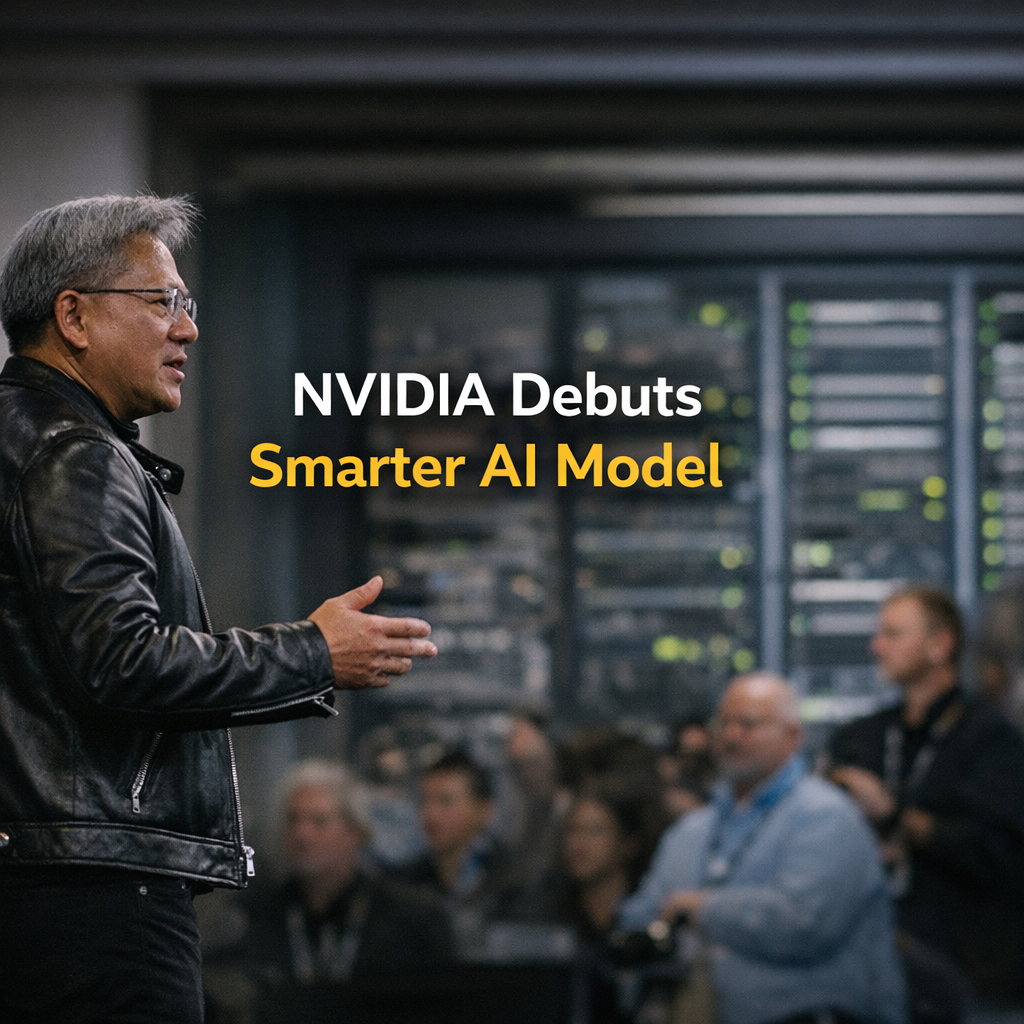
AI demand is scaling at an unprecedented rate, outpacing current supply.
Oracle’s latest statements underscore transformative shifts across the cloud infrastructure landscape as enterprises and AI professionals prioritize generative AI adoption.
Major players like Oracle, Microsoft, and Google are racing to invest in the infrastructure needed for large language models (LLMs) and advanced AI applications.
Key Takeaways
- Oracle reports AI infrastructure demand far exceeds current supply, setting record cloud growth.
- Generative AI adoption drives new revenue streams and disrupts legacy enterprise IT budgets.
- Major cloud providers pivot to prioritize GPU and AI chip availability amid global shortages.
- Developers and startups must factor competitive cloud access and evolving partnerships into build strategies.
AI Drives Cloud Platform Surge
Oracle’s recent earnings call, as reported by Reuters and amplified by CNBC and TechCrunch, revealed that cloud growth continues at a record pace.
Oracle’s CEO emphasized that “real value” lies in AI workloads, with demand for generative models driving consistent double-digit revenue growth.
The company’s cloud infrastructure, positioned as an alternative to AWS, Azure, and Google Cloud, has gained traction with customers needing specialized, high-performance GPU clusters essential for LLM training and inference.
Demand for generative AI compute has fundamentally outpaced today’s supply, reshaping cloud investment and procurement strategies across sectors.
Generative AI Forces Infrastructure Innovation
Cloud and AI providers face global GPU and data center constraints as Nvidia’s H100 chips become the industry’s “new gold.” This constraint has created ripple effects; Oracle, like its rivals, battles to secure enough capacity to meet rapidly growing customer needs.
Enterprise customers prioritize AI spending even as IT budgets tighten elsewhere, shifting investments toward projects that promise real automation and data-driven transformation.
Microsoft and Google echo Oracle’s sentiments, pointing to strong AI-fueled cloud growth in their recent earnings. According to The Wall Street Journal, multicloud partnerships and geographic expansion mark the next competitive front as vendors race to capture global AI workloads.
Implications for Developers, Startups, and AI Professionals
Developers
Engineers building generative AI services must monitor cloud GPU availability and evaluate alternative providers. Oracle’s aggressive focus on high-performance GPU infrastructure means more choice but also more complexity in workload placement and optimization.
Strategic cloud partnerships and geographic diversification increasingly dictate go-to-market timelines for AI-driven applications.
Startups
Founders in the generative AI space must contend with infrastructure bottlenecks shaping fundraising and product roadmaps. Early access to specialized compute can translate to a sustained competitive edge.
AI Professionals
Specialists and practitioners should prioritize cloud fluency and agile infrastructure operations. Experience in cost-effective training, deployment, and operation of LLMs now differentiates talent in this fast-moving sector.
Competitive Dynamics: The Road Ahead
Oracle’s surge illustrates a critical inflection point as the “AI arms race” intensifies among cloud titans. Customer decision-making now weighs not just price and service breadth, but direct access to cutting-edge generative AI capabilities.
As vendors lock in multi-billion dollar GPU orders, expect regional and private cloud expansion to accelerate through 2025.
Generative AI’s demand shock is not cyclical — it is structural and will define the next decade of cloud evolution.
Those building with, selling, or investing in generative AI must adapt to this fast-cycle environment. Cloud agility, infrastructure-aware development, and vertical partnerships will prove decisive as the ecosystem matures.
Source: Reuters