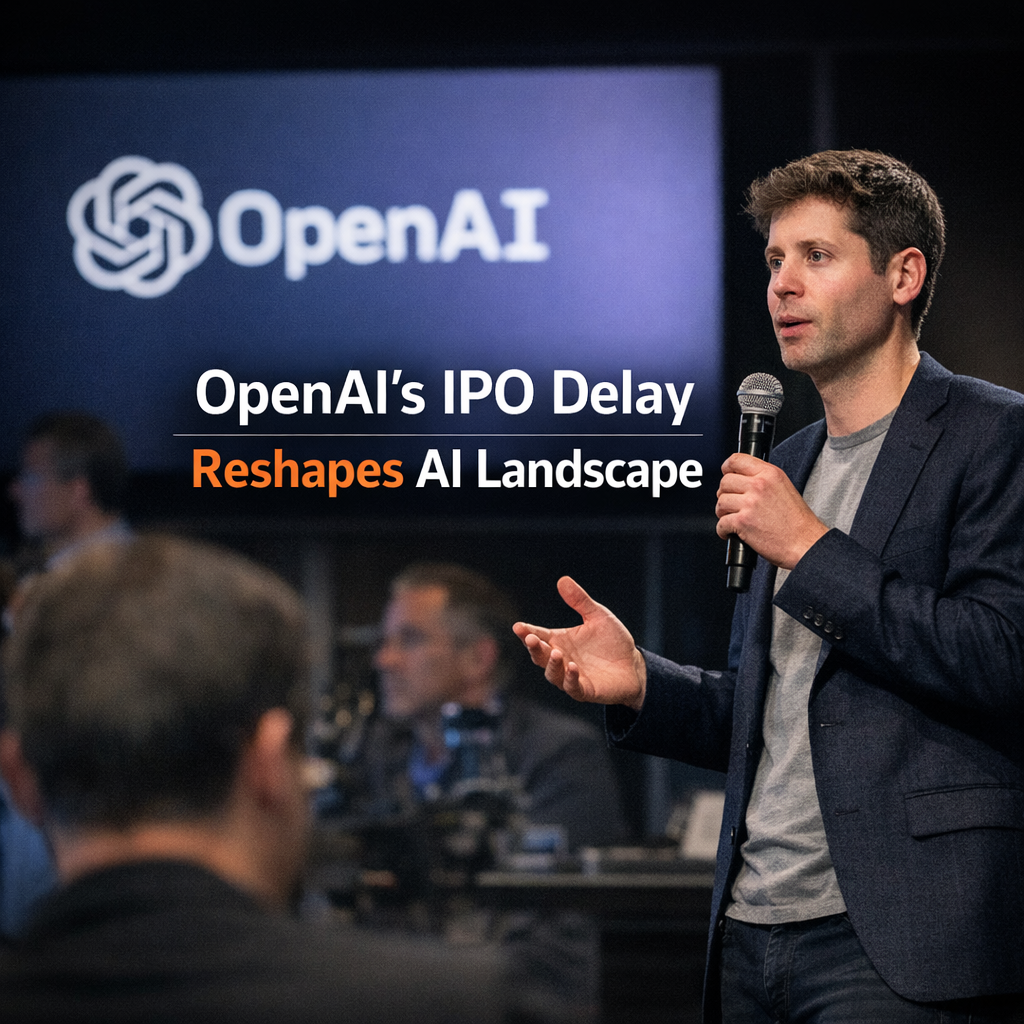
In a landscape where AI startups increasingly chase public funding to fuel growth, OpenAI’s refusal to pursue an IPO in 2026 signals a calculated, industry-shaping stance. For developers, founders, and enterprise customers betting on the trajectory of large language models (LLMs) and advanced generative AI, this decision reverberates beyond financial markets—reshaping expectations for product velocity, partnership structure, and the strategic posture of one of the AI sector’s most-watched leaders.
- OpenAI confirms it will not pursue a public listing in 2026, dampening IPO speculation.
- This move aligns with ongoing efforts to address complex governance and stakeholder challenges.
- Opaque ownership and evolving board dynamics raise questions about OpenAI’s long-term structure.
- Developers and AI partners may face continued uncertainty around platform stability and roadmap access.
Key Takeaways
OpenAI’s decision to hold off on an IPO this year reshapes how investors and partners perceive risk, incentives, and access to the company’s core AI technologies. The choice signals an intent to prioritize mission stability, ecosystem alignment, and long-term governance solutions over short-term capital gains. For those building on top of OpenAI’s models or competing directly, the implications ripple across technical integration, business development, and the timeline for sector-wide consolidation.
The AI industry’s most influential organizations now see going public as a milestone, not a necessity—preserving autonomy matters just as much as access to capital.
Why OpenAI Is Delaying Its IPO
OpenAI’s chief executive, Sam Altman, warned for months that the company would not rush into an IPO. This stance follows last year’s highly publicized leadership shakeup and sustained scrutiny regarding the company’s for-profit/nonprofit hybrid structure. Major backers like Microsoft, which has invested over $13 billion in cash and cloud credits, and the company’s unique capped-profit model, create a complex calculus around governance and returns. Reports from The Information and Fortune reinforce that internal leadership and outside investors are both navigating a landscape with evolving rules—and exposure to regulatory and ethical risks that differ from traditional public companies.
Governance Hurdles and Leadership Flux
OpenAI’s board makeup, including recent reshuffles and the reappointment of Altman after a brief ouster, underscores the volatility inherent in rapid AI advancement. The structure—where nonprofit board members hold final say over the for-profit arm—complicates decision-making on monetization, partnerships, and product launches. This layered governance drives caution when considering compliance, risk mitigation, and public shareholder alignment.
“OpenAI’s governance complexity extends beyond board politics—its very structure shapes the pace and openness of AI innovation.”
Impact on Developers, Startups, and AI Partners
Developers relying on OpenAI’s APIs or building downstream products face uncertainty when an AI leader’s future is unclear or at risk of outside takeover. Delaying a public offering may stabilize the current commercial licensing environment, preserving predictable access to APIs, pricing, and support. However, this stasis could also slow external investment in the OpenAI ecosystem or encourage rivals (like Anthropic, Cohere, and Google) to accelerate their own platform outreach and open source initiatives in search of developer mindshare.
Capital Markets and Competitor Strategies
OpenAI’s absence from public markets removes a much-anticipated liquidity event for early investors and employees. Meanwhile, sector competitors observe an opening: StabilityAI, Anthropic, and Cohere are each capturing interest, both with headline fundraising rounds and by positioning themselves as more conventional, venture-backable targets. Some, such as Anthropic, have already attracted significant cloud provider partnerships, including substantial bets from Amazon and Google. The battle for ecosystem dominance hinges not only on model quality, but also on how governance and incentive structures align with developer and enterprise needs.
“When foundational model providers resist short-term monetization, they prolong strategic flexibility at the cost of transparency and public market discipline.”
Industry Implications and the AI Funding Landscape
The AI sector’s capital markets remain dynamic even as OpenAI’s IPO plans pause. According to PitchBook, investments in generative AI startups topped $25 billion in 2023, with continued momentum into 2026. Yet OpenAI’s decision to remain private—alongside Apple’s stealthy generative AI developments and Google’s recent Gemini product launches—signals a broader move toward strategic control over core IP and platform direction. This posture protects mission focus but may delay the mass market adoption benefits that come from public scrutiny and diverse investor input.
The Road Ahead: What to Watch in AI Corporate Strategy
OpenAI’s choice to forestall an IPO for now spotlights a new era where mission continuity, internal alignment, and regulatory trustworthiness trump fast access to public capital. Startups and developers should monitor OpenAI’s evolving governance as it continues shaping market norms around transparency, access, and partnership. Ultimately, the path OpenAI carves—between nonprofit roots and commercial realities—will set precedents for how future “AI-first” entities scale responsibly, manage risk, and serve a global base that demands both innovation and trust.
Source: The Manila Times