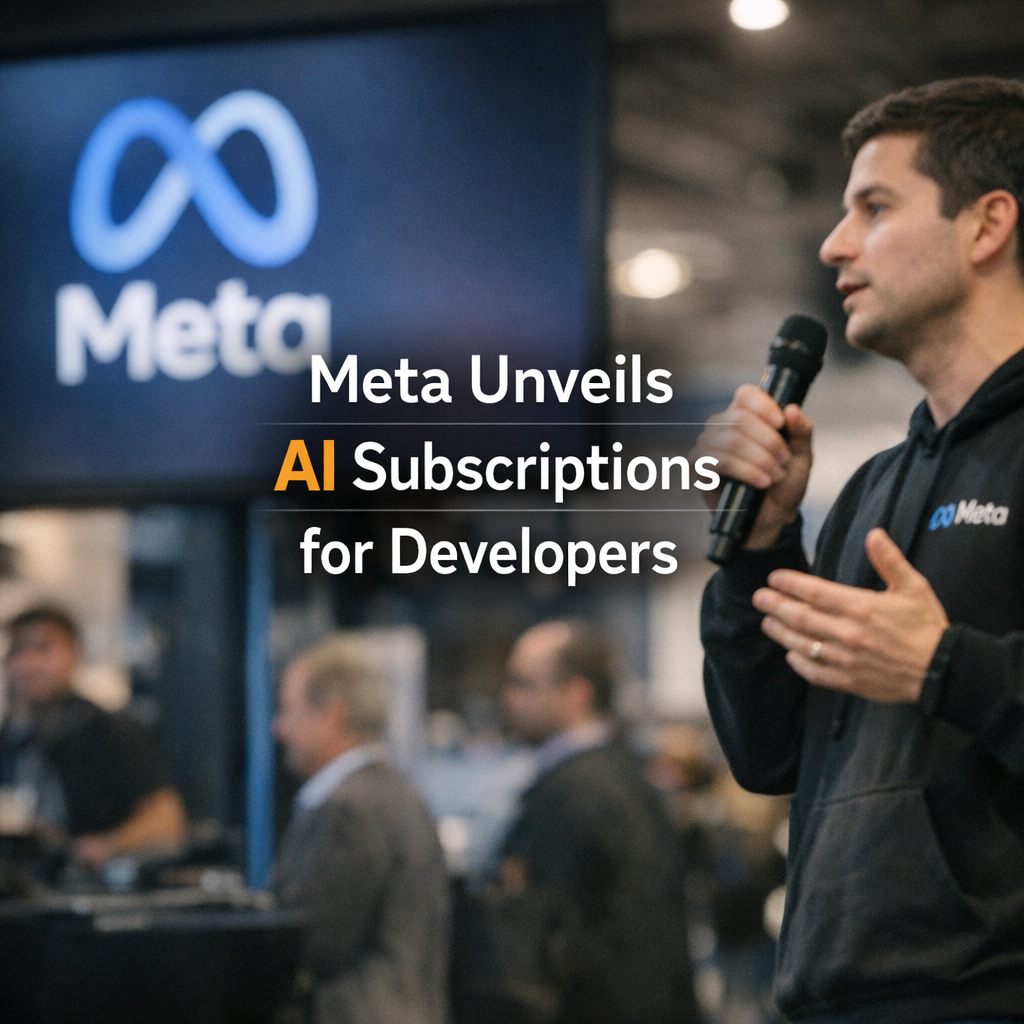
Meta is turning up the heat in the battle for AI dominance by unveiling fresh AI-focused subscription options, a move poised to ripple across the developer landscape and the wider generative AI ecosystem. With competition over LLMs and advanced AI features intensifying, Meta’s new strategy marks a clear drive to monetize artificial intelligence talent and infrastructure — and reshape how professionals and startups access next-gen AI capabilities.
- Meta launches new subscription tiers targeting developers and enterprise AI users
- Features include premium access to LLM-powered tools and advanced model APIs
- This signals an industry shift as major tech firms seek recurring revenue from AI products
- Startups and individual AI practitioners may face a new paywall for cutting-edge capabilities
- Implications extend far beyond chatbots — from analytics to workflow automations
Key Takeaways: What Meta’s AI Subscription Expansion Means
Meta’s foray into AI subscriptions isn’t just a business play — it sets the tone for the evolving economics of generative AI. Tech giants are moving away from entirely free offerings, nudging developers and startups towards paid tiers for access to powerful LLMs, proprietary APIs, and advanced tools. This creates new hurdles for early-stage teams but could drive a leap in AI service quality and reliability.
“When AI access becomes a subscription service, creativity and innovation increasingly depend on budget as much as on code.”
Meta’s Subscription Shift: Expanding Beyond Social
While Meta built its empire on social networking, its latest push targets a different crowd: the AI development community. According to TechCrunch and confirmed by The Verge, Meta’s new subscription tiers offer powerful LLM access, advanced AI toolchains, and priority API throughput. These paid plans dovetail with Meta’s high-profile open-source Llama models, but layer premium features — such as enhanced customer support and GPT-4-level capabilities — behind a monthly fee.
This pivot directly responds to trends set by competitors like OpenAI, Microsoft, and Google, each of whom has rolled out subscription-based generative AI offerings in the last 12 months. By monetizing its models and toolsets, Meta acknowledges that world-class AI isn’t just a promotional hook — it’s a product with recurring revenue potential.
“Major AI providers now treat their platforms less as public utilities and more as premium workspaces, placing value on early access, improved reliability, and enterprise-grade security.”
Impacts on AI Developers and Startups
The move challenges open innovation ideals that fueled the initial LLM boom. For independent developers and lean startups, rising paywalls are already making access to state-of-the-art AI models a mounting operational cost. Some may pivot to open alternatives; others might pass costs onto customers or seek ways to pool resources across teams.
Those subscribing to Meta’s upgraded AI plans could enjoy benefits like:
- Early access to new Llama model versions and experimental features
- Dedicated infrastructure for high-throughput or mission-critical applications
- Advanced analytics, monitoring, and usage controls aimed at enterprise use cases
Yet for bootstrapped projects or academic developers, the tightening of free tiers signals a tougher environment. The shift also pushes more teams to scrutinize which provider offers the best blend of performance, cost, support, and legal safety for their AI workloads.
The Broader Industry Pivot: Recurring Revenue and AI Productization
Meta’s move echoes a broader pivot within Big Tech. As The Wall Street Journal reports, the largest AI providers are converging on SaaS-like pricing for advanced generative AI, including contextual assistants and workflow automations. This is a strategic reversal from the “unlimited free trials” era of 2023. Monetization is now front and center, as the costs of compute, maintenance, and customer support loom large.
Customers, from enterprise CTOs to indie hackers, must now weigh not only a model’s accuracy or capabilities but also the sustainability of its pricing and service guarantees. These new paid plans could foster higher model quality and more stable APIs — but may also accelerate the concentration of AI power among firms with massive cloud budgets.
“Expect a sharper divide between AI haves and have-nots, as subscriptions become the passport to tomorrow’s most potent models and features.”
Looking Ahead: The Race to Build a Sustainable AI Business
Meta’s AI subscription launch acts as a bellwether for the next phase of the AI industry: one focused on sustainable, monetized access to advanced technology. As the largest players lock up the most cutting-edge LLMs behind paywalls, startups and solo developers must adapt their strategies — whether by partnering, forming collectives, or doubling down on open-source innovation.
The age of freely available, unlimited AI horsepower is winding down. Success in the new AI landscape will depend on making smart bets about providers, pricing, and the real “value add” of each generative AI tool in production pipelines.
Source: TechCrunch