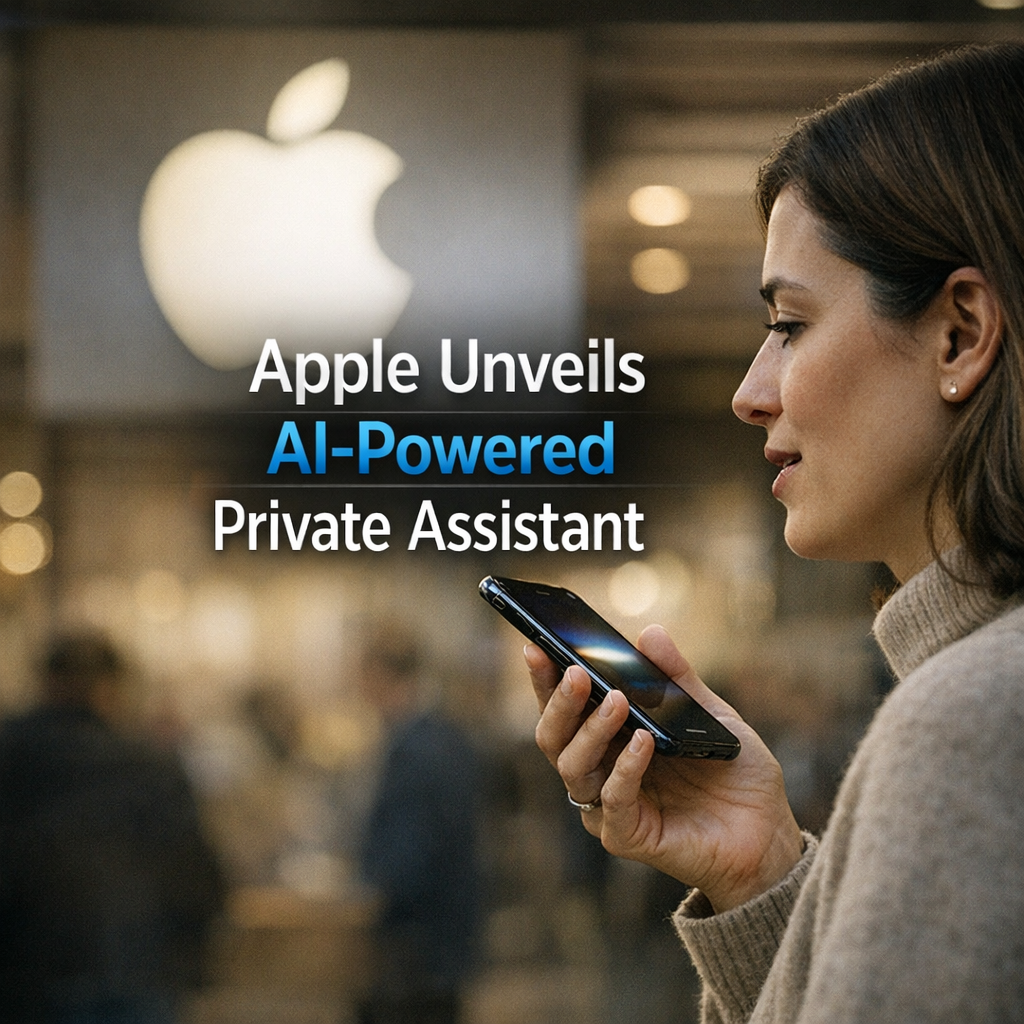
Apple has just unveiled its most ambitious leap in AI with a reimagined Siri assistant, driven by Apple Intelligence and deeply integrated across its ecosystem. For developers, startup founders, and AI professionals, this release signals a seismic shift not only in how iOS interfaces with generative AI, but also how privacy-first LLMs might reshape user expectations on-device and in the cloud. As Apple enters the generative AI arena with new APIs and tools, the landscape for voice apps, personal agents, and seamless AI integration is poised for a dramatic evolution.
- Siri receives a robust upgrade as Apple launches generative AI features powered by Apple Intelligence.
- Privacy-centric processing leverages on-device and cloud AI, setting a new standard for user data protection.
- Developers gain fresh APIs and options for Siri integration across iOS, iPadOS, and macOS.
- Partnership with OpenAI brings ChatGPT’s capabilities to Apple devices, creating new possibilities—and new competitive tensions.
Key Takeaways
Apple’s move into generative AI marks an inflection point for both end-users and the developer community. Users can now rely on an assistant that not only understands nuanced requests, but also crafts responses, summarizes content, and automates tasks—all while maintaining Apple’s privacy priorities. For app builders and startups, integration points for natural language tasks and personal context offer a high-potential playground. At the same time, Apple’s partnership with OpenAI introduces new interoperability, but also questions about long-term platform strategy for third-party LLM providers.
Apple’s AI shift forces every developer and founder to rethink what “personal assistant” really means when privacy and intelligence blend at the system level.
Apple Intelligence: Systemwide Generative AI Innovation
The next generation of Apple Intelligence transforms device interactions by allowing Siri to run advanced language models both locally and in the cloud. This hybrid deployment ensures low-latency responses while keeping sensitive data protected within the Apple ecosystem unless broader context is required. According to Apple, user requests that need extra computation get sent to secure servers, maintaining data minimization principles even as models become more capable.
Developers will interact with these AI enhancements through updated APIs in iOS 18, iPadOS 18, and the new macOS release. Opportunities abound for apps that can participate in deep-linking workflows, leveraging user context or summarization tasks. Apple’s focus on in-device processing outpaces most competitors, especially with some LLM tasks handled without ever leaving the device.
On-device LLMs unlock a new class of privacy-respecting generative AI applications, putting Apple ahead in trust while matching Silicon Valley’s appetite for automation.
OpenAI and ChatGPT: Friend or Foe for Apple’s Ecosystem?
The integration of ChatGPT within Siri paves the way for conversations and content tasks that benefit from the broader knowledge base and creativity of OpenAI’s models. Users can opt-in to send queries to ChatGPT when Siri recognizes a need for outside expertise—for example, generating longer text, brainstorming, or tackling ambiguous requests. This approach balances Apple’s privacy-first image with user demand for cutting-edge AI.
This partnership will inevitably pressure other foundation model providers—from Google to Anthropic—to consider how (or if) they fit into Apple’s future plans. For startups operating adjacent to these tech giants, the question becomes whether to invest in Apple’s preferred AI stack or adopt a multi-model strategy to hedge against strategic shifts. Apple controls API and integration pathways tightly, so alignment with Apple Intelligence may be crucial for category leaders in note-taking, productivity, or voice-driven workflows.
The real winner may be the user—but for developers, Apple’s ChatGPT integration demands both flexibility and vigilance around shifting platform priorities.
Implications for Developers and AI Startups
Apple’s foray into generative AI introduces new documentation, API surface, and review processes. Early reports suggest a focus on extensibility, but with close curation by Apple to ensure privacy and safety. This hands-on approach may slow some innovation but will appeal to sectors—health, finance, enterprise—where compliance and trust are paramount.
For AI professionals, Apple’s technical decisions offer both template and challenge. Building efficient on-device LLMs requires mastery of optimization, energy use, and user experience finesse, offering a playbook for those wanting to escape cloud dependency. Apple has also flagged a commitment to transparency around model behaviors, hinting at potential research partnerships or external audits in the future.
Apple’s AI platform privileges trust and integration—for startups, the differentiator is no longer just what your model can do, but how seamlessly it fits into a tightly controlled ecosystem.
New User Interactions: Beyond Traditional Assistants
Siri’s overhaul opens the door to conversational multi-turn dialogue, context awareness, and proactive help. Instead of relying solely on commands, users can have Siri summarize articles, draft messages, or automate cross-app routines. Developers now have both opportunities and obligations to ensure their apps can support and respond to generative requests—reshaping the app UX design process for AI-first workflows.
What This Means for the Future of AI-Powered Devices
Apple’s generative AI announcements redraw the competitive map for both AI and device makers. The focus on hybrid LLM deployment—on-device and secure cloud—demonstrates a forward-thinking path others will likely follow. For AI developers, aligning with Apple Intelligence increases access to a massive install base, but requires agility and compliance with Apple’s evolving ruleset. As user expectations rise for not just smarter, but also more secure and integrated AI experiences, innovation will increasingly depend on balancing openness and tight system integration.
The new Siri and Apple Intelligence together signal the start of a new era in consumer AI—one where privacy, seamlessness, and sophisticated language understanding are no longer mutually exclusive, but non-negotiable requirements. Early movers who adapt to these demands will shape the next generation of AI-powered products and services across the globe.
Source: Apple Newsroom