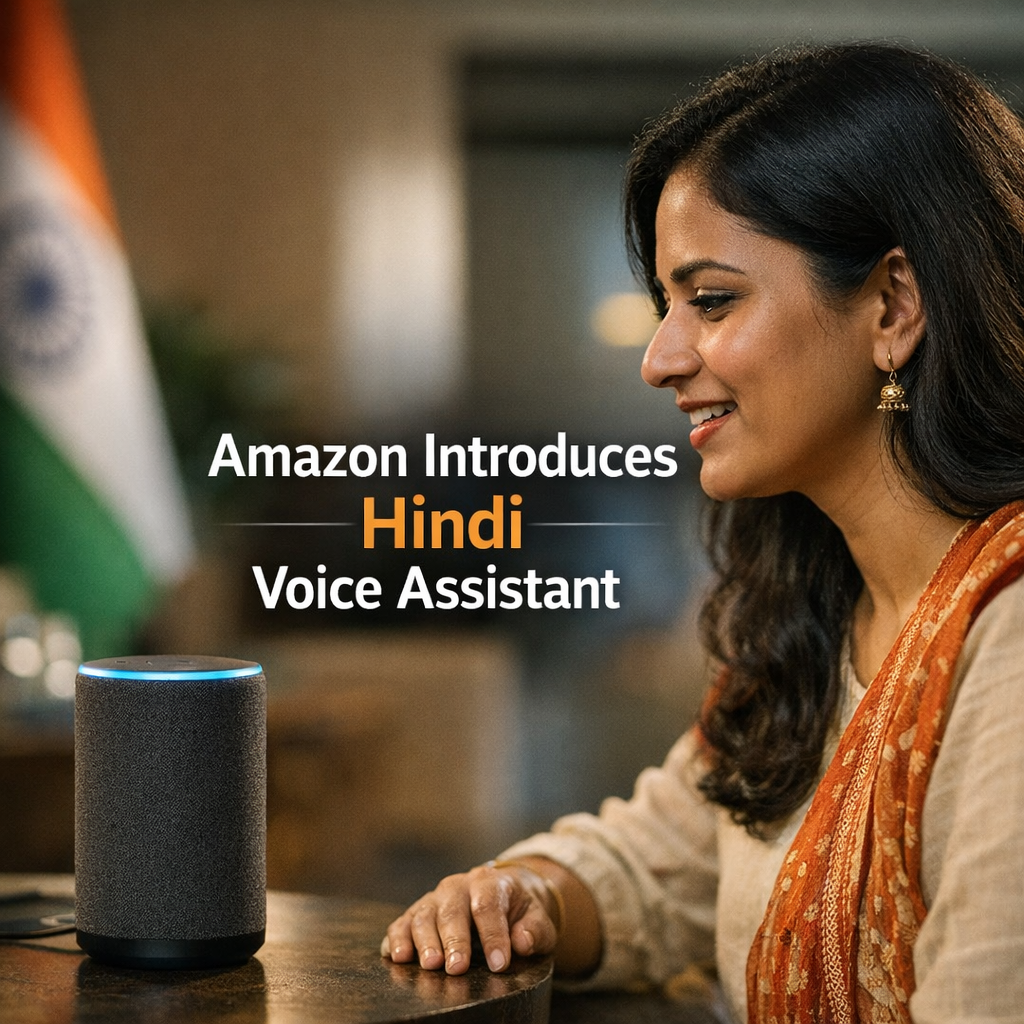
Voice AI adoption in India just took a significant leap. Amazon has rolled out Alexa with full Hindi language support, a clear move to target India’s massive user base—and intensify the AI assistant competition. As global tech giants race to localize large language models (LLMs) and generative AI, India stands at the frontline: a mobile-first market with immense linguistic diversity. For developers, startups, and AI strategists, this launch could mark a turning point in how users interact with devices and apps across the country.
- Amazon debuts Alexa in India with Hindi language integration
- Voice AI platforms intensify localization for competitive edge
- Developers gain access to new APIs and potential market share
- Indian language AI models highlight growing demand for regional language support
- Startups face new opportunities—and challenges—around voice tech adoption
Key Takeaways
- Amazon’s Hindi-enabled Alexa aims to capture India’s untapped voice assistant market, where local language support remains a critical factor in mass adoption.
- Competition in generative AI intensifies as tech leaders invest in building LLMs capable of understanding Indian vernaculars.
- Voice AI integration with regional languages offers a fresh playground for third-party developers and entrepreneurs.
Amazon’s Voice AI Gambit: Why Hindi Language Support Changes the Game
Amazon’s decision to bring Hindi capability to Alexa signals a shift from generic, English-dominated AI to culturally nuanced, locally tuned interfaces. India’s digital ecosystem is diverse by nature—not only does the population exceed 1.4 billion, but more than 40% cite Hindi as their primary tongue, according to the Census of India.
Bridging the language gap is not just an accessibility milestone—it’s a strategic lever for global tech leaders to unlock the next billion users.
By making Alexa converse natively in Hindi, Amazon increases its likelihood of engaging first-time internet users, rural markets, and households more comfortable with regional speech patterns. Google already added Hindi voice support to Google Assistant as early as 2018; Apple’s Siri introduced partial regional support in 2019. Amazon’s entry now intensifies this three-way race.
Developer Ecosystem: New APIs, Expanded Use Cases
For Indian developers, Alexa’s Hindi rollout brings revamped APIs and updated skill kits. Third-party programmers can now build voice-driven apps—like shopping, education, entertainment, and local services—with contextual understanding of colloquial Hindi phrasing. According to Amazon developer documentation, the platform now supports intent recognition tuned for Indian accents, phrasing, and idioms.
Localized developer tools make AI assistants more than voice search—they become true digital intermediaries embedded in daily life.
By tapping into the broader Alexa Skills Kit (ASK) ecosystem, Indian startups can expand their business models, integrate with smart home devices, and reach users who were previously excluded by English-only commands. Expect a rapid increase in Hindi-language skills targeting finance, news, and government services as developers seize the moment.
Generative AI and LLM Localization: Market Implications
The latest Alexa update underscores a growing focus among AI labs: building foundational models that speak the world’s languages, not just English or Mandarin. Localizing LLMs for Hindi—and eventually for languages like Bengali, Tamil, Marathi, and Telugu—serves as a pivotal test for scaling generative AI to billions in emerging markets. Meta, Microsoft, and Google have each announced initiatives to pre-train language models on Indian text and speech data.
Enterprises investing in regional generative AI tools now stand to define how vast new populations access information and automation.
Delivering accurate, context-sensitive responses in Indian languages demands significant investment in NLP research, training data, and cultural understanding. Still, the potential payoff—AI adoption across government programs, education, commerce, and healthcare—is massive.
Startups, Local Players, and the Voice Tech Surge
India’s homegrown voice AI startups, including Reverie Language Technologies and Vernacular.ai, have spent years developing NLP models tailored to South Asian languages. With Amazon’s Hindi Alexa release, local players gain a new yardstick—and a potential partner or competitor. Expect aggressive acceleration of regional innovation and new entrants exploring indigenous voice interfaces, not just within India but across other linguistically rich markets.
Voice AI further democratizes technology by lowering the literacy and digital skills barrier, allowing millions to interact with devices, government apps, and commerce purely through vernacular speech. For forward-thinking founders, the coming surge of Indian-language voice AI will redefine product strategy across sectors—from banking and agriculture to online retail and entertainment.
What’s Next for AI in India’s Language Landscape?
With Alexa’s Hindi launch, Amazon throws down the gauntlet in the global AI localization race. As generative AI models unlock new real-world applications, the industry faces a challenge: mastering not only code and data, but also culture, dialect, and context. The outcome will shape which platforms dominate as India’s digital future unfolds—and who captures the billions moving online for the first time.
Source: TechCrunch