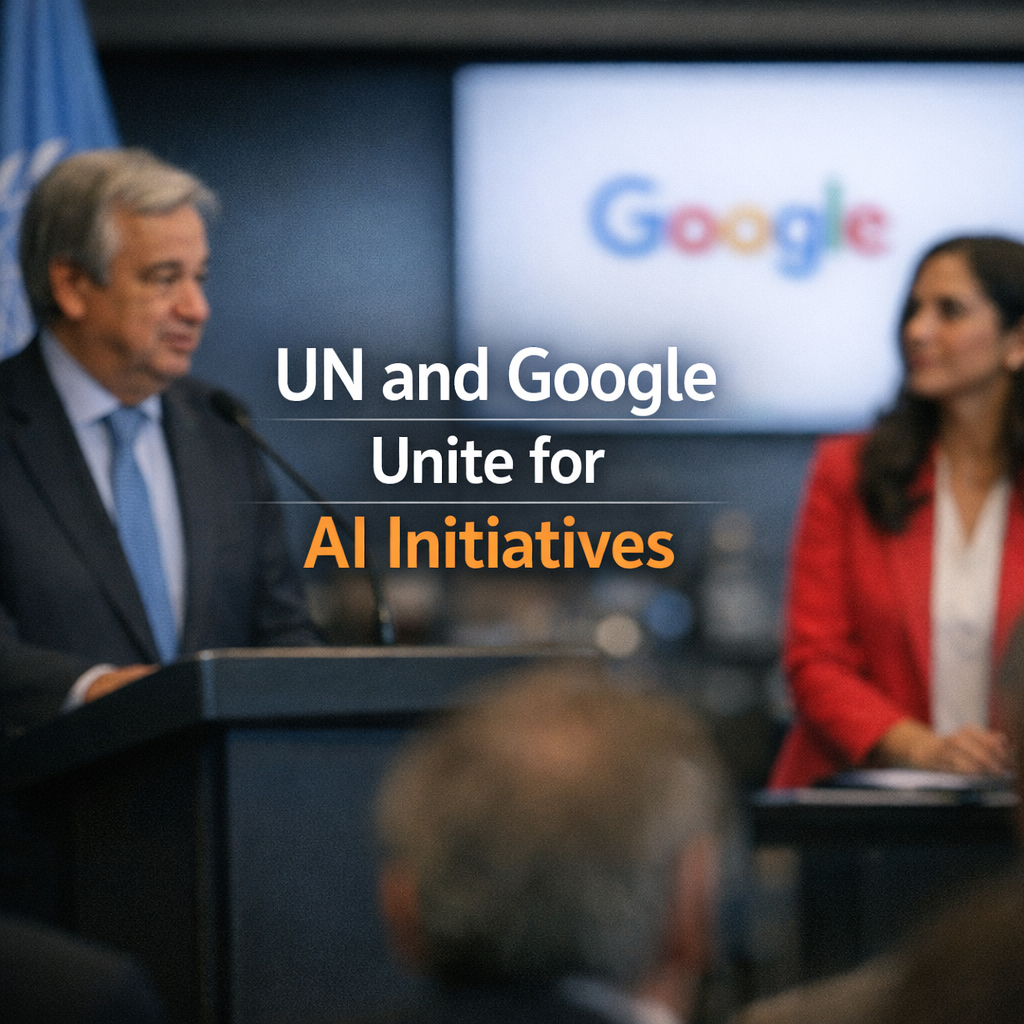
As generative AI reshapes how organizations harness massive datasets, the United Nations has unveiled a partnership with Google to transform decades of global data into AI-ready knowledge. This move signals an inflection point: humanitarian agencies see that actionable, up-to-date, and interoperable information has become a strategic necessity as AI agents accelerate their role in decision-making, crisis response, and sustainable development tracking.
- UN teams up with Google to revamp global datasets for AI integration
- Partnership aims to make data accessible, standardized, and machine-readable for advanced generative AI applications
- Massive potential for improving crisis monitoring, policy planning, and the reach of LLM-powered agents
- Developers and startups poised to benefit from expanded access to quality data sources in global projects
Key Takeaways
The partnership between the United Nations and Google is more than a technical upgrade—it reflects a shift in how institutions prepare for an AI-first world. With the task of harmonizing disparate datasets and converting them into machine-friendly formats, this collaboration sets a new bar for open data, digital governance, and real-time insight generation.
Transforming legacy datasets into AI-ready assets stands out as both a technical and strategic leap for global organizations seeking impact at scale.
By removing silos and making UN data accessible to generative AI models, the initiative promises faster, smarter interventions—potentially reshaping everything from climate monitoring to humanitarian logistics.
Why Global Datasets Need an AI-Ready Overhaul
International agencies like the UN have grappled with a fundamental issue: massive archives of critical statistics, reports, and field data exist in incompatible formats or are locked behind fragmented systems. For large language models (LLMs) and AI agents to extract value, they need structured, reliable, and current information that can be ingested at scale.
Enabling generative AI to synthesize insights demands a unified, structured, and highly interoperable data landscape.
The complexity is real—UN repositories span dozens of agencies, languages, and unique metadata standards. Without intervention, these datasets remain underutilized by the AI tools now shaping sectors from disaster response to economic policy.
Inside the Collaboration: What Google Brings to the Table
Google is leveraging its advanced search, AI, and data infrastructure to power this transformation. The company will help standardize, annotate, and de-duplicate the UN’s vast digital records, making them accessible not just for its own models, but for the entire ecosystem. According to Reuters, Google Cloud’s Vertex AI and advanced data engineering tools will provide the backbone for this conversion, focusing on machine-readability and flexible APIs.
For developers, access to clean, rich, up-to-date global datasets unlocks new possibilities for building LLM-powered applications. Startups aiming at crisis prediction, environmental modeling, or public sector analytics will find new doors opened as these resources become accessible programmatically.
AI professionals can expect the new data pipelines to become essential infrastructure for building multi-modal humanitarian and policy tools.
Implications for Generative AI: From Insights to Action
The transformation of UN data directly enhances the capabilities of generative AI agents. By fusing real-time feeds from humanitarian, climate, and economic sources, LLMs gain the context needed for decision-support, monitoring, and reporting at unprecedented scale and speed.
For instance, live refugee movement maps and supply chain analyses—which previously required laborious manual updates—can be automated by generative agents combing through harmonized datasets. The impact stretches to proactive crisis alerting, as AI models flag emerging needs for immediate response.
Giving AI agents clean access to global datasets transforms them from static assistants into dynamic partners in solving complex challenges.
Beyond operations, the transparency and interoperability of these AI-ready datasets align with open data mandates and responsible AI standards, helping increase trust in automated decision systems in sensitive domains.
Opportunities and Challenges Ahead for AI Developers
For the developer community, the UN-Google project sets the stage for a wave of innovative AI applications with global impact. Richer datasets mean enhanced prompt engineering, improved model fine-tuning, and strengthened data-driven reasoning for LLMs. However, significant hurdles remain: ensuring data privacy, managing bias in datasets, and maintaining regular updates will be ongoing requirements.
Startups in the AI-for-good space—spanning food security, health, and disaster resilience—can now design tools that plug directly into global indicators and insights, previously only available to insiders or through onerous data-wrangling.
Entrepreneurs and technical teams who harness these AI-ready datasets will set new benchmarks for solving cross-border, real-world problems.
The Road Ahead: An AI-Native Future for Global Data
The UN’s decision to prioritize AI-readiness signals how mission-driven organizations are recalibrating for the era of autonomous, real-time analytics. As similar partnerships proliferate, expect rapid progress in democratizing access to critical datasets and supercharging generative AI applications worldwide. For the AI industry, the next decade will be shaped not just by model architectures, but by the quality, openness, and interoperability of the data that fuels them.
Source: TechCrunch
Additional sources: Reuters, VentureBeat