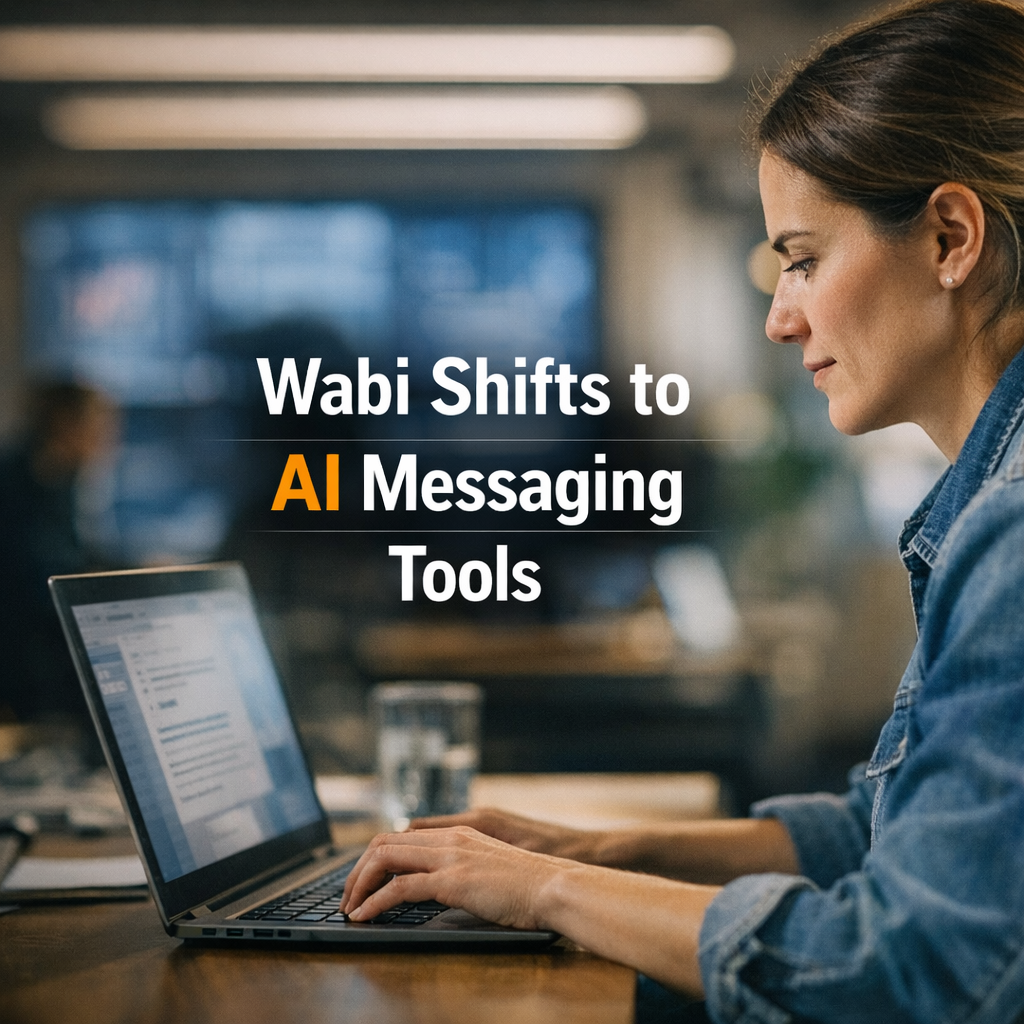
The rapid evolution of generative AI has forced companies operating in the low-code and no-code app development space to rethink their strategies and product offerings. As user expectations for instant, intelligent digital experiences rise, tools that once empowered non-coders to build apps risk being outpaced by new AI-native platforms. Wabi, once known for simplifying app creation with AI, is taking a bold turn: pivoting to a messaging-first experience that leverages large language models (LLMs) to redefine how users interact with both data and software.
- Wabi exits traditional app builder market, doubling down on AI-powered messaging interfaces.
- The move responds to growing limitations of template-based app creation in an LLM era.
- Messaging-centric platforms tap into the trend of conversational, on-demand knowledge work.
- Opportunities and new challenges emerge for startups and developers rethinking the user experience in AI-powered environments.
Key Takeaways
Wabi’s pivot is more than a business tweak—it’s a case study in how generative AI is disrupting established digital paradigms. The following insights reflect broader shifts shaping developer tools, workflow automation, and the future of user interaction.
“As LLMs mature, the advantage shifts from static no-code templates to fluid, conversational interfaces that harness real-time reasoning.”
- AI chatbots are becoming the new “app:” Instead of static menus or forms, users want to engage in natural, context-aware conversations powered by LLMs.
- No-code’s boundaries are exposed: Template-driven app builders struggle to keep up with the dynamic capabilities of advanced generative models.
- Development is getting more accessible—and more complex: While conversational AI unlocks new ease for end users, it demands fresh design thinking from developers.
- Trust, privacy, and data access move to the forefront: Messaging-first platforms must balance seamlessness with enterprise-grade security as they automate sensitive workflows.
From Template Builders to Conversational Workflows
The no-code revolution delivered powerful abstractions, including drag-and-drop interfaces and pre-built integrations. Wabi initially surfed this wave by automating much of the app-creation process. But as LLMs like OpenAI’s GPT-4 and Google’s Gemini have demonstrated, what users increasingly want is not a rigid app but a responsive digital companion that understands intent and context.
Wabi’s shift aligns with a mounting industry consensus: the killer AI app is not an app at all, but an interface—a persistent, intelligent messaging thread that adapts to user needs in real-time. This is evident in launches from companies like Slack (with AI-native assistants), Anthropic’s Claude chat, and Microsoft Copilot’s integrations across Teams and Office 365. The underlying principle remains:
“AI-first messaging bridges the gap between structured workflows and the unpredictable realities of human decision-making.”
For developers, this means less concern with building rigid UIs and more emphasis on prompt engineering, data integrations, and context control. For end-users, expecting a bespoke solution for every workflow gives way to an era where intelligent conversations replace manual navigation entirely.
The LLM Wave Redefines User and Developer Roles
The pivot to conversational AI is not without its frictions. Developers now face unique challenges: designing predictable, safe user experiences in the open-ended world of natural language, managing data permissions, and integrating external APIs to enable actionable workflows within chat. Meanwhile, startups like Wabi must deliver enough value to stand out from “off-the-shelf” chatbot builders and direct interactions with general-purpose LLMs from OpenAI or Google.
LlamaIndex, LangChain, and other frameworks plug into this trend, giving builders the tools to turn datasets, documents, and APIs into context-enriched agents or assistants. Wabi’s bet is that its platform can orchestrate these technologies behind a seamless conversational layer—one tailored to business logic, not generic AI demos.
“The AI-native messaging stack is fast becoming table stakes for startups competing in workflow automation, customer service, and knowledge management.”
Messaging as an Enterprise Interface: Implications for Startups and Developers
This shift will not only raise the bar for consumer apps; B2B software providers, internal tool builders, and even SaaS giants will feel the pressure to embed LLM-powered messaging into core products. Companies like UiPath and Zapier already signal movement in this direction, with conversational workflows rapidly replacing traditional dashboard-focused paradigms.
- Developers must prioritize integrations, prompt safety, and chatbot tuning as critical skills.
- Risk mitigation around hallucinations and data privacy will shape product architecture more than ever before.
- Buy-vs-build decisions are upended—teams may opt for proven messaging platforms layered atop best-in-class LLMs to accelerate go-to-market.
The Road Ahead: Messaging-First, AI-Native Platforms Will Define the Genre
Wabi’s pivot underscores a larger movement redefining the boundaries of “applications.” The next frontier lies in creating persistent, intelligent messaging threads—secure, personalized, and deeply integrated—that serve up knowledge, automate tasks, and evolve with the user.
“The future of software is less about constructing screens and more about orchestrating conversations between users, data, and AI.”
What’s Next for AI, LLMs, and the Conversational Platform Ecosystem
As Wabi and peers embrace messaging-native interfaces, expect a rapid proliferation of tools competing to become the backbone of enterprise knowledge work and workflow automation. Companies that marry real-time LLM reasoning with trusted integrations, security, and user-centric design will set the pace. For developers and founders, fluency in AI-powered conversation design and context-aware orchestration is quickly becoming the new baseline. The transition from app-centric thinking to messaging-first strategies now marks the competitive edge in the generative AI era.
Source: TechCrunch