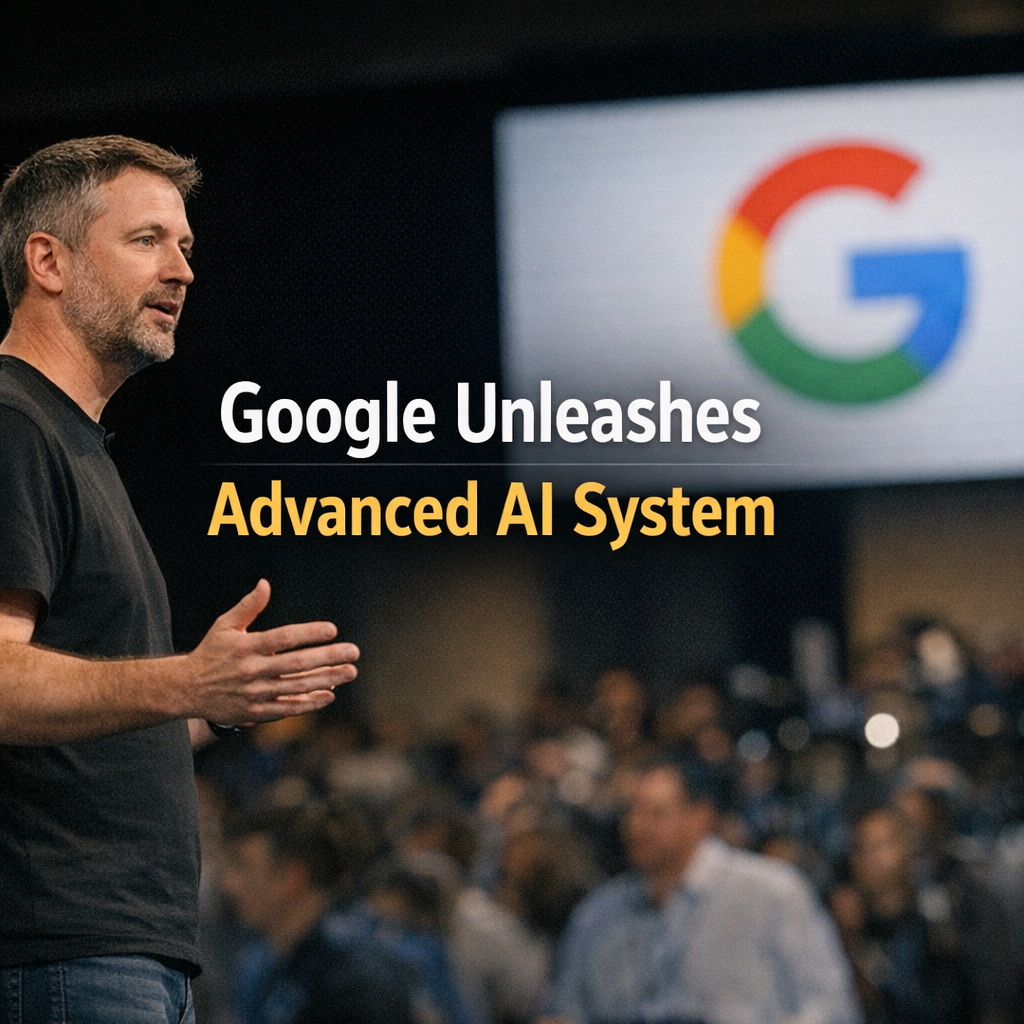
Google has just raised the bar in artificial intelligence with the unveiling of Gemini 4, codenamed “Argon.” As the race to build the most capable large language models (LLMs) accelerates, Google’s latest release claims significant advances in reasoning, scale, and efficiency—threatening to reset expectations across the industry. Developers and startups working with generative AI now have a more powerful tool to leverage, with potential for breakthroughs in enterprise automation, creative content generation, and context-rich applications.
- Gemini 4 arrives as Google’s most capable and efficient LLM, with broader context handling and improved safety features.
- New APIs enhance integration options for developers, including advanced multi-modal capabilities.
- OpenAI, Meta, and Anthropic face renewed competition as Google doubles down on enterprise and consumer AI products.
- Gemini 4 brings major improvements in handling “hallucinations” and real-world factuality.
Key Takeaways
Gemini 4’s introduction marks a turning point in the LLM landscape:
- Substantial leap in model capability: Gemini 4 dramatically widens the context window—reportedly processing hundreds of thousands of tokens at once, outpacing rivals like GPT-4o and Llama 3.
- Enterprise focus: The integration-ready APIs and safety advancements directly target high-stakes business and government applications.
- Real-world reliability: Google’s push to suppress hallucinated or fabricated AI responses addresses a core barrier to adoption in regulated sectors.
- Platform strategy: Gemini 4 will power not only Google’s flagship products like Search and Workspace, but also a rapidly expanding cloud AI portfolio.
Google’s Gemini 4 doesn’t just compete with leading LLMs—it redefines achievable AI accuracy and context, pressing rivals to close the gap fast.
Inside Gemini 4: Capabilities, APIs, and Model Architecture
While the technical details remain partially under wraps, Google has confirmed that Gemini 4 boasts a flexible, multi-modal architecture. Developers can now tap into advanced vision, speech, and language understanding through unified APIs—significantly lowering integration hurdles for cross-modal AI.
Token capacity and context window: Reports from industry insiders indicate Gemini 4 can handle context windows as large as 1 million tokens, dwarfing existing open and closed-source models. This enables complex document analysis and conversation continuity previously out of reach.
Safety and factuality: Backed by new data curation and real-time retrieval systems, Gemini 4 demonstrates measurable reductions in hallucinated outputs. Early enterprise partners in healthcare and finance noted substantial improvements in risk-sensitive scenarios during pilot deployments.
The surge in Gemini 4’s context processing makes document-heavy AI pipelines—from insurance claims to legal review—more robust than ever before.
How Does Gemini 4 Stack Up? A Look at the Competitive Arena
The AI sector has seen rapid-fire releases this year, including OpenAI’s GPT-4o, Anthropic’s Claude 3, and Meta’s Llama-3. However, Gemini 4’s benchmarks suggest a meaningful edge in scale and safety. Direct comparisons point to:
- Speed: Early testers report lower latency and faster response generation compared to previous Gemini models and select OpenAI offerings.
- Accuracy: Google claims a 20–30% reduction in critical factual errors relative to Gemini 1.5 and GPT-4-class models.
- Deployment breadth: Gemini 4 will become the engine behind core Workspace features, Search results, and Vertex AI tools—expanding Google’s AI footprint beyond consumer chatbots into deep enterprise integration.
Gemini 4’s real challenge to OpenAI and Meta isn’t just raw power—it’s the seamless deployment inside Google’s established productivity and cloud ecosystems.
Implications for AI Developers and Startups
For AI professionals, Gemini 4 changes both the opportunity and risk calculus:
- API access means startups can now experiment with large-context, low-hallucination LLMs for specialized verticals—legal tech, healthcare, enterprise automation, and more.
- Enhanced safety guardrails and customizable moderation open doors for deployment in finance, government, and other tightly regulated industries.
- The model’s performance in reasoning and long-term memory tasks unlocks new possibilities in RAG (retrieval augmented generation) and knowledge management tools.
Conversely, the scale of Google’s offering raises the bar for open-source models to deliver comparable reliability and depth. Startups reliant on differentiating through accuracy or context length must now recalibrate in light of Gemini 4’s public benchmarks.
With Gemini 4’s expanded context window and reliability focus, the next wave of AI startups will compete not just on features, but on vertical depth and nuanced safety.
What’s Next? The Road Ahead for Generative AI
Google’s Gemini 4 signals a clear intent: unified, cross-modal intelligence with enterprise-grade reliability is rapidly becoming the new standard for LLMs. As rivals accelerate to keep pace, expect a surge in vertical AI solutions, richer tool APIs, and even tighter coupling between foundational models and cloud infrastructure. For every developer and founder in the AI ecosystem, the message is unmistakable—adapt quickly, because the AI stakes just got higher.
Source: TechCrunch