AI avatars have quickly evolved from static chatbots into dynamic agents promising true interactivity. OpenAI’s latest release, “Dots,” signals a major step forward—infusing personality and agentic behavior into next-gen virtual assistants. As competition heats up in the generative AI space, Dots’ launch not only raises the bar for avatar design but exposes the rapidly shifting boundaries of what conversational AI can achieve in both consumer and enterprise contexts.
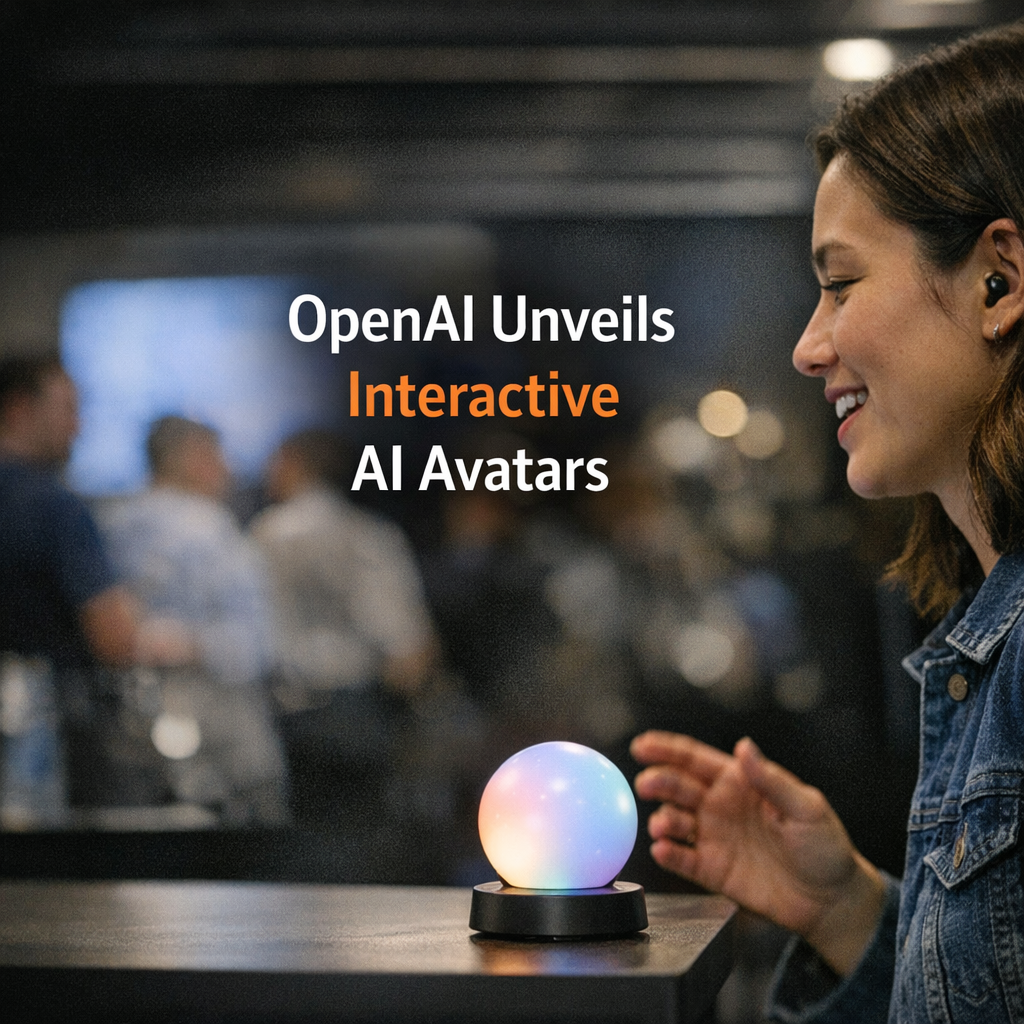
- OpenAI debuts Dots, its animated, interactive AI avatar experience.
- Dots combines LLM-powered reasoning with expressive visual animation.
- Early demos show avatars handling scheduling, messaging, and adaptive conversations.
- This technology opens new business opportunities—and challenges—around AI-powered interaction.
Key Takeaways
OpenAI is redefining AI-human interaction with Dots, an agentic avatar built on the latest advancements in language models and user interface design. These bubbly digital assistants not only converse using natural language but also display lifelike affect and personality, reshaping expectations for digital agents.
“With Dots, the paradigm shifts from AI as a utility to AI as a social participant—inviting users to engage, collaborate, and trust.”
Dots: Where Animation Meets Autonomous AI
Unlike static voice assistants or text bots, Dots presents users with an animated avatar that reacts, emotes, and adapts in real time. Powered by state-of-the-art large language models (LLMs) fine-tuned for dialogue and contextual awareness, Dots aims to balance utility with a more personable interface.
OpenAI’s demonstration reveals Dots taking on calendar management, message drafting, and task reminders—not just following commands, but proactively suggesting solutions based on conversational cues. The avatar’s animated responses (think eyes widening at a surprise, or pulsing when it “thinks”) humanize its digital presence and contribute to user comfort and engagement.
“Animated, agentic avatars like Dots bring a new dimension to conversational AI—one that leverages design and affect alongside advanced reasoning.”
Implications for Developers and Product Teams
Dots opens up a wealth of opportunities for developers eager to embed agentic avatars into third-party apps and services. APIs designed for extensibility will let teams tailor Dots’ capabilities, behaviors, and appearance to fit bespoke workflows across industries, from customer support to education and productivity tools. This move could spur a wave of innovation rivaling the early days of mobile app stores.
However, the complexity of orchestrating LLM-driven autonomy with real-time animation and security introduces new engineering challenges. Developers will need to master prompt engineering, event synchronization, and safe-guarding user data while fostering fluid, engaging dialogue.
“For startups and devs, mastering agentic avatars is less about technological novelty, and more about building real user trust at the AI interface.”
Commercial and Ethical Opportunities
Companies in retail, healthcare, and education can deploy avatars like Dots for immersive, branded customer experiences. In healthcare, animated agents could ease digital triage and improve patient interactions. Education platforms may discover that personable AI tutors increase engagement and learning outcomes.
At the same time, as AI avatars become more lifelike, transparency and ethical use require even greater scrutiny. OpenAI and enterprise adopters will need robust disclosure mechanisms so users understand when they’re interacting with AI, not humans.
“Success in the coming avatar race hinges on balancing engagement with transparency—ensuring users never confuse clarity for charisma in digital agents.”
Competitive Landscape: The Race for Agentic Avatars
OpenAI’s Dots faces rapid-fire competition. Google’s Project Astra, recently showcased at I/O, integrates agentic avatars into Android and Workspace demos. Meanwhile, startups like Hume AI and Replika are betting on emotionally expressive avatars as platforms, offering extensive developer APIs and personalized features. Meta, too, pushes its own lineup of AI personas for Messenger and WhatsApp, leveraging the company’s social network dominance.
The arms race is about more than technical prowess; it’s about shaping user expectations and trust in daily digital interactions. As LLMs grow more powerful and multimodal, whoever gets agentic avatars “right” could own the interface layer for a legion of next-gen apps.
The Road Ahead: What Will AI Faces Mean for the Industry?
The debut of Dots heralds a shift from transactional, utilitarian bots toward friendlier, more intuitive AI agents. Successful integration of these avatars could lead to richer digital experiences and new business opportunities—particularly for those who blend next-gen LLMs, user-focused design, and responsible deployment.
“Avatars like Dots mark the start of a new chapter, where the line between assistant and ally blurs, transforming how people and AI collaborate.”
The coming year will show which teams can best bridge deep model intelligence with expressive, accessible interfaces—and how users will respond when their newest coworker is just a dot away.
Source: TechCrunch