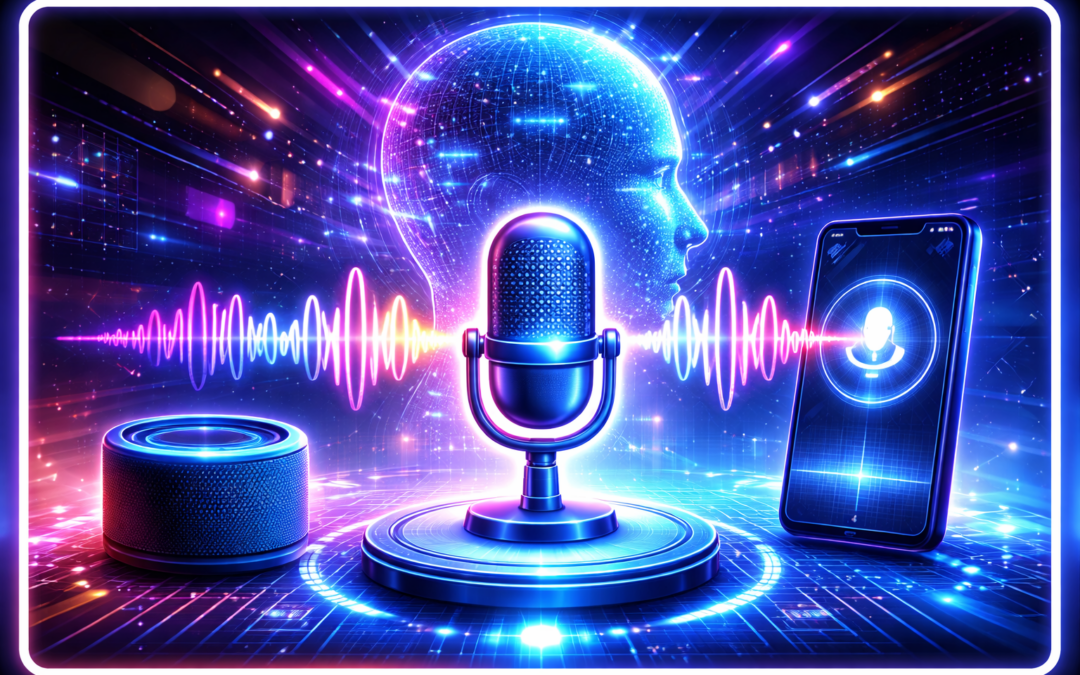
The rapid evolution of AI and large language models (LLMs) continues to transform human-computer interactions. Voice technology, powered by generative AI, is quickly emerging as the next major interface for accessing digital services, according to industry leaders and recent high-profile investments. Developers, startups, and AI professionals should prepare for fundamental shifts in how users engage with apps and devices.
Key Takeaways
- Voice is positioned to become the primary interface for generative AI, mirroring the rise of the graphical user interface in prior computing eras.
- ElevenLabs’ vision and recent funding reflect a surge in demand for advanced, natural-sounding synthetic voices.
- Major platforms and tools—such as OpenAI’s ChatGPT Voice and Google’s Gemini—are integrating real-time, conversational audio, accelerating adoption.
- AI professionals and product teams need to rethink user experience, security, and inclusivity in voice-driven applications.
Why Voice is Quickly Becoming AI’s Next Interface
Recent headlines spotlight ElevenLabs, a leader in generative AI voice synthesis, as it secured $80M in a Series B round. The company’s CEO, Mati Staniszewski, asserts that “voice is the next interface for AI”—and the momentum backs up his claim. Investors such as Andreessen Horowitz and Sequoia Capital have thrown their support behind startups developing advanced voice models, indicating strong confidence in AI-powered voice technology.
“Voice unlocks the most natural mode of human-computer communication—unmediated, expressive, and universal.”
Leading consumer AI products are now integrating voice as a first-class feature. ChatGPT offers real-time voice conversations, while Google’s Gemini extends beyond text to deliver multimodal, voice-enabled interactions. Apple and Amazon both invest heavily in multimodal generative AI for their voice assistants, demonstrating a wider industry shift.
Implications for Developers, Startups, and AI Professionals
New Developer Tooling and APIs
The surge in demand for natural-sounding synthetic voices drives rapid innovation in text-to-speech (TTS) APIs and developer platforms. ElevenLabs, OpenAI, and other providers now offer flexible APIs enabling integration of lifelike speech into apps, customer service bots, and accessibility tools in minutes.
Voice AI lowers barriers, allowing startups to differentiate fast with unique user experiences, regional accents, and emotional tones.
Design and User Experience Overhaul
Generative AI voice shifts design paradigms from GUI to “conversational UX.” Developers must prioritize context-aware, latency-optimized dialogue, and solve for challenges like speaker verification and privacy. Critically, AI voice opens new pathways for accessibility—enabling visually impaired users to engage more fluidly with technology.
Security, Ethics, and Trust Challenges
Voice-powered generative AI also raises the stakes in deepfake prevention and responsible use. Leading startups implement watermarking, consent frameworks, and robust moderation to address risks of misuse. The ability to clone voices with minimal input underscores the urgency for ethical guidelines and regulatory action, as highlighted by research from MIT Technology Review and Wired.
Market Momentum and What’s Next
CB Insights estimates voice AI startups raised over $500M in the past 18 months, and the pace shows no sign of slowing. The convergence of real-time LLMs, improved speech recognition, and TTS quality produces AI voice agents that rival human performance.
Expect to see voice-driven AI interfaces proliferate in industries from healthcare (diagnosis and remote care), to gaming (immersive NPCs), to customer support (hyper-personalized bots). The next generation of voice AI will not only interpret what is said, but also intention, context, and emotion—unlocking richer, more intuitive, and inclusive user experiences.
Developers and startups that embrace this shift now will shape the standards, frameworks, and future of AI-powered interface design.
Source: TechCrunch