Rapid advancements in generative AI have reached a new milestone as OpenAI launches an agentic coding model, just minutes after Anthropic unveiled its own competing system. This head-to-head release race signals fierce competition and promises massive impacts on AI development, productivity tools, and the future of autonomous coding.
Key Takeaways
- OpenAI released a new agentic coding model closely following Anthropic’s latest coding assistant announcement.
- Both models represent major leaps for autonomous code generation and end-to-end software development.
- Accelerator-style launches from leading labs create intense pressure on startups and practitioners to adapt quickly.
- Early signals suggest a shift from static LLMs to more active, agent-driven AI systems handling broader tasks.
OpenAI and Anthropic: Rivals Speed Up the Agentic AI Race
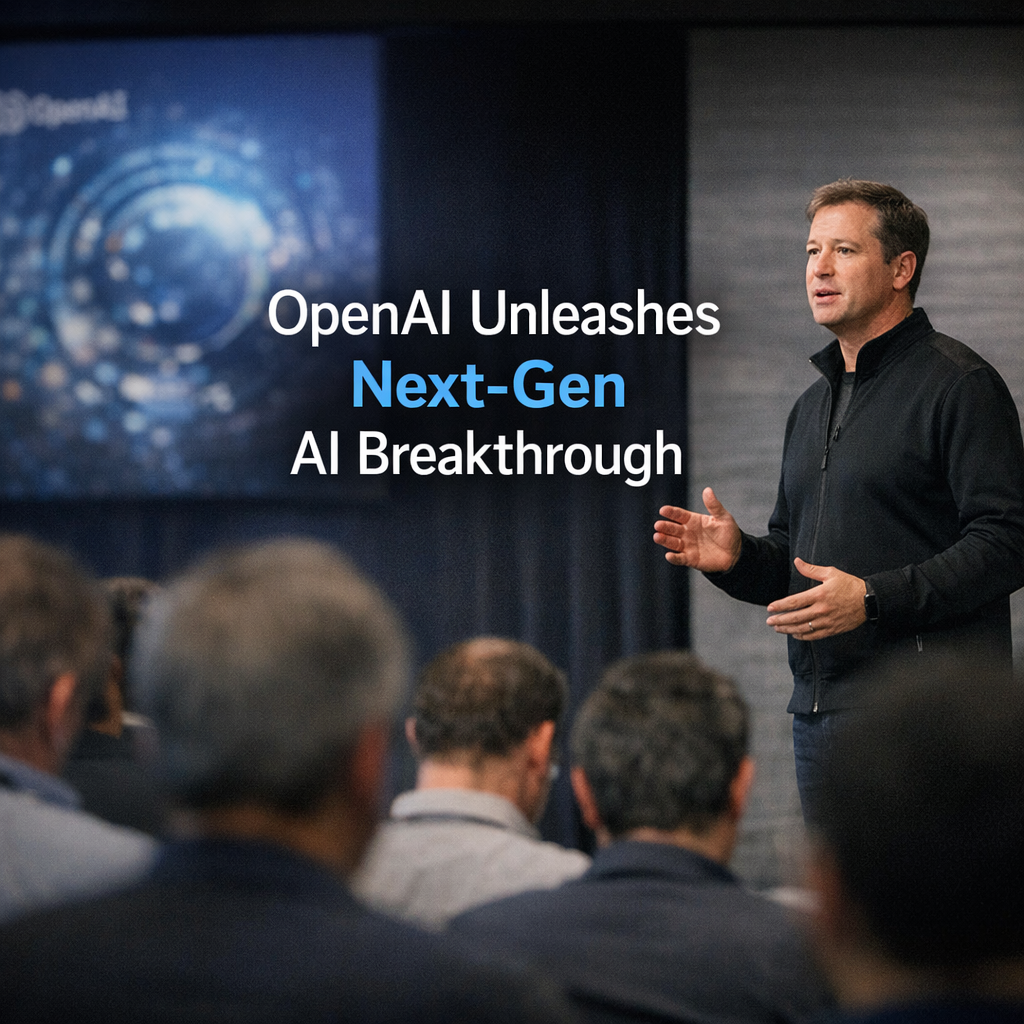
OpenAI’s unveiling of a new agentic coding model, moments after Anthropic’s competing launch, shows a dramatic escalation in the AI race among top labs. According to TechCrunch, OpenAI’s system demonstrates advanced capabilities in code suggestion, debugging, and even architectural design without constant human prompting. Anthropic’s entry, meanwhile, touts safety-first self-improving features leveraging its constitutional AI principles.
The era of passively waiting for user instructions is ending—autonomous agents will soon dominate developer workflows.
Real-World Implications for Developers and Startups
Developers now gain access to tools that not only autocomplete code but can also initiate, modify, and orchestrate entire programming projects. This evolution could drastically improve prototyping speed and lower barriers to entry but also requires new skills in agent orchestration and output validation.
Startups in the AI tooling space face pressure to innovate or differentiate quickly. The open, API-compatible nature of both launches allows rapid integration, driving a fresh wave of competition and potential partnerships. However, domain-specific AI tooling providers may face disruption as general-purpose agentic models encroach on niche use cases.
For AI professionals, the battle between OpenAI and Anthropic showcases a growing emphasis on agent alignment, responsible autonomy, and task reliability. Companies that fail to incorporate these agentic approaches risk falling behind both in productivity and safety standards.
“Autonomous software agents mark a paradigm shift from single-turn LLMs, enabling end-to-end solutions in code generation and DevOps.”
Analysis: What the Agentic Model Competition Means for AI Ecosystem
Immediate consequence: Developers now have to evaluate not just the breadth of code an AI model can write, but its ability to reason through complex, multi-step problems with minimal supervision. Early independent testing (via Hacker News and The Decoder) indicates OpenAI’s model demonstrates robust error recovery and iterative improvement, though some experts on Reddit’s r/MachineLearning note potential risks if users place too much trust in unsupervised code changes.
Anthropic’s release puts its “constitutional AI” at the forefront, aiming to curb hallucinations and enforce best coding practices within agentic workflows. This head-to-head launch scenario benefits end users through faster innovation cycles but adds pressure to keep up with API changes and shifting AI benchmarks.
Looking Forward: The New Normal for AI-Driven Coding
The simultaneous arrival of rival agentic coding AIs accelerates a transition already underway since Copilot, Gemini, and Claude’s earliest launches. As more work migrates from traditional coding IDEs to AI-managed agents, reliability, explainability, and secure integration become critical differentiators.
Winners in this new era will combine rapid agentic AI adoption with stringent real-world validation, governance, and developer support.
As the generative AI arms race intensifies, industry stakeholders must critically assess the maturity, transparency, and limits of these next-gen agentic models, shaping the codebase—and the AI-powered businesses—of tomorrow.
Source: TechCrunch