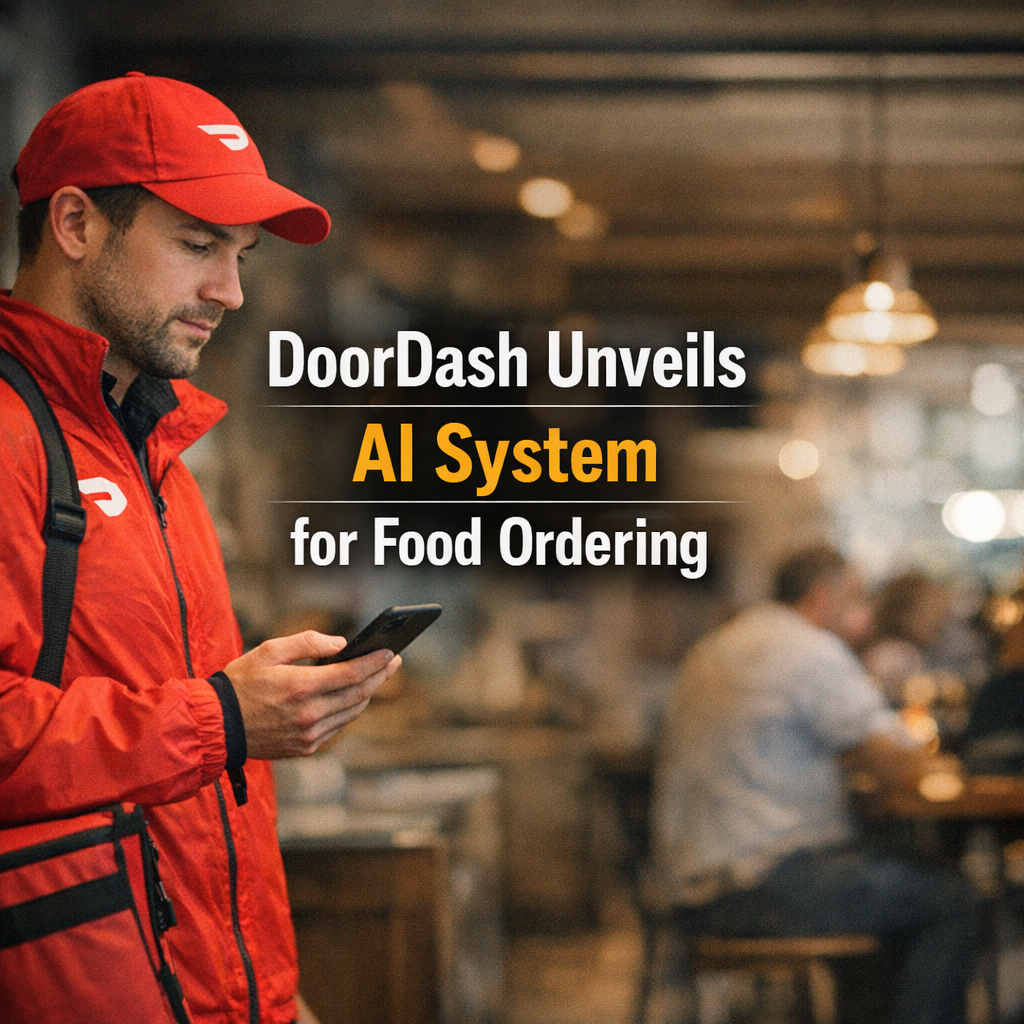
The rapid evolution of generative AI is upending the food delivery landscape, and DoorDash’s new AI-powered text ordering agent places it squarely in the center of this disruption. As customer habits shift toward seamless, conversation-driven ordering, this move signals not only technological ambition, but also fierce competition among on-demand giants to own the AI-driven dining experience.
- DoorDash debuts a conversational AI agent enabling users to place orders by text message
- System aims to streamline recommendations, handle complex requests, and drive repeat orders
- Intensifies the arms race between top food delivery companies leveraging LLMs for personalization
- Raises major implications for developers, restaurant partners, and the broader generative AI ecosystem
Key Takeaways
DoorDash’s rollout of a customer-facing AI agent isn’t just a feature upgrade—it’s a fundamental rethink of food ordering through generative AI and large language models (LLMs). By allowing users to interact with the service as if texting a knowledgeable friend, DoorDash stands to increase order frequency, improve accuracy, and deliver tailored dining suggestions. For developers and AI professionals, this launch demonstrates how edge-case handling, intent recognition, and conversational context tracking are moving from research labs into daily consumer experiences.
“Generative AI isn’t just changing how people order food—it’s redefining what convenience means in the on-demand economy.”
DoorDash’s AI Agent: From Gimmick to Game Changer
Unlike clunky, rules-based chatbots, DoorDash’s new system draws on recent advances in natural language processing and intent recognition via large language models. Users simply text what they want, using natural language—anything from “suggest something spicy for a group of four” to “I have a vegan and a seafood allergy”—and the agent analyzes restaurant offerings to filter, recommend, and build an order accordingly.
Pilot programs reveal the strength of this approach. According to reporting from TechCrunch and The Verge, early testers placed orders 30% faster and with far fewer errors than via app navigation alone. The AI can handle follow-up questions in context, manage substitutions, and even upsell based on ordering history. For Edge LLM startups, this demonstrates that real-world, revenue-driving applications are within reach—if accuracy, reliability, and seamless integration come first.
“LLM-powered ordering agents will soon be table stakes, not differentiators, for food delivery platforms competing on user experience.”
A Boon for Restaurants, But Caution Required
For DoorDash’s vast network of restaurant partners, this technology has clear upsides: fewer errors, higher order volume, and the chance to surface new menu items through AI-driven recommendations. However, experts from Restaurant Dive highlight potential risks, including menu confusion if LLMs misinterpret ingredient data or promotional items. Developers integrating with delivery APIs must double down on structuring menu metadata for safe AI handling.
Rival platforms like Uber Eats and Grubhub are already experimenting with conversational AI pilots, aiming to match or exceed DoorDash’s text-based ordering experience. Look for rapid movement among logistics, restaurant menu digitization, and third-party AI providers as the space heats up.
What Developers, Startups, and AI Pros Need to Know
- AI-powered agents must deeply understand menu taxonomies, local inventory, and allergy triggers—structuring and updating this data is a massive ongoing project
- Models powering conversational agents must be continuously fine-tuned on real customer interactions to handle ambiguous requests
- Real-time integration with order management systems is critical for minimizing latency and missed communications
- Data privacy and PCI compliance challenges will escalate as conversational agents handle sensitive user data and payment details
“Building trust in AI-driven food ordering means blending human-like convenience with bulletproof data accuracy and transaction security.”
The Competitive Context: Why Generative AI Is Now Front and Center
Major on-demand delivery players are pouring resources into generative AI as consumers demand ever-simpler interfaces. Uber Eats recently piloted a ‘chat to order’ feature in select markets, while startups like Snackpass and Lunchbox are racing to overlay AI assistants onto existing restaurant tech stacks. Private investment in conversational commerce AI is surging, surpassing $600 million in the first half of 2024 alone (per PitchBook).
For the broader ecosystem, DoorDash’s move sets a precedent: whoever best fuses personalized recommendations, error handling, and frictionless commerce will shape the next phase of the food delivery wars. This shift also presents lucrative opportunities for SaaS vendors, LLM fine-tuning specialists, and data orchestration platforms.
Looking Forward: The New Standard for On-Demand AI
Expect rapid iteration and copycat moves across the industry as conversational AI agents prove their value—not only for customers, but also for restaurants and tech providers. Those who solve for nuanced intent, local inventories, and user trust will pull ahead. DoorDash’s AI agent rollout marks just the beginning of a much broader transformation, making generative interfaces the default way people interact with services across the on-demand economy.
“The AI agent era has arrived in food delivery—startups and incumbents alike must now compete on conversation, not just convenience.”
Source: TechCrunch