As the AI ecosystem rapidly expands, OpenAI is unleashing a landmark upgrade to ChatGPT: plugins and new app-like automations that blur the boundary between conversational AI and dynamic, task-driven software. With these profound changes, AI professionals and developers face a landscape where building, deploying, and monetizing generative AI tools is faster—and more competitive—than ever. OpenAI’s moves don’t just introduce features; they set aggressive benchmarks for the next generation of AI-powered applications.
- OpenAI launches new ChatGPT plugins, offering app-like functionality and automations within its chat interface
- Developers gain access to tools for embedding interactive interfaces and custom workflows directly into ChatGPT
- This evolution vaults ChatGPT from a conversational interface to a flexible, software-like platform
- Startups and enterprises face new opportunities—and rivals—within the exploding generative AI ecosystem
- Industry experts predict intensified platform competition across LLMs, plugins, and AI app marketplaces
KEY TAKEAWAYS
OpenAI’s plugin expansion for ChatGPT is more than a feature release. By equipping developers with tools to craft interactive apps and workflows inside the world’s most popular AI, OpenAI positions ChatGPT as a rich, extensible platform—potentially rivaling legacy app ecosystems. Forward-thinking teams must now rethink go-to-market strategies, user engagement approaches, and trust dynamics as AI-driven “apps” become both programmable and widely distributable through ChatGPT.
The race has shifted: Building for the AI platform is now as urgent as building with it.
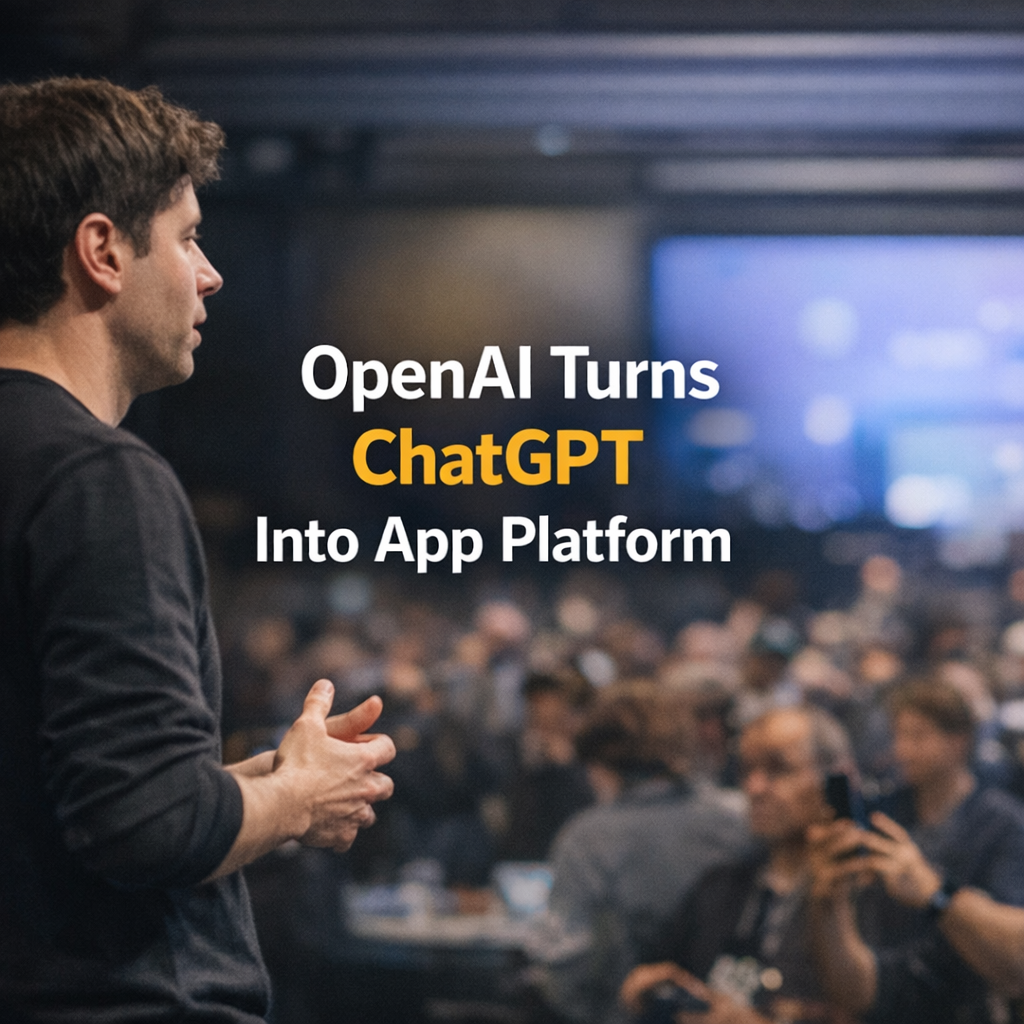
OpenAI Turns ChatGPT into an App Platform
OpenAI’s new plugin framework marks a clear inflection point. Developers and companies can now build interactive widgets, automation workflows, and mini-apps that live natively inside ChatGPT’s familiar chat interface. Users gain seamless access to everything from travel bookings to custom productivity tools—without ever leaving the conversation window.
This leap transforms ChatGPT from a static chatbot into an execution environment reminiscent of mobile and web app platforms.
ChatGPT’s leap beyond simple text responses opens the floodgates for enterprise integration, vertical solutions, and an entirely new class of AI-enhanced digital products.
Implications for Startups, LLM Toolmakers, and the Wider AI Market
For startups, the new plugin capabilities promise both acceleration and disruption. Early adopters gain a distribution edge, able to deploy and monetize within ChatGPT’s immense user base. However, legacy SaaS tools and standalone AI assistants now face risk: users may increasingly perform key workflows inside ChatGPT, bypassing traditional apps altogether.
This “ChatGPT-first” mindset puts pressure on toolmakers to integrate, not compete, with the dominant conversational interface. Early examples show plugins for enterprise systems, developer tools, consumer services, and even no-code workflow builders, all jostling for prominence within OpenAI’s ecosystem.
Developers ignoring ChatGPT’s plugin system run the risk of obsolescence as user workflows migrate to integrated chat-driven experiences.
How Plugins Work Under the Hood
OpenAI’s plugin tools grant developers access to APIs, UI components, and automation hooks inside ChatGPT. These plugins can connect to external services, handle transactions, and present dynamic responses—all orchestrated through secure authentication and permissioning flows. Already, companies like Expedia, Instacart, and Zapier have rushed to deploy early plugins, foreshadowing a surge in consumer and enterprise integrations.
Third-party AI models and APIs also leverage this system, enabling new collaboration patterns across the broader LLM and tool landscape. OpenAI’s approach ensures extensibility but also raises vital questions around data privacy, plugin quality, and trust—areas that startups and enterprises must scrutinize as adoption accelerates.
Competitive Dynamics: AI Platforms in Flux
As OpenAI pushes ChatGPT deeper into the ecosystem, competition quickly intensifies. Google has already introduced AI workspace integrations, while Anthropic and Meta bolster their own generative AI platforms with SDK releases and API improvements. Each provider is vying to anchor the next generation of “AI apps”—and with ChatGPT plugins, OpenAI stands to dominate both distribution and developer mindshare.
The next platform war won’t be about search or cloud—it’s about who owns the critical mass of intelligent in-app experiences.
Opportunities and Challenges for AI Developers
For AI engineers, product leads, and founders, OpenAI’s move redefines both opportunity and risk:
- Faster Go-to-Market: Launching AI-powered utilities and tools can now happen directly inside ChatGPT, reducing user acquisition friction.
- Greater User Reach: Plugins can access millions of ChatGPT users without separate marketing spend or distribution challenges.
- Platform Dependency: Reliance on OpenAI’s policies, revenue sharing, and ecosystem governance could squeeze independent toolmakers long-term.
Balancing speed of innovation with autonomy and diversification remains a core strategic concern as plugins proliferate.
Looking Ahead: The Next Wave of Generative AI Platforms
The rapid adoption of ChatGPT plugins sets the pace for a new era: conversational ecosystems where users discover, transact, and automate inside a single, smarter interface. For developers, being visible in OpenAI’s marketplace may soon matter as much as SEO rankings did for web startups a decade ago. As the generative AI field matures, the dividing line between “app” and “AI interface” will fade—creating both gold-rush opportunities and existential risks for incumbents and newcomers alike.
Staying relevant in the generative AI era now demands not just technical skill, but platform foresight—and relentless agility.
The launch of ChatGPT’s plugin and automation platform signals a reshaping of the software stack itself, inviting developers, startups, and enterprises to invent the next wave of intelligent, chat-native applications with global reach.
Source: TechCrunch