AI-driven innovation is reshaping global infrastructure at unprecedented speed, and nowhere is this more urgent than in the energy sector. As South Korea accelerates its ambitions to become a leader in AI and semiconductor technology, a new nationwide effort is set to overhaul how the country powers the data centers, LLMs, and advanced generative AI workloads of tomorrow. This strategic move carries outsized implications for AI development, cloud startups, and the energy-tech interface across Asia and beyond.
- South Korea launches a sweeping utility merger to confront soaring AI data center power demand
- Massive AI infrastructure buildout risks overwhelming national electricity supply without bold action
- Utilities consolidation aims for greater efficiency, renewables integration, and future-ready grid stability
- Impacts include potential energy pricing shifts for tech businesses—startups and hyperscalers alike
Key Takeaways
South Korea’s utility consolidation is more than just bureaucratic reshuffling—it marks a new stage in national preparations for the unpredictable energy needs of AI-centric industries. Developers and founders must recognize how volatility in energy policy, especially in semiconductor-centric economies, could directly affect AI compute costs, latency, and the competitive landscape for LLM deployments.
“Energy constraints will rapidly become one of the biggest bottlenecks for generative AI expansion—not just in infrastructure spend, but in access, speed, and regional AI competitiveness.”
South Korea’s decision echoes similar moves by Japan, the U.S., and EU nations to future-proof grids against the explosive power demand from large language models and AI cloud workloads. This cross-industry collaboration signals a wider trend: AI and energy are becoming inseparable strategic priorities.
Why South Korea Is Merging Five Utilities
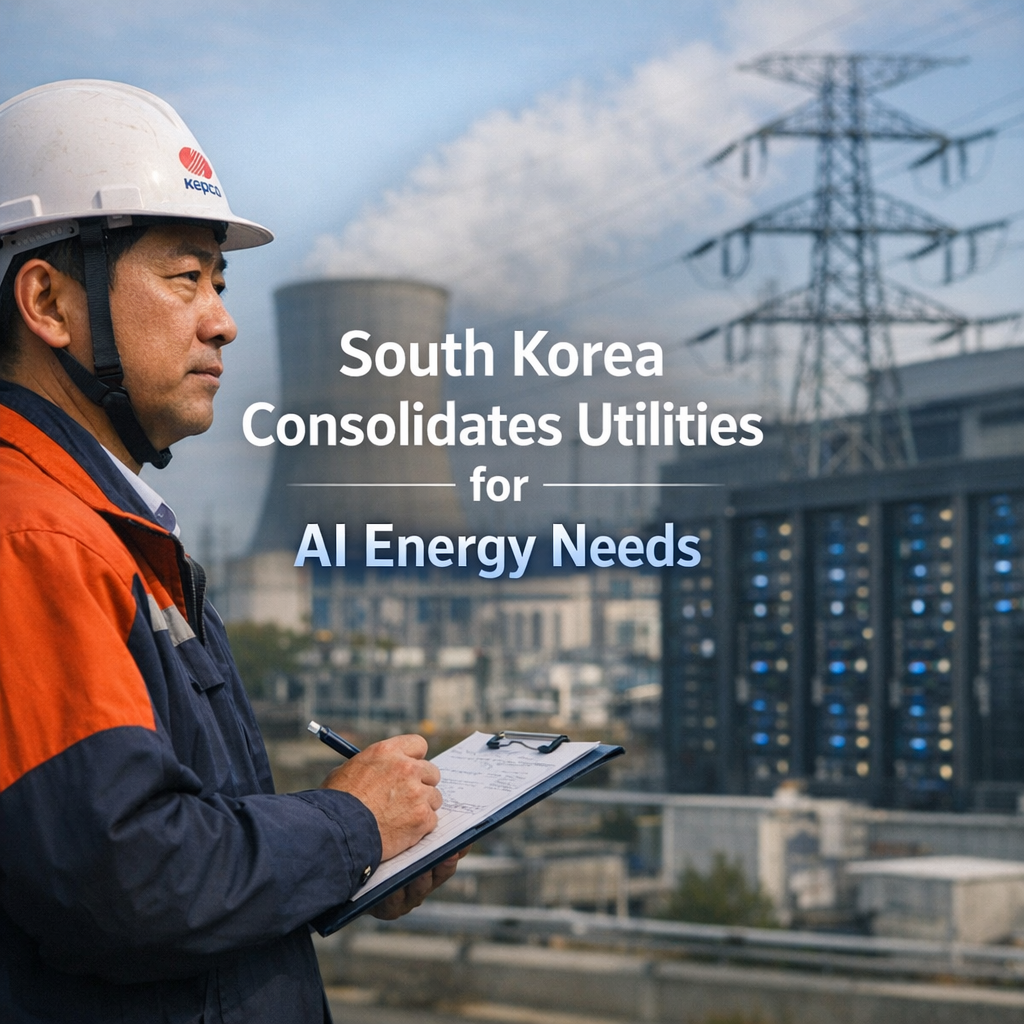
The country’s five state-run electricity companies will merge into one unified entity. This consolidation aims to streamline power generation and distribution, crucial as hyperscale data centers—driven by LLM training and generative AI inferencing—threaten to outpace energy supply. South Korea projects electricity demand surging by over 14% within a decade, led largely by semiconductor foundries and AI infrastructure investments from tech giants like Samsung, SK Hynix, and Naver.
“Centralized energy management lays the groundwork for rapid scaling in AI chip manufacturing and model training capacity, especially as global competition for compute intensifies.”
By uniting these state utilities, South Korea targets faster grid enhancements, reduced administrative delays, and more agile integration of renewables. The government explicitly links this move to their goal of doubling AI data center capacity by 2030.
The AI Energy Crunch: A Global Blind Spot
AI—particularly LLMs and generative models—demands massive computational resources. Analysts at Bloomberg and the International Energy Agency report that global data center power usage could more than double by 2026, with AI accounting for a significant share. In South Korea, recent government data shows that data centers alone could consume 8% of the nation’s electricity output in coming years, a figure previously unimaginable.
In the U.S., Microsoft and Amazon have both announced billion-dollar investments in green energy to meet the needs of generative AI products, while Japan recently advanced $4 billion for energy upgrades to support its own AI and chip ambitions. South Korea’s unified utility move is not just about capacity, but agility; as more LLMs shift from training to inference and edge deployment, demand patterns may become both unpredictable and spiky.
Implications for AI Startups and Developers
Power reliability and cost now join cloud compute as primary risks in project calculus for every AI startup, LLM developer, or scaling SaaS. The new unified utility entity is expected to negotiate more directly with tech firms, potentially streamlining infrastructure expansion—but also creating new dependencies on government policy and pricing. Early reports indicate that electricity tariffs for power-intensive industries could see adjustment, amplifying both opportunity and risk for AI infrastructure ventures.
“Developers and startups scaling LLM workloads must monitor utility policy and grid modernization as closely as GPU supply—energy is now a core component of AI product strategy.”
Sustainability and the Race for Green AI
With this consolidation, South Korea seeks a foundation for adding more renewables to the grid, reducing the carbon footprint of rapidly proliferating AI deployments. Given mounting investor pressure for sustainable AI, this creates competitive leverage for companies operating in regions with advanced, green, and reliable grids. Government officials say the new utility model should accelerate both grid modernization and investment in smart grid tech, enabling both environmental gains and higher speed of AI infrastructure rollout.
Looking Ahead: The AI-Powered Power Grid
As the AI revolution collides with infrastructure limits worldwide, South Korea’s proactive utility merger signals a new reality: the future of LLMs and generative AI may be determined as much by national energy strategy as by advances in silicon or model design. Stakeholders across the AI spectrum—from independent developers to global hyperscalers—must now navigate an industry where access to reliable, efficient power is a core competitive advantage.
“The most successful AI ecosystems of the 2030s will be built where energy and compute scale together—South Korea’s move raises the stakes for the world’s digital economies.”
Expect other nations to watch closely, with similar integrations likely as AI power demands soar globally. Unified energy strategy may soon become a cornerstone of every ambitious national AI roadmap.
Source: Nikkei Asia