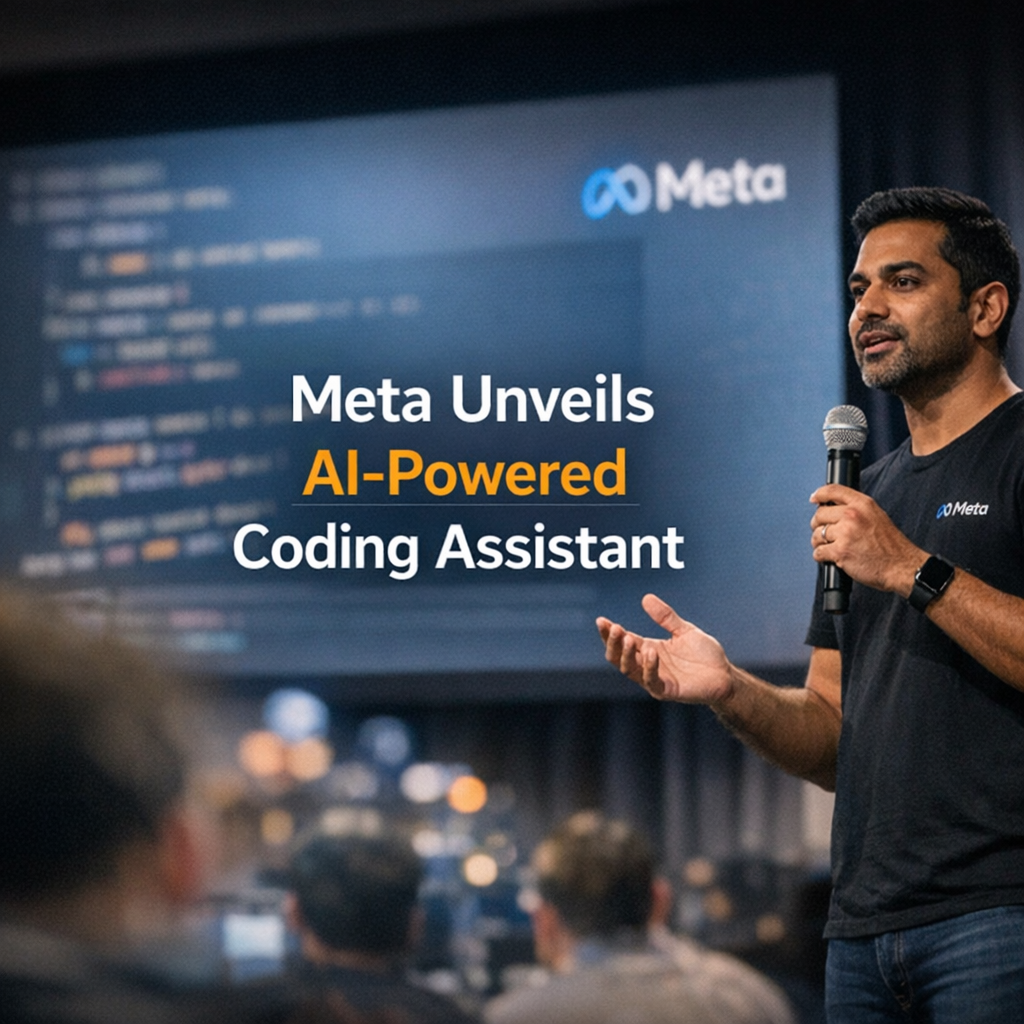
Developer productivity and AI-powered automation are advancing rapidly as companies compete to deliver faster, more efficient coding tools. The latest breakthrough comes from Meta AI, which has unveiled Muse-Spark 1.3—a new agentic coding model that dramatically reduces compute costs. At a moment when LLMs are reshaping the software industry, Muse-Spark 1.3’s jump in efficiency signals a sharp turn toward leaner, more accessible AI-driven development workflows.
- Muse-Spark 1.3 cuts both API tool calls and token usage, addressing a core bottleneck facing current generative AI coding agents.
- By slashing compute demands, Muse-Spark aims to be more resource-friendly for startups and enterprises deploying agentic LLMs in production.
- Meta’s latest model nudges industry standards for code generation and tool-use optimization in developer automation.
Key Takeaways
Meta’s Muse-Spark 1.3 makes generative AI coding agents easier to deploy by lowering costs and computational overhead—a strategic leap in agentic LLM design.
- 20% fewer external tool calls: Developers pay less in API costs and boost response speed by reducing model reliance on other systems.
- 25% drop in token consumption: Lower token usage enables smoother, cheaper integration of Muse-Spark 1.3 in cloud and on-prem environments.
- Improved agentic reasoning: Muse-Spark 1.3 leverages better planning and execution, strengthening contextuality in coding tasks.
Lean Agentic Models: A Rising Industry Benchmark
Reducing tool calls and token usage isn’t just a technical win—it’s a business imperative. Startups running agentic coding models often struggle with API pricing and latency when building AI-powered developer tools. Muse-Spark 1.3 confronts these obstacles by significantly trimming the compute burden linked to each generated result.
When agentic coding models cut unnecessary tool hops, developers gain more speed, predictability, and freedom to automate complex workflows at scale.
Meta’s approach aligns with broader trends in model optimization. OpenAI’s GPT-4 Omni, for example, has made similar efficiency moves in multi-modal reasoning and cost containment. Google’s AlphaCode 2 also aims to push the limits of compact, specialized coding LLMs. Muse-Spark 1.3 pushes Meta to the frontlines, delivering measurable progress in aligning model performance with the needs of professional creators.
Impacts for Developers, Startups, and AI Engineers
Fewer Multistep Handoffs
Earlier LLM-powered agents often juggled between multiple APIs, extension environments, and search tools to complete code synthesis or debugging. Each handoff not only added latency but risked compounding errors and ballooning costs.
Streamlined models like Muse-Spark 1.3 reduce operational drag, allowing coders to harness LLMs for end-to-end workflows without breaking the bank.
Muse-Spark 1.3’s optimizations are particularly relevant for open-source toolchains and cloud platforms looking to embed intelligent agents for code review, bug fixes, or automated documentation.
Major Token Reduction Brings Economic Savings
Every token generated by an LLM translates directly to infrastructure consumption and, in commercial settings, billable expenses. By cutting token requirements by a quarter, Muse-Spark 1.3 opens the door for companies to deliver always-on coding assistants without incurring runaway costs.
Top AI development tool providers—including GitHub Copilot and Amazon CodeWhisperer—have faced scrutiny over compute costs at scale. Muse-Spark 1.3’s efficiency improvements reframe the economic stake, giving CTOs and platform architects more budget leeway for experimentation and deployment.
Deeper Agentic Reasoning
Muse-Spark 1.3 showcases a shift from shallow code suggestion toward more thoughtful, context-aware agentic behavior. Internally, improvements in reasoning align with a new generation of compositional agents—systems able to plan, assess, and execute tasks with minimal explicit supervision. This is pivotal for workflow automation, especially when linking together disparate APIs, databases, and testing suites in enterprise environments.
According to multiple industry reviewers and GitHub benchmarks, more context-savvy agentic models furnish developers with greater trust and flexibility, which accelerates iterative software delivery and innovation.
Competitive Landscape and Industry Momentum
Meta’s release comes amid fierce competition to dominate the agentic code generation market. Google, OpenAI, and Microsoft have all prioritized tooling and agent frameworks designed to shrink latency and costs—hallmarks of enterprise adoption.
As generative AI coding models become integral to continuous integration pipelines, efficiency and contextuality will define the winners in this high-stakes race.
The timing of Muse-Spark 1.3 coincides with new model releases from startups like Magic.dev and open-source initiatives focused on replicability and self-hosting. The emphasis on agentic architectures underscores a shift from pure code suggestion toward orchestration of developer environments—a trend poised to accelerate as LLMs mature.
The Road Ahead: Opportunities and Challenges
Muse-Spark 1.3’s efficiency gains set a new standard for practical, deployable coding agents. However, model optimization alone won’t guarantee widespread adoption. Challenges around security, orchestration, and integration with legacy developer toolchains remain. As open agent frameworks mature and AI orchestration patterns evolve, the market will demand not just clever models but truly seamless, cost-effective solutions embedded across cloud and on-prem stacks.
Meta’s progress with Muse-Spark 1.3 points to a near future where AI-driven software engineering becomes integral to the developer workflow—streamlining coding, enhancing productivity, and setting new bars for LLM deployment efficiency at scale.
Source: MarkTechPost