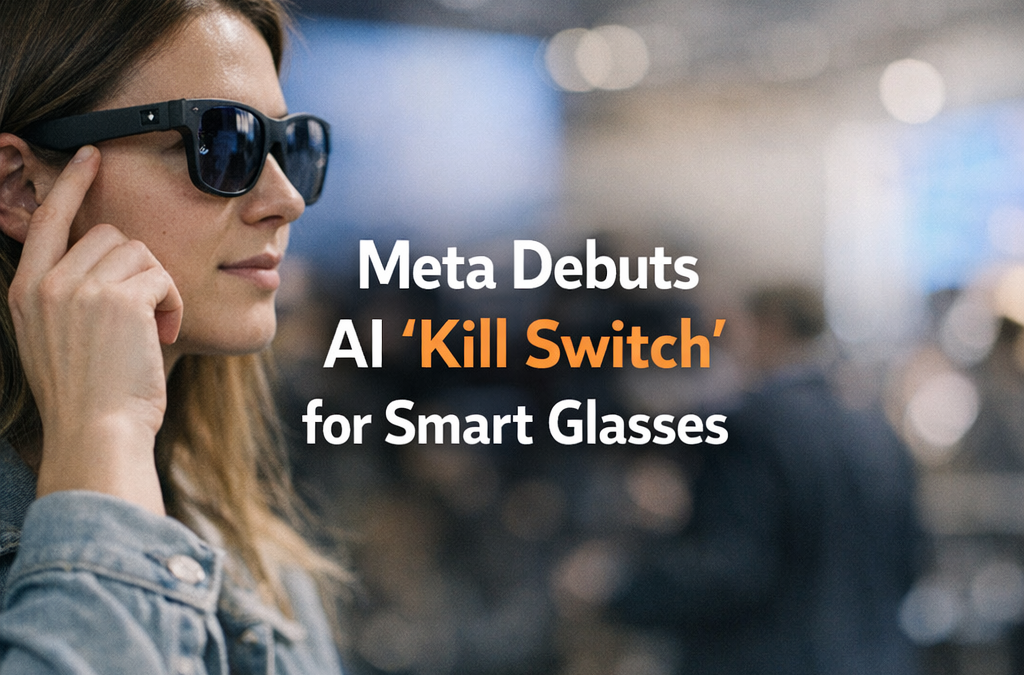
Meta continues to lead the generative AI wearables race, unveiling a new AI-powered conversation enhancement feature for its smart glasses, signaling a major leap for real-world AI applications in augmented reality hardware.
Key Takeaways
- Meta’s smart glasses now use AI to filter and clarify speech in noisy environments.
- The upgrade leverages advanced on-device large language models (LLMs) for real-time audio processing.
- This marks a step toward seamless AI-integrated augmented reality experiences.
- Implications expand across accessibility, communications, and next-generation wearable tools for developers and startups.
Meta’s AI Glasses: Advancing Voice Clarity with LLMs
Meta’s latest smart glasses feature “AI-powered Conversation Mode,” a breakthrough that uses generative AI and sophisticated LLMs to boost speech intelligibility in loud settings. By actively detecting, isolating, and amplifying human voices, the glasses deliver clearer conversations even in bustling spaces like cafes or conferences.
Meta’s integration of real-time LLM audio processing into consumer wearables sets a new benchmark for AI-powered accessibility and ambient computing.
How the Technology Works
The AI models onboard the smart glasses process incoming audio, recognize speech patterns, and dynamically suppress environmental noise. According to TechCrunch and additional reports from The Verge and Wired, Meta employs custom neural networks optimized for fast, low-latency inference on device. This privacy-first approach keeps user data local and unlocks new real-time interaction capabilities.
Implications for Developers and Startups
Enhanced AI hardware APIs: The new feature hints at accessible hardware APIs enabling developers to build bespoke audio and language tools on top of Meta’s platform.
Competition and opportunity: Google and Apple’s AR divisions also race to deploy AI-powered audio enhancement, but Meta’s deployment gives it early-mover advantage.
Startups can now prototype “AI hearables” and accessibility tools with unprecedented fidelity, using Meta’s glass hardware as live testbeds.
Shaping the Future of Smart Wearable AI
Generative AI in wearables will redefine real-time translation, personal assistants, and social interactions. For AI professionals, Meta’s approach—blending on-device edge inference with powerful language processing—underscores a broader industry pivot toward locally-processed, privacy-respecting generative AI. This shift promises lower latency, better user autonomy, and new frontiers for innovation in assistive technology and augmented reality.
AI-powered smart glasses signal a paradigm shift—from standalone virtual assistants to proactive, context-aware ambient computing.
Looking ahead, developers, startups, and AI researchers should monitor Meta’s developer initiatives, as the ecosystem opens the door to custom generative AI applications in wearables, from healthcare to immersive communications.
Source: TechCrunch