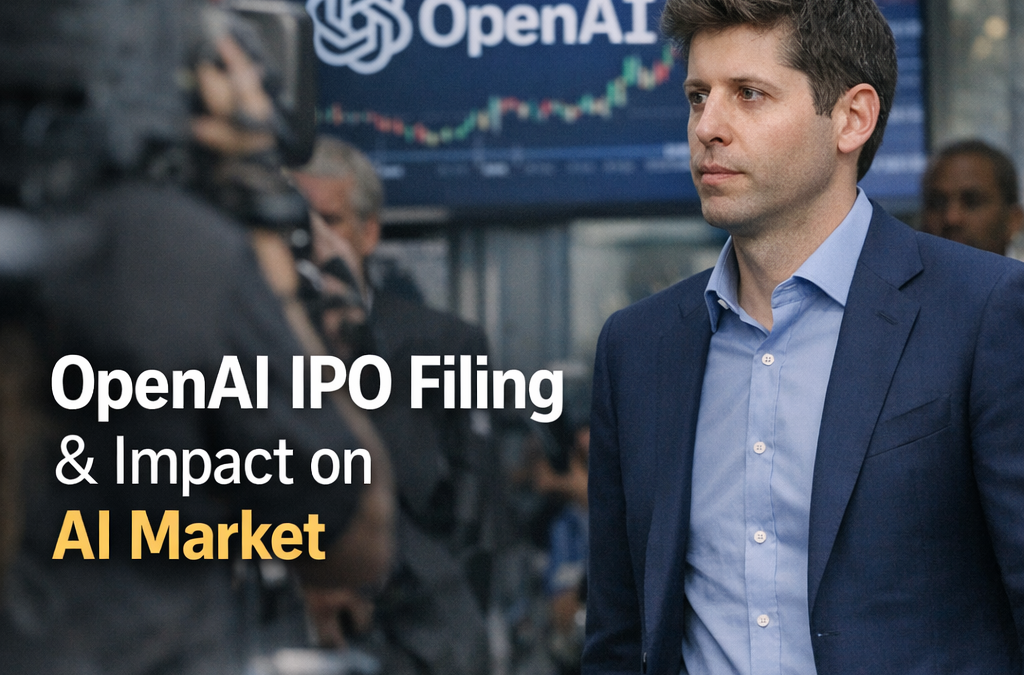
OpenAI has announced a significant enterprise partnership just days after sounding an internal “code red” over Google’s rapid advancements in artificial intelligence.
The generative AI space is heating up as major players accelerate deployments and sharpen competition.
Key Takeaways
- OpenAI secured a major unnamed enterprise client, demonstrating its growing B2B market traction.
- Internal “code red” at OpenAI shows the company directly acknowledges Google as a formidable AI competitor.
- Rapid generative AI adoption in enterprise is redrawing the battle lines for cloud, productivity, and custom LLMs.
- Developers, startups, and tech professionals must stay agile as the ecosystem shifts toward integrated AI solutions and vendor lock-in risks intensify.
Surge in Enterprise AI Adoption
OpenAI’s latest enterprise win underscores how businesses increasingly choose integrated large language models (LLMs) for productivity, automation, and innovation.
Though OpenAI has not disclosed the client, industry analysis (CNBC, Reuters) suggests Big Tech competitors—Amazon, Microsoft, Google—are all fiercely pushing generative AI APIs and custom model offerings to lure global businesses.
“OpenAI’s commercial momentum signals a pivotal shift—generative AI is no longer hype; it is table stakes for digital transformation in the enterprise.”
OpenAI vs. Google: The Escalating Race
OpenAI’s internal “code red” reportedly addresses mounting pressure from Google, whose new Gemini AI models continue to evolve rapidly. Just last week, Google showcased enterprise-grade multimodal features and tighter Google Workspace integration (The Verge).
OpenAI’s leadership recognizes that, beyond model accuracy, deployment scale, and trust, platform interoperability and speed-to-market will be critical differentiators.
“The current AI arms race makes it imperative for developers and startups to anticipate fast-changing APIs, shifting SDKs, and ever-evolving LLM ecosystem incentives.”
Implications for Developers, Startups, and AI Professionals
The B2B AI stack is fracturing as enterprises demand greater customizability, privacy controls, and on-prem or hybrid deployment.
For startups building on LLM APIs, platform risk grows; every new enterprise win for OpenAI or Google means stricter integration requirements and possibly reduced optionality.
- Developers should proactively adapt workflows to support multi-cloud and model-agnostic architectures.
- Startups that can abstract away vendor lock-in or offer higher trust and compliance features may outmaneuver larger, less nimble incumbents.
- AI practitioners should closely track real-world enterprise successes and focus on operational LLM deployments over mere benchmarks.
Enterprise AI decisions now shape the future of software—only those who evolve with the ecosystem will capture the next wave of opportunity.
The Road Ahead
As OpenAI, Google, and major tech vendors double down, expect more public enterprise wins, tighter model integration across productivity platforms, and increased pressure on independent AI tool vendors.
The generative AI landscape in 2024-2025 will demand adaptability, technical depth, and careful ecosystem navigation.
Source: TechCrunch