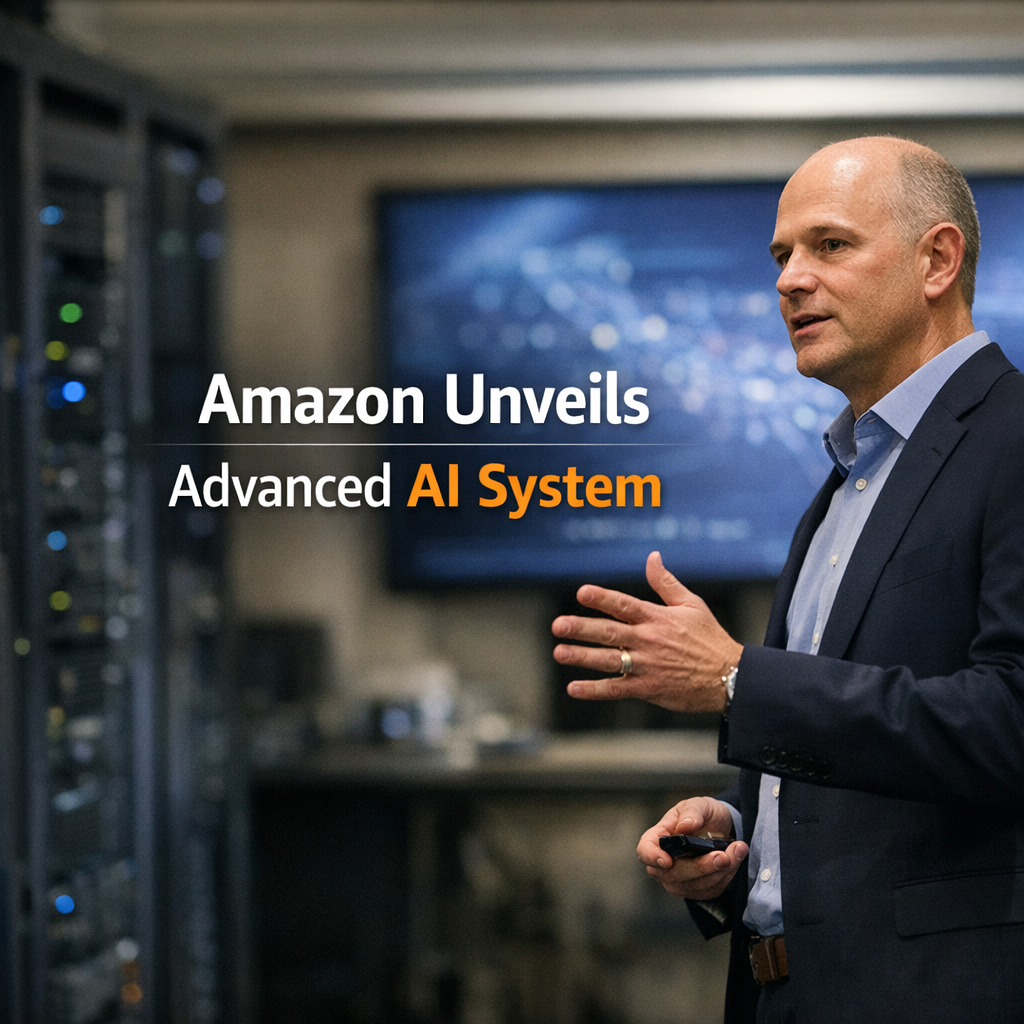
Huawei’s announcement of its new agentic AI systems signals an ambitious leap in the evolution of large language models (LLMs) and multi-agent AI technologies.
As global tech giants race to redefine productivity and automation, Huawei’s latest move reflects China’s accelerating push into generative AI domains, offering fresh opportunities and challenges for developers, enterprises, and AI professionals.
Key Takeaways
- Huawei unveiled a new agentic AI system aiming to rival top global LLM providers with a focus on agent-based architectures.
- The company emphasizes application-level innovation, especially in telecommunications, manufacturing automation, and government operations.
- Huawei’s platform integrates with its own Ascend AI chips and models, optimizing for secure, sovereign, and high-performance deployments.
- China’s generative AI market continues to attract major players, intensifying the global competition for LLM dominance.
- The advancement of multi-agent AI systems will drive new real-world use cases and technical challenges for the ecosystem.
Huawei Pushes Agentic AI to the Forefront
During the 2024 World Artificial Intelligence Conference (WAIC), Huawei introduced its next-generation agentic AI system, designed to enable a new breed of software agents that can autonomously analyze, plan, execute, and adapt to complex enterprise tasks.
“Huawei’s agentic AI aims to fundamentally transform organizational workflows with secure, customizable AI agents operating in dynamic, real-world settings.”
What Makes Agentic AI Different?
Unlike traditional LLM deployments, agentic AI systems deliver end-to-end task automation and orchestration by leveraging multiple specialized agents.
According to Huawei, this approach allows granular control over complex workflows, drawing inspiration from advancements like OpenAI’s GPT-4-based agents and Google’s Gemini launch.
Multi-agent architectures can dramatically broaden the potential of generative AI, as they are capable of dividing and conquering tasks at scale.
“Multi-agent systems hold the key to moving beyond conversational chatbots to enterprise-grade automation, with implications for supply chain management, smart cities, and telecom operations.”
Technical and Strategic Implications
Huawei’s agentic AI framework is architected to run seamlessly on its proprietary Ascend AI chips and PanGu LLM — a crucial move for sovereign AI infrastructure amidst escalating geopolitical tensions concerning data privacy and computational sovereignty (Reuters, TechCrunch).
High compatibility with current data centers and edge deployments offers strategic flexibility for system integrators and developers.
For developers, the agent-based API and developer toolkit promise easier orchestration of complex AI workflows.
Startups stand to benefit from access to highly specialized, task-oriented agents that can unlock new vertical applications in manufacturing, government automation, and telecommunications.
AI professionals should note that agentic architectures may require new skills for workflow design, testing, and optimization, as integrating and supervising multiple autonomous agents increases risk and complexity.
Market Reaction and the Road Ahead
Huawei’s entry intensifies competition in China’s burgeoning generative AI landscape, where Baidu, Alibaba, and SenseTime are already advancing LLM efforts.
Pulling from both domestic research and global trends, Huawei bets that its vertical expertise—especially in telecom—will give it a competitive edge in actionable, high-impact AI deployments.
“Agentic AI will redefine enterprise software by enabling persistent, proactive agents capable of transforming traditional business processes.”
Observers anticipate that multi-agent systems will steadily push the boundaries of what enterprise AI can achieve, but also raise fresh questions about safety, control, and trustworthiness that all stakeholders must address.
Conclusion
Huawei’s unveil of agentic AI marks a strategic inflection point for the global generative AI ecosystem. With new paradigms for modularity, autonomy, and application-specific intelligence, the ground is shifting for developers, startups, and enterprises worldwide to try, integrate, and compete at a higher level of automation.
Source: Artificial Intelligence News, TechCrunch