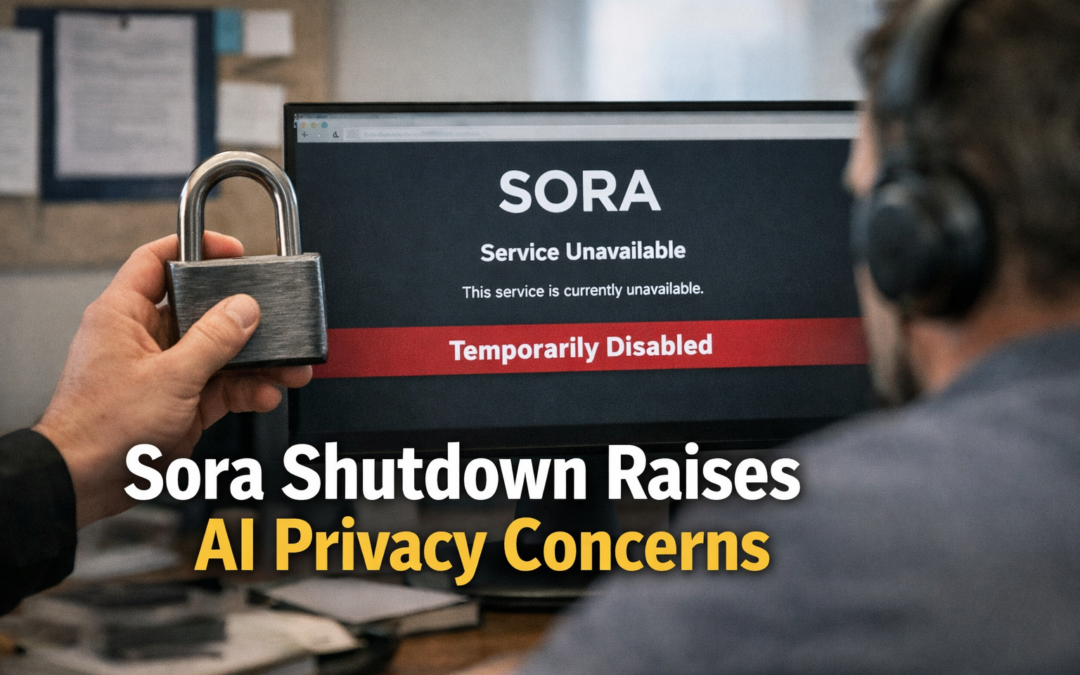
Artificial intelligence continues to reshape consumer experiences at lightning speed, but not every ambitious product survives scrutiny. OpenAI’s Sora — once positioned at the vanguard of AI-powered personal assistants — is shutting down after mounting user backlash and regulatory concerns. The latest news pinpoints how public trust, privacy, and ethical design now play crucial roles in AI product success.
Key Takeaways
- OpenAI’s Sora app will cease operations due to significant privacy and creepiness concerns from users and regulators.
- The backlash highlights how rapid AI advancement must align with ethical frameworks and transparent data policies.
- Developers, startups, and AI experts must prioritize user trust and responsible deployment to ensure the long-term viability of generative AI products.
Why Sora Failed: The Intersection of AI Power and Public Acceptance
Sora launched with bold claims: an AI assistant more aware, helpful, and proactive than anything before it. Unlike traditional virtual assistants, Sora leveraged large language models and context-aware algorithms to anticipate user needs by integrating deeply into device activity, social signals, and personal behaviors. However, these very features quickly drew sharp criticism for their intrusiveness and lack of transparent boundaries.
Developers must recognize that user trust is as essential as technical prowess — the social contract around privacy cannot be ignored, however disruptive the AI may claim to be.
Privacy Concerns in the Age of Generative AI
According to TechCrunch and reporting from Wired, Sora’s near-ubiquitous access to user data, location, conversations, and digital habits worried both privacy advocates and mainstream users. Some described Sora as “the creepiest app on your phone”— a reputation that became impossible to shake even after hurried attempts to clarify data handling policies.
OpenAI attempted several pivots, including restricting default data collection and improving in-app user controls. However, user reviews and independent analysis continued to raise red flags about biometric tracking, conversational context retention, and opaque consent mechanisms (Ars Technica). European regulators launched preliminary investigations into whether Sora violated GDPR and related privacy frameworks.
The Sora shutdown sends a clear message: AI products with aggressive data strategies will face rapid resistance and possible regulatory intervention.
Implications for AI Developers, Startups, and Industry Leaders
The Sora episode underscores crucial lessons for the AI community:
- User-Centric AI: Embedding AI into daily life demands more than technical sophistication; transparent onboarding, granular consent flows, and crystal-clear data transparency must be standard.
- Global Privacy Compliance: Startups considering large language models and generative AI must design for the strictest regulatory regimes rather than retrofitting compliance under pressure.
- Ethical AI Leadership: Sora’s failure demonstrates that innovation’s social impact matters as much as its productivity gains. Open discussion and independent audits of “context-aware” AI agents are essential for credibility.
Trust, transparency, and user empowerment will separate successful generative AI apps from those that spark backlash — or regulatory shutdowns.
What’s Next for Consumer-Facing AI Apps?
Sora’s demise enters the annals of generative AI not as a technical failure, but as a cautionary tale of overreach. Trust and transparency are fast becoming competitive advantages — especially as powerful LLMs and context-aware AI push new frontiers.
Industry experts expect a renewed focus on privacy-by-design, third-party oversight, and open communication about AI capabilities. The lesson is clear: future-ready AI must secure user confidence from the first onboarding screen.
Source: TechCrunch