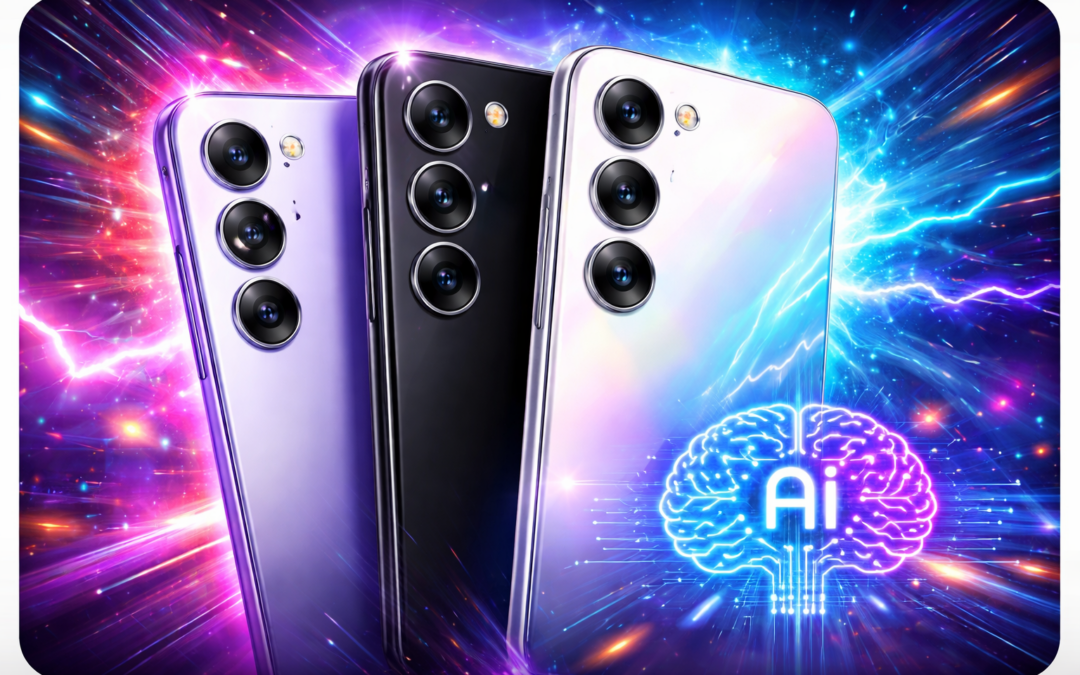
Samsung has officially unveiled the Galaxy S26 series, positioning it as the most intuitive Galaxy AI phone to date. With upgraded on-device AI, generative features, and enhanced security, the S26 series stakes a clear claim in the rapidly evolving AI smartphone market. The announcement signals major implications for developers, AI professionals, and tech startups as mobile AI capabilities rapidly advance.
Key Takeaways
- On-device generative AI transforms user interactions: The S26 leverages Samsung Gauss and integrated LLMs to deliver fast, contextual responses without cloud dependency.
- Cross-app AI automation expands productivity: Apps like Notes and Gallery harness multi-modal models for smarter organization and real-time recommendations.
- Premium security for AI data: Samsung Knox Matrix adopts new zero-trust, hardware-based authentication for sensitive on-device models.
- Developers gain access to new AI SDKs: Third-party apps can natively integrate with Galaxy AI, opening an ecosystem for custom AI features.
- S26 series intensifies competition in AI phones: Samsung directly challenges Google’s Pixel AI suite and Apple’s anticipated AI upgrades.
Samsung S26 Series: Generative AI Goes Mainstream
The Galaxy S26 series debuts with on-device generative AI integrated via Samsung’s proprietary language model, Samsung Gauss, and also supports cloud-based models like Google Gemini. This means users can perform real-time language translation, image generation, and complex assistant tasks locally, without sending data to remote servers.
“Galaxy S26 delivers instant generative AI capabilities, enabling privacy-first, offline processing for speech, images, and text.”
According to The Verge and CNET, Samsung’s focus on hybrid AI (combining both on-device and cloud inferencing) is a direct response to user demand for faster, private AI features. Users can rely on the AI for summarizing notes, editing photos, composing messages, and even generating custom emojis—all with minimal latency.
Implications for Developers and Startups
The S26 series introduces the Galaxy AI SDK, allowing third-party developers to create apps that leverage on-device AI models and multimodal capabilities. This includes features like semantic search, smart reply, and contextual app automation, lowering barriers for startups to innovate in the mobile AI space.
“Samsung’s open AI SDK positions Galaxy phones as a powerful platform for next-gen AI applications beyond the default ecosystem.”
For AI professionals, integrating generative models directly at the hardware level offers opportunities to experiment with low-latency applications that respect privacy, an area where regulatory pressures are growing. Startups can build new consumer and enterprise tools that benefit from real-time vision and language processing, targeting Samsung’s massive user base.
Enterprise-Grade Security for AI Workloads
With growing concerns over AI data privacy, the S26’s enhanced Knox Matrix delivers hardware-enforced, zero-trust secure enclaves for AI inference and model storage. According to Android Authority, this heightened security model appeals to both regulated industries and privacy-minded consumers, setting a new standard for mobile AI safety.
Industry Analysis: The AI Smartphone Arms Race
The Galaxy S26 series launch puts competitive pressure on Apple and Google. Apple is expected to reveal significant AI integrations at its 2024 WWDC, while Google’s latest Pixel devices already lean heavily on Gemini-powered experiences. Samsung’s move to open up its AI ecosystem via SDKs could become a differentiator for developer loyalty, while hybrid AI deployments address the growing demand for both speed and privacy in generative AI features.
“Opening the Galaxy AI ecosystem to developers accelerates generative AI innovation across Android, challenging entrenched competitors.”
In summary, the Galaxy S26 marks a pivotal leap for AI-enabled smartphones. Developers, startups, and enterprise IT leaders should closely watch Samsung’s new SDK ecosystem and evolving user expectations, as on-device AI redefines how consumers interact with their devices — and how future mobile apps are built.
Source: Samsung Newsroom
Additional sources:
The Verge,
CNET,
Android Authority