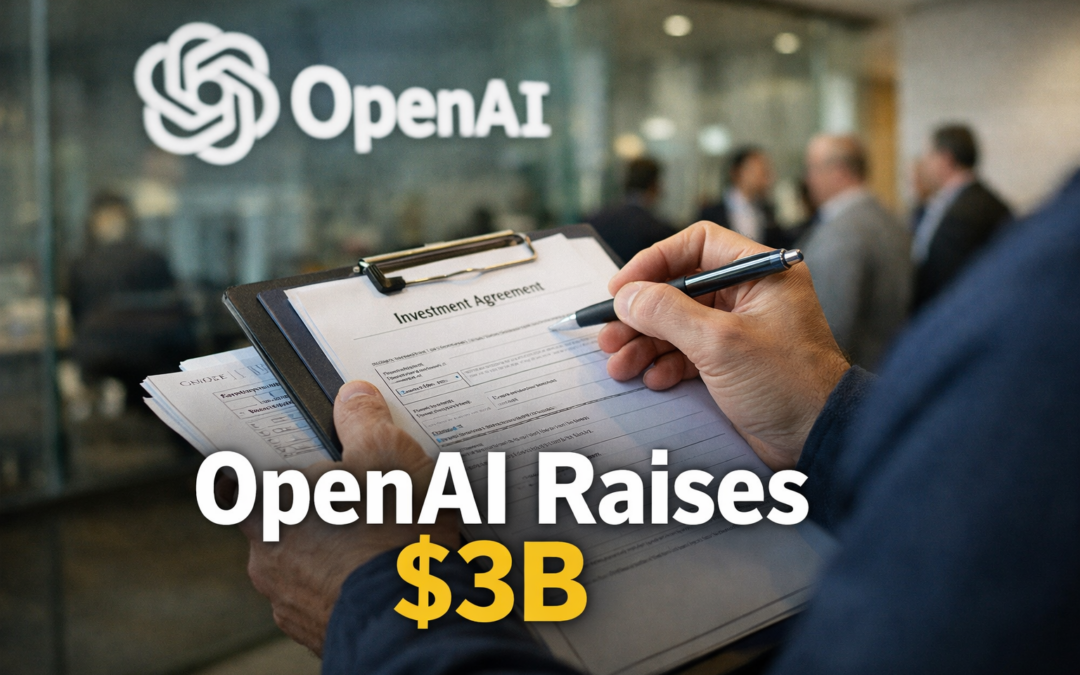
OpenAI has secured an extraordinary $3B from retail investors in a $12.2B funding round, signaling robust public confidence in generative AI and large language models (LLMs). This unprecedented capital injection not only elevates OpenAI’s private valuation but also may redefine the dynamics of AI startup funding, democratizing access and accelerating real-world AI applications.
Key Takeaways
- OpenAI raises $3B from retail investors in a record-breaking $12.2B fundraise.
- Retail participation in a late-stage, high-profile AI startup is a rare industry move.
- This funding could speed up generative AI model development and broaden adoption.
- OpenAI’s public interest precedes any IPO, setting new precedents for startup fundraising.
- Developers and AI professionals may soon see more open, accessible tools and platforms.
OpenAI’s Unprecedented Funding Round
OpenAI’s latest funding round stands out for its inclusion of retail investors, not just institutional money. According to TechCrunch and corroborated by Reuters reports, the company’s strategy drew over $3B from non-institutional participants, out of a colossal $12.2B total raise. This move allows everyday investors direct exposure to the bleeding edge of generative AI—an opportunity typically restricted to venture capital and private equity funds.
“OpenAI’s embrace of retail funding marks a turning point for AI startup financing, opening doors for broader, direct tech investment.”
Analysis: What This Means for AI, Developers, and Startups
This retail-inclusive strategy reflects significant public belief in the long-term potential of LLMs and generative AI products. For developers and startups, this may signal a faster pace of innovation—OpenAI can now deploy more capital into research, product scaling, and possibly open-sourcing initiatives.
Both SiliconANGLE and Bloomberg highlight that such access is practically unheard of at this funding stage, making OpenAI’s approach a possible template for future AI ventures seeking more democratic cap table structures. The underlying implication: AI professionals and developers could soon see more open platforms, sandbox environments, and application programming interfaces available for experimentation and customization.
“Greater retail involvement could accelerate AI adoption across industries, empowering a wider range of participants to shape AI’s future.”
Furthermore, increased coffers may mean faster model iterations, product launches, or even price reductions for API access, which startups and independent builders will closely watch. Companies like DeepMind and Anthropic may feel competitive pressure to match or counter OpenAI’s engagement of non-institutional capital.
Shaping the AI Funding Landscape
This funding event could serve as a precedent for other generative AI innovators, especially as regulatory bodies worldwide debate the governance of powerful LLMs. Startups in related fields—such as machine learning infrastructure, model training, and AI-driven software—may seek similar capital strategies, resulting in more dynamic, community-driven growth.
For AI developers, the signal is clear: new funding avenues may soon align incentives more directly between creators, users, and the organizations building tomorrow’s AI models. OpenAI’s bold move heightens expectations for transparency, innovation velocity, and public participation in the next phase of generative AI.
Source: TechCrunch