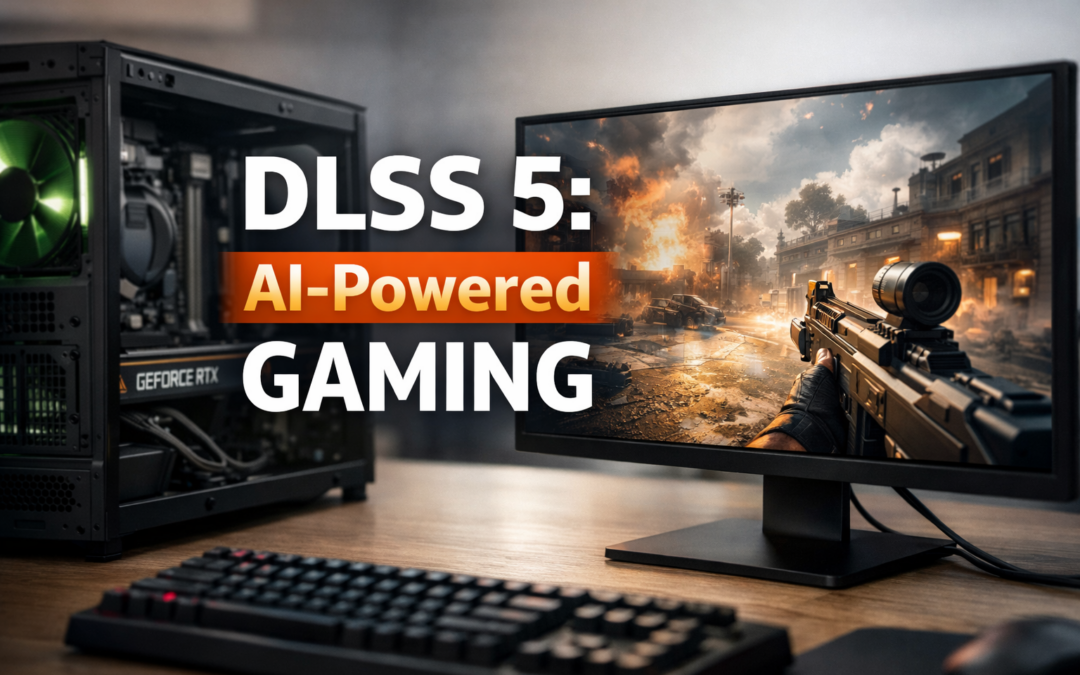
AI continues to reshape the gaming industry and beyond. Nvidia’s newly announced DLSS 5 technology leverages generative AI to deliver unprecedented photo-realism in real-time graphics, while its underlying capabilities signal major shifts for applications far outside of gaming.
Key Takeaways
- Nvidia DLSS 5 harnesses generative AI to enhance photo-realism in video games, dramatically boosting image quality and frame rates.
- The technology is engineered for real-time upscaling and motion generation, leveraging Nvidia’s latest RTX GPUs and AI cores.
- Nvidia sets its sights on broad industry applications, including film, simulation, design, and virtual production.
- DLSS 5’s advancements showcase how generative AI can deliver true-to-life experiences, hinting at the future convergence of gaming and professional visualization.
- Developers and startups now have expanded toolsets to leverage AI-driven graphics for immersive environments, real-time content creation, and more efficient pipelines.
DLSS 5: Generative AI Pushes Photo-Realism to New Levels
Nvidia’s DLSS (Deep Learning Super Sampling) has evolved with each generation. With the introduction of DLSS 5, released March 2026, Nvidia taps into generative AI models that synthesize crisp, detailed frames far beyond native rendering. This deep neural network, running on RTX GPUs, predicts scene detail and motion with remarkable accuracy—translating to higher frame rates and more life-like visuals.
Nvidia’s generative AI now generates entire frames in real time, setting a new bar for visual fidelity in both games and professional rendering.
Unlike previous iterations, DLSS 5 integrates with Nvidia’s new neural rendering pipeline, which not only upscales images but also generates novel pixels based on scene context and learned visual patterns (as covered by The Verge). Early hands-on reports highlight photorealistic lighting, ultra-sharp textures, and dynamic motion that rivals pre-rendered CGI.
Beyond Gaming: Implications for Developers and Industries
As Nvidia confirms, DLSS 5 transcends traditional game rendering. The same generative AI foundation can power virtual production for movies, architectural visualization, and industrial design, allowing for interactive, cinematic-quality graphics in real time.
Generative AI-driven pipelines promise to cut content creation time and computational costs while unlocking new creative possibilities.
For developers, Nvidia supplies a robust SDK compatible with major engines such as Unreal Engine 5 and Unity. Startups building in AR/VR, metaverse platforms, or digital twins gain the ability to deliver hyper-realistic visuals without ballooning hardware requirements. AI professionals can embed these models for live simulation and instant visualization—previously restricted to offline workflows due to render times.
Real-World Adoption and Future Prospects
Early adopters are already porting AAA game titles and media applications to DLSS 5, and Nvidia expects broader industry take-up as generative AI-powered rendering matures. Expert commentators at GamesIndustry.biz highlight the knock-on effects: more accessible content pipelines, democratized visual storytelling, and cross-sector disruption.
The fusion of generative AI and real-time rendering could redefine creative and technical workflows across industries, from gaming to movie-making and virtual design.
Conclusion
Nvidia’s DLSS 5 confirms the accelerating merger of AI, graphics hardware, and creative applications. As developers integrate these generative AI capabilities, expect to see not just more immersive games—but transformative tools and workflows across entertainment, simulation, and professional visualization. Forward-thinking startups and AI engineers should closely watch this trajectory for emerging opportunities and competitive leverage.
Source: TechCrunch