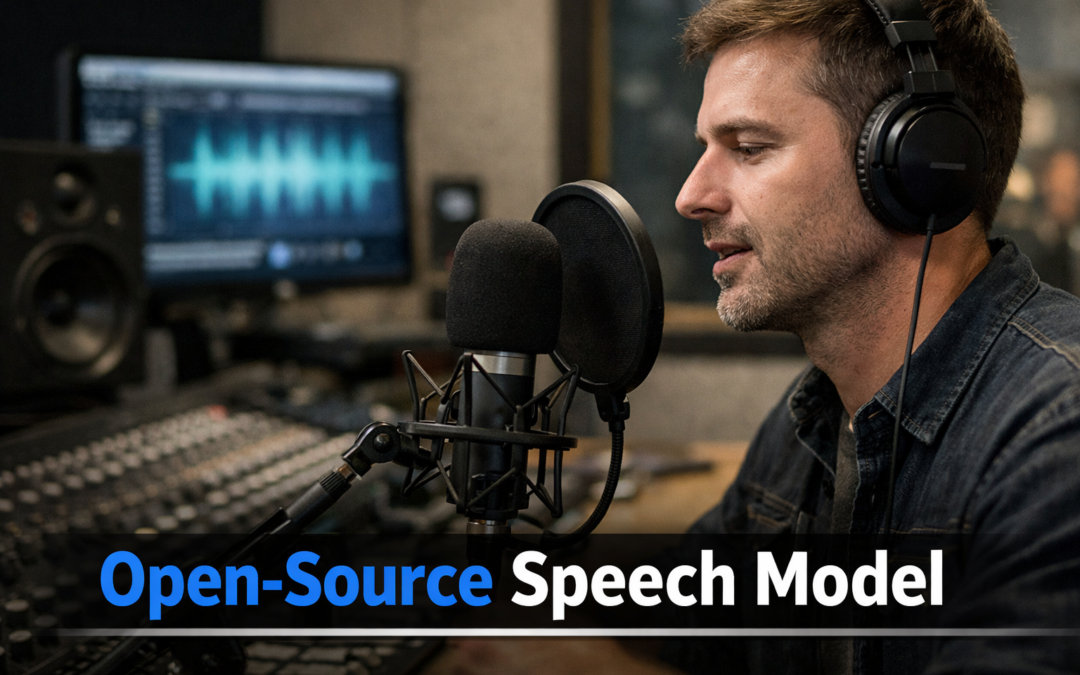
- Mistral has launched a new open-source speech-generation model, entering direct competition with OpenAI’s Whisper and Meta’s MMS.
- The model demonstrates high accuracy in transcription and robust multilingual capabilities, targeting enterprise adoption and AI research communities.
- This release accelerates innovation in voice AI applications and gives developers more options for integrating advanced speech-to-text solutions.
- Mistral’s approach emphasizes transparency, accessibility, and ethical deployment—setting a new benchmark within generative AI and LLMs.
The AI landscape for speech-generation is evolving rapidly as Mistral releases an open-source model for speech-to-text and generation, directly challenging incumbents such as OpenAI’s Whisper and Meta’s open speech initiatives. This move reflects the surging demand for accurate, multilingual, and real-time voice AI models within developer circles and enterprises seeking customized artificial intelligence solutions. By removing platform limitations and licensing constraints, Mistral positions its model as a catalyst for cutting-edge generative AI applications.
Key Takeaways
- Mistral’s open-source speech model rivals major closed and partially closed alternatives, democratizing speech AI.
- Expanded language support makes high-accuracy voice-to-text accessible for global application deployment.
- Open licensing enables rapid experimentation and domain-specific fine-tuning by startups, AI researchers, and businesses.
Decoding Mistral’s Speech Model Release
Mistral’s speech model promises high transcription accuracy across dozens of languages, challenging Meta’s MMS and outperforming baseline open-source models, according to preliminary benchmarks referenced by VentureBeat and SemiAnalysis. Mistral joins the ranks of AI innovators aiming for transparency and ethical standards, making its model’s weights and code openly available for commercial and research use. Notably, developers report that its architecture enables efficient on-device inferencing, lowering operational costs and expanding deployment contexts—from call centers and customer support bots to voice-enabled IoT.
Mistral’s open release instantly broadens the field, allowing engineers to modify, fine-tune, or audit the model’s output—unlike black-box counterparts from large vendors.
Strategic Impact for AI Stakeholders
- For Developers: The availability of open weights and modular APIs empowers rapid prototyping across verticals. Teams can adapt Mistral’s model for real-time transcription tools, accessibility tech, and multimodal conversational AI pipelines.
- For Startups: Access to a high-quality, permissively licensed speech model eliminates prohibitive licensing, encouraging innovation in markets like voice assistants, telemedicine, language learning, and regional-language social media.
- For AI Professionals: The transparent release facilitates rigorous benchmarking, community-driven improvements, and deeper research into multilingual, low-resource speech understanding—vital for advancing AI inclusivity.
Unfettered open-source access means faster iteration, better security auditing, and trust-building among enterprise AI adopters.
Wider AI Ecosystem Implications
Mistral’s model lands as governments and industry increasingly scrutinize AI ethics, privacy, and explainability. Open access enables researchers and policymakers to audit models for bias, hallucination, or misuse risks. This transparency positions Mistral favorably amid regulatory uncertainty, and prompts giants like OpenAI and Google to further justify their partial openness. According to ZDNet, this move refreshes the promise of the open-source AI era—lowering barriers for emerging market players and academic institutions alike.
Mistral’s strategic release represents a turning point: True open AI accelerates industry-wide adoption, collaboration, and trust.
Bottom Line
Mistral’s open-source speech model disrupts the status quo set by proprietary leaders, providing an alternative that is fast, accurate, multilingual, and free of commercial barriers. Its launch signals renewed momentum in voice AI, inviting developers, startups, and enterprises to build secure, scalable, and globally relevant speech-driven experiences.
Source: TechCrunch