AI continues its rapid evolution, with Luma unveiling Creative AI Agents powered by its cutting-edge Unified Intelligence Models (UIMs). This marks a significant leap in generative AI, signaling deeper automation and versatility for developers, startups, and businesses integrating advanced AI capabilities.
Key Takeaways
- Luma launches Creative AI Agents, leveraging new Unified Intelligence Models (UIMs) for multimodal capabilities.
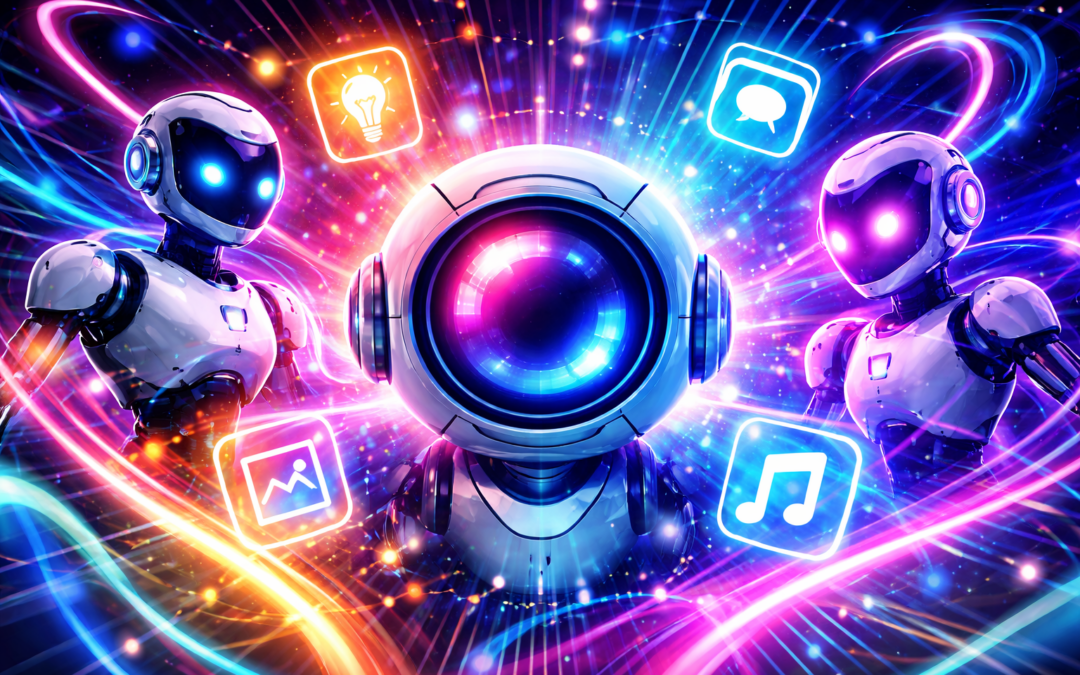
- UIMs can process and generate audio, image, video, code, and natural language data in real time.
- Luma’s agents perform complex, goal-driven creative tasks autonomously, setting a new standard for generative AI tools.
- This announcement reflects increased competition in the AI agent race, with implications for workflow automation and productivity.
Luma’s Unified Intelligence Models Explained
According to TechCrunch and direct statements from Luma, Unified Intelligence Models represent an evolution beyond typical large language models (LLMs). These models fuse various modalities into a single neural architecture, enabling agents to handle images, videos, code, and text interchangeably — all without separate pipelines.
“Luma’s UIMs erase the traditional silos between media types, allowing for seamless, creative multi-modal AI applications.”
Sources including VentureBeat and Business Insider confirm that Luma’s UIMs support real-time use-cases like video content creation, code generation, image synthesis, and natural language dialogue — all from a single model foundation.
For Developers: Accelerated Multimodal Integration
The launch of these new agents hints strongly at richer APIs and SDKs for enterprise and indie developers. The multilayered approach lets engineers avoid juggling multiple models or complex wrappers for multimodal tasks.
“By supporting cross-modal reasoning natively, Luma’s UIMs could streamline AI integration pipelines, reduce infrastructure costs, and cut latency.”
This empowers developers to deliver new creative tools and workflows, from automated media editing to product design and customer service bots that use both vision and language understanding seamlessly.
Implications for Startups and AI Professionals
Luma’s shift toward robust creative AI agents signals a new chapter for startups: access to AI agents that context-switch among data types allows rapid prototyping without heavyweight systems. Real-world applications include content marketing, entertainment, digital education, and hands-free coding assistants.
Competitive pressure will escalate in the AI marketplace, as Luma’s unified model approach pushes incumbents like OpenAI and Google DeepMind to offer better, real-time, and multimodal agent solutions for their cloud AI platforms.
“This is a pivotal step forward as generative AI agents become more autonomous, creative, and business-ready.”
Outlook: Real-World Impact
The real test will be developer adoption and the emergence of new products leveraging Luma’s Creative AI Agents. Expect rapid experimentation in industries reliant on high-quality, multimodal content generation and creative automation. AI professionals should watch for advances in agent reasoning, model customization, and the eventual convergence of vision-language-action systems under one roof.
As the field pushes to bridge gaps between text, image, audio, and code, Luma’s UIM-powered agents represent a tangible leap — raising the bar for what generative AI can deliver in both consumer and enterprise scenarios.
Source: TechCrunch