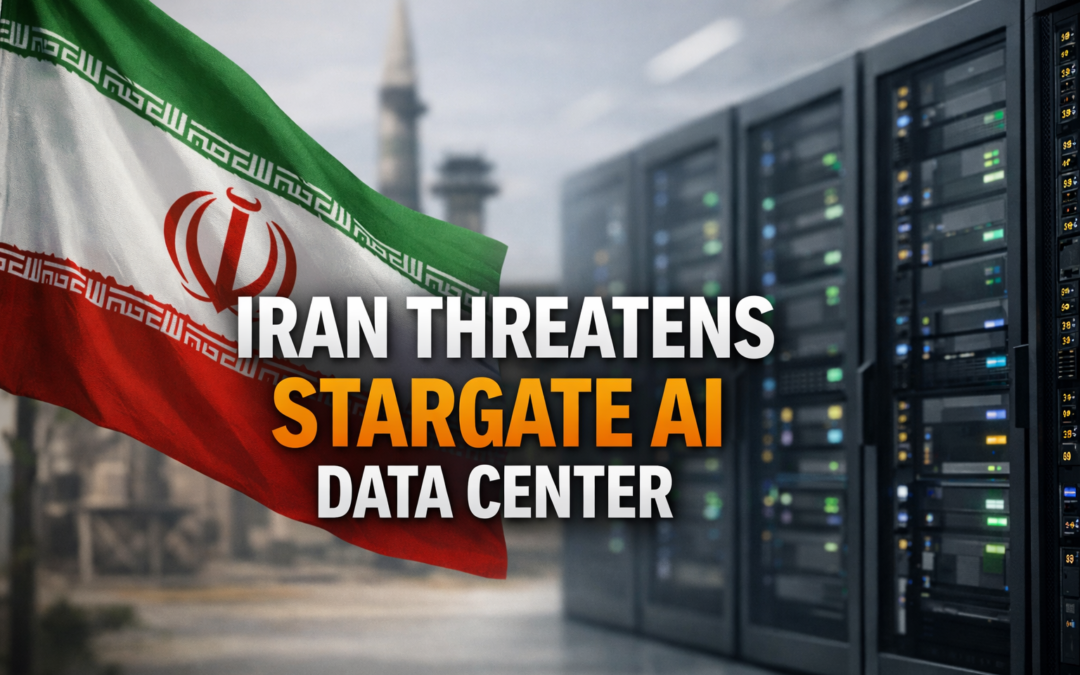
- Iran threatens action against Stargate AI if it does not relocate AI data centers out of the Middle East.
- Heightened geopolitical tensions underscore the strategic importance of AI infrastructure.
- Regional governments grow increasingly wary of foreign AI companies operating sensitive workloads near their borders.
- The standoff could ripple across global AI cloud providers, developers, and emerging startups.
As AI data centers rapidly expand across key global markets, recent moves by the Iranian government signal escalating risks for AI infrastructure companies. On April 6, 2026, Iran issued a direct threat to Stargate AI, a major player in generative AI and LLM-driven data services, demanding the company relocate its data centers out of the Middle East amidst concerns over sovereignty, surveillance, and digital autonomy.
Key Takeaways
- Iran warns Stargate AI over hosting data centers in the Middle East, triggering uncertainty for AI data infrastructure.
- This action highlights growing geopolitical scrutiny of how and where generative AI workloads get managed and stored.
- AI startups, developers, and global cloud providers face a shifting regulatory landscape in politically sensitive regions.
Details and Analysis
According to TechCrunch, Iran’s Ministry of Information and Communications Technology has warned Stargate AI to either relocate all of its Middle East cloud infrastructure or face blocking and possible further action. Stargate AI, well known for its large-scale language model (LLM) services comparable to OpenAI and Google, relies on data centers in Bahrain and the United Arab Emirates to deliver latency-sensitive solutions across the region.
“This episode highlights that the new ‘AI cold war’ is as much about infrastructure control as it is about model innovation.”
Iranian officials cite persistent concerns about foreign AI companies possessing valuable data, enabling potential surveillance, and weakening local autonomy. This rhetoric follows a wave of new regulations in countries like Saudi Arabia, India, and China, which have each increasingly emphasized AI infrastructure localization.
For cloud AI providers, such developments foreshadow stricter regionalization requirements and heightened compliance risks. Public statements by industry analysts, including recent reports from Reuters and The Verge, confirm that nations now assert data sovereignty as a top-tier strategic imperative. That means every stakeholder — developers, IT architects, and founders building on generative AI — must adapt both deployment and compliance playbooks accordingly.
“Developers working with LLMs and generative AI now face steeper regulatory hurdles and new technical limitations when choosing cloud regions and data residency options.”
Implications for Developers, Startups, and AI Professionals
- Infrastructure Choices Are No Longer Just Technical: Teams need to carefully map geopolitical shifts to region selection, data governance strategies, and multi-region failover plans.
- Increased Costs and Complexity: Enforced regionalization and possible forced migrations drive up deployment and maintenance costs for both vendors and startups reliant on high-availability AI services.
- Emerging Opportunity for Regional AI Ecosystems: Stricter rules may incentivize local AI innovation, boosting sovereignty but fragmenting the global cloud AI landscape.
- Potential Chilling Effect: Heightened risk of data center disruption may discourage fast-moving AI launches and stymie tech ecosystem growth in the Middle East.
Outlook
Iran’s direct warning to Stargate AI spotlights a fast-developing trend: national interests and AI infrastructure are now tightly intertwined. Whether this escalates into wider restrictions or negotiated accommodations, all AI-focused developers and companies building for a global audience need contingency plans for data sovereignty and operational resilience.
Source: TechCrunch