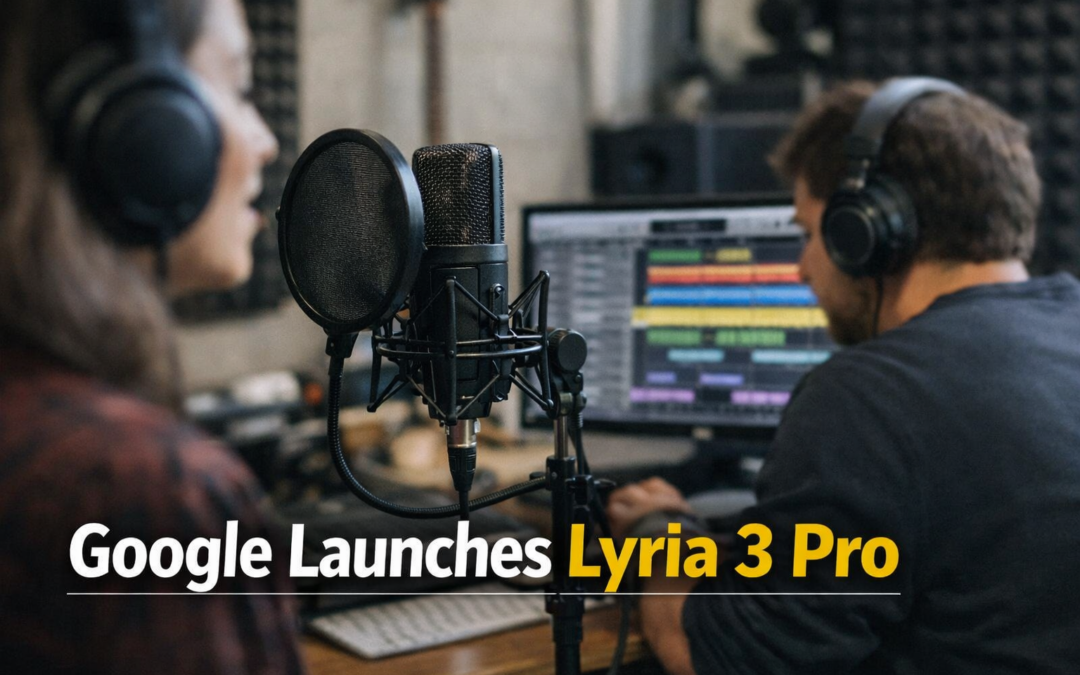
The landscape of AI-powered music generation has advanced significantly with Google’s unveiling of Lyria 3 Pro, a next-generation generative music model. This development positions Google at the forefront of AI-generated audio, competing head-to-head with industry leaders and expanding possibilities for music producers, startups, and researchers.
Key Takeaways
- Google has released Lyria 3 Pro, an updated music generation model with advanced control and versatility.
- The model supports nuanced editing, delivering studio-quality audio outputs suitable for professional projects.
- Lyria 3 Pro rivals and even outperforms contemporaries like Suno and Udio in certain benchmarks.
- Developers can access APIs and integration tools, empowering them to bring AI music capabilities into consumer apps and creative workflows.
What Sets Lyria 3 Pro Apart?
Lyria 3 Pro introduces granular creative controls—allowing users to specify genres, moods, and even instrument variations. Unlike earlier generative AI tools that produced generic or unrealistic outputs, Lyria 3 Pro leverages Google DeepMind’s audio research and proprietary datasets to “deliver rich, dynamic, and contextually aware music compositions tailored to user prompts.”
“Lyria 3 Pro sets a new bar for customizable AI music, closing the gap between algorithmic sounds and human creativity.”
Developer & Startup Implications
The open access API and developer toolkit signal a strategic push for ecosystem adoption. Startups focusing on content creation, video editing, gaming, or podcasting tools can tap directly into Lyria 3 Pro to streamline music licensing, background scoring, or personalized soundtracks. According to VentureBeat, early adopters have already begun experimenting with integrations into DAWs (digital audio workstations) and mobile creative suites—demonstrating practical B2B applications.
Google’s clear documentation and robust API support reduce both integration friction and time-to-market for third-party developers. Professionals can programmatically generate loopable segments, control arrangement parameters, and automate sound design—all while remaining copyright compliant.
“For startups, the availability of advanced AI music models like Lyria 3 Pro means faster prototyping and fewer legal hurdles in content generation.”
Comparing Lyria to Competing AI Music Models
Several outlets including MusicRadar and The Verge highlight key areas where Lyria 3 Pro challenges other top AI music offerings:
- Higher audio fidelity and realism compared to Suno v3
- Precision in text-to-music prompt interpretation, unlike Udio’s more randomized results
- Expanded genre and instrument coverage, providing flexibility for industry professionals
Real-World Impact for AI Professionals
AI researchers and product teams recognize Lyria 3 Pro as an inflection point for generative audio. The model’s success demonstrates the value of large, well-curated training data and sophisticated prompt engineering. For AI professionals, this reinforces trends toward multimodal foundation models—wherever creative, context-aware outputs become requirements.
Startups and independent devs alike should monitor Lyria’s trajectory closely. As generative AI matures, intellectual property stewardship and artist collaboration will become central to sustainable adoption. Google’s continued refinement of model transparency is one aspect that industry experts will watch, particularly amid ongoing debates on fair use and copyright in AI-generated content.
“Lyria 3 Pro marks a pivotal leap in generative AI, melding technical sophistication with practical real-world creative tools.”
Conclusion
With Lyria 3 Pro, Google has firmly established itself in the generative AI music domain, offering developers and creators unparalleled tools for music production. The model’s integration features, creative controls, and sound quality will have broad implications for media startups, AI developers, and creative professionals around the globe.
Source: TechCrunch