Apple’s rumored leap into AI-powered wearables signals a pivotal moment for the integration of generative AI, large language models (LLMs), and smart devices. As the boundaries between hardware and AI blur, developers, startups, and AI professionals need to closely track Apple’s moves to stay ahead in shaping next-generation user experiences and products.
Key Takeaways
- Apple is reportedly developing three AI-driven wearable products: new AirPods with cameras, an AI-powered ring, and smart glasses.
- These devices aim to seamlessly integrate multimodal generative AI capabilities, moving core AI functions closer to users.
- The AI wearables market is heating up with competitors like Humane and Samsung also investing in similar products.
- Developers and startups in the AI ecosystem have new opportunities for app ecosystems, sensor integration, and context-aware software.
Apple’s Ambitious Push Into AI Wearables
Reports from TechCrunch and corroborated by sources like MacRumors and Bloomberg, reveal that Apple has accelerated development on three major AI wearables:
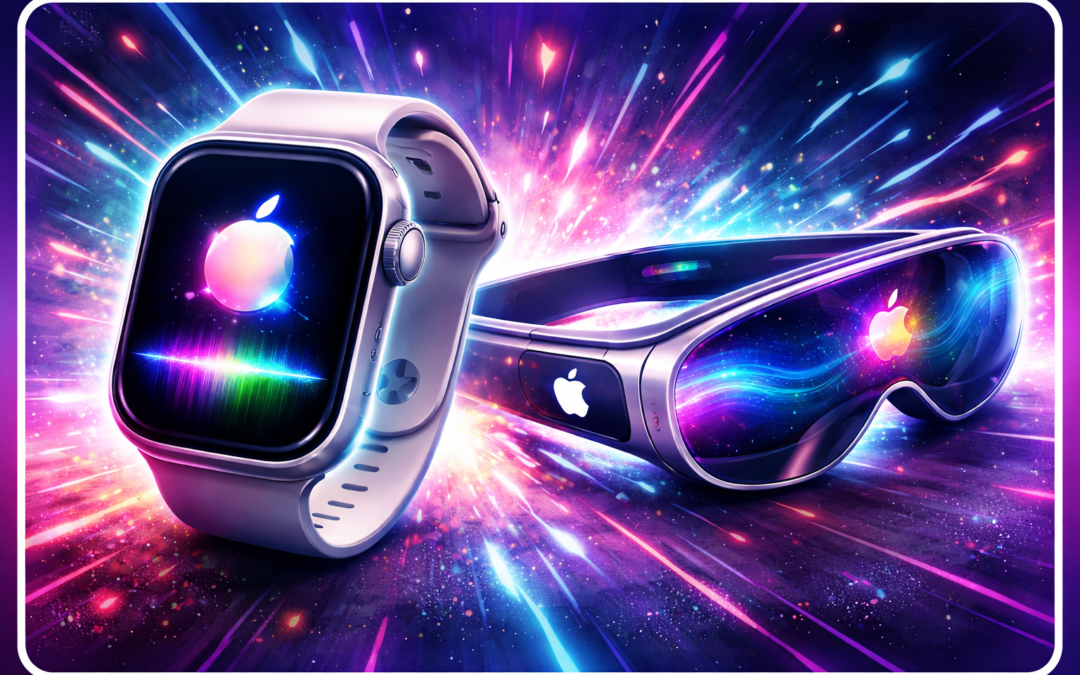
- Smart AirPods – Next-gen AirPods may feature built-in cameras and onboard AI that provides real-time context, notifications, and even health insights.
- AI Ring – Competing with Samsung’s Galaxy Ring, Apple’s rumored AI-powered smart ring focuses on health monitoring, gesture control, and on-device AI processing.
- Apple Smart Glasses – Long-awaited AR glasses could finally arrive with deep integration of generative AI capabilities, offering interactive overlays and proactive assistance.
“Apple moving generative AI directly into wearables will redefine context-aware computing and push the edge-AI paradigm across the consumer landscape.”
The AI Wearable Race Intensifies
Industry momentum around AI hardware continues to grow. Companies like Humane and Rabbit have launched their own AI-driven wearables, while Samsung’s recently announced Galaxy Ring confirms the awakening of a new product category. Apple’s rumored devices—armed with proprietary silicon and AI models—could easily leapfrog competitors by leveraging the vast iOS ecosystem and tightly knit hardware-software integration.
Implications for Developers & Startups
The emergence of AI-powered wearables creates a multitude of opportunities:
- Native AI Apps: Developers can build context-aware, always-available voice and vision apps harnessing generative AI and LLM APIs tailored for continuous use on the body.
- Sensor Fusion & Health Innovation: New sensor arrays—imaging, biometrics, haptics—coupled with on-device AI unlock fresh avenues in digital health, quantified self, and movement-based interfaces.
- Personalized Edge AI: With privacy-centric on-device LLMs, startups can offer smarter, personalized services while aligning with Apple’s stance on user data protection.
Developers who anticipate Apple’s AI wearable SDKs and frameworks stand to gain first-mover advantages in a market poised for rapid adoption.
What’s Next for Real-World AI Adoption?
Apple’s entry into AI wearables not only elevates consumer expectations, but also sets a new baseline for privacy, reliability, and integration in consumer AI devices. Early reporting suggests a focus on local device intelligence over cloud-based AI, responding to regulatory scrutiny and consumer concerns around data security (9to5Mac). As more information surfaces, expect Apple’s platform moves to affect hardware design, developer priorities, and service innovation throughout the AI landscape.
The convergence of wearables and generative AI will shape a new era of hyper-personalized computing, creating opportunities for those prepared to build and deploy novel real-world applications.
Source: TechCrunch