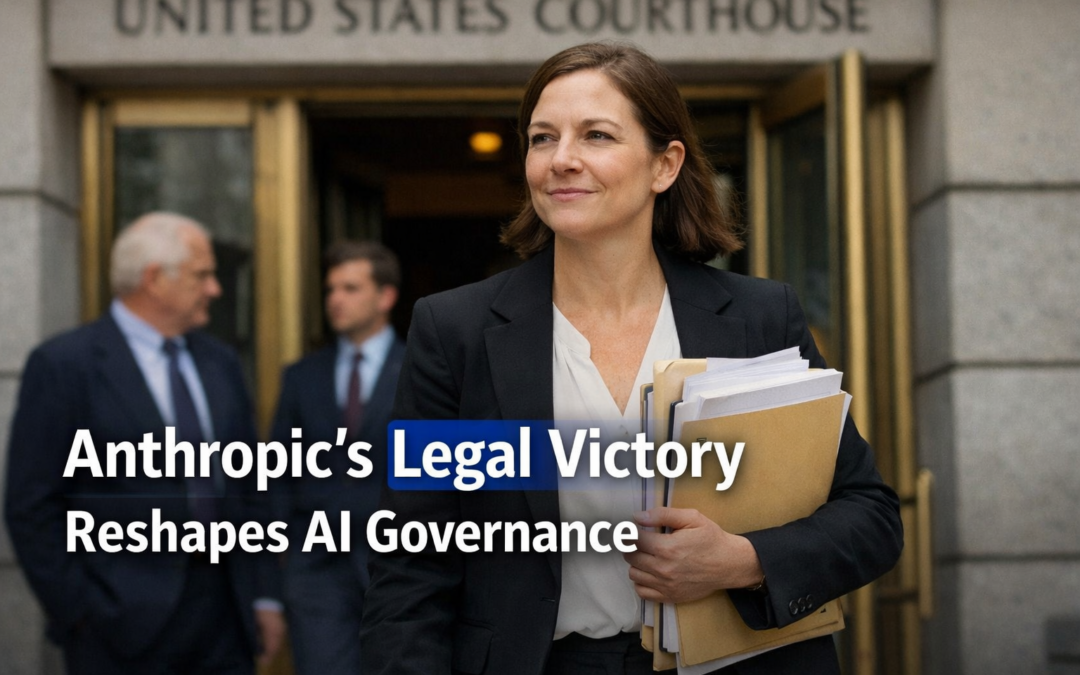
Anthropic’s recent legal triumph over the Trump Administration marks a significant precedent in AI governance, with major implications for both generative AI development and policy around LLM (Large Language Model) technologies. This moment draws attention across the AI community, as startups and professionals alike evaluate its impact on future public-private collaborations.
Key Takeaways
- Anthropic secured a U.S. court injunction preventing the Trump-era Defense Department from restricting its operations due to alleged security concerns.
- This legal victory strengthens AI companies’ ability to defend against regulatory overreach and ambiguous national security claims.
- The outcome sets a new benchmark for how generative AI startups participate in government contracts and technology policy debates.
Background: A High-Stakes Dispute in AI-Government Relations
In March 2026, Anthropic obtained a court injunction against the Trump administration following a standoff with the Defense Department involving access to its advanced AI models. The government cited national security but provided little transparency. This catalyzed widespread discussion about the legal responsibilities and rights of AI toolmakers collaborating with federal bodies.
Anthropic’s win reinforces an emerging consensus: AI enterprises need clear, evidence-based justification before facing government-imposed restrictions.
Implications for the AI Ecosystem
Developers: Developers working with large language models will benefit from increased clarity on legal obligations and defensibility. This decision could promote more open collaborations with government agencies while reducing the risk of unpredictable disruptions.
Startups: Startups gain precedent for challenging vague security allegations tied to AI innovation. As LLMs and generative AI services gain traction in critical infrastructure and defense, founders can pursue projects with stronger confidence in their legal standing.
AI Professionals: Trust in government contracts remains vital, but this case signals the industry’s ability—and necessity—to push back when regulations lack transparency or specificity.
The verdict highlights the importance of well-defined, evidence-based policies for AI safety and ethical deployment—especially when national security rhetoric is involved.
Analysis of the Legal Landscape
Legal analysis from both Reuters and The Verge indicates that the court’s rationale centered on due process and the lack of clear, justifiable basis for the administration’s blacklisting of Anthropic. Previous attempts by firms like OpenAI to clarify regulatory boundaries failed to produce similar precedents. Now, the “Anthropic injunction” could become a case study for AI-focused startups defending commercial and intellectual freedom.
According to legal experts cited by Reuters, this victory “raises the bar” for what governments must prove before imposing sweeping limitations—pushing policy debates toward greater transparency and proportionality.
Industry Outlook
Expect this case to influence how AI vendors structure contracts, manage security assessments, and interact with regulators. Successful outcomes like Anthropic’s could catalyze new waves of government innovation partnerships, provided both sides commit to clear standards and documented risks.
This courtroom milestone may enable a future where AI innovation and public interest can coexist—without arbitrary intervention.
Source: TechCrunch