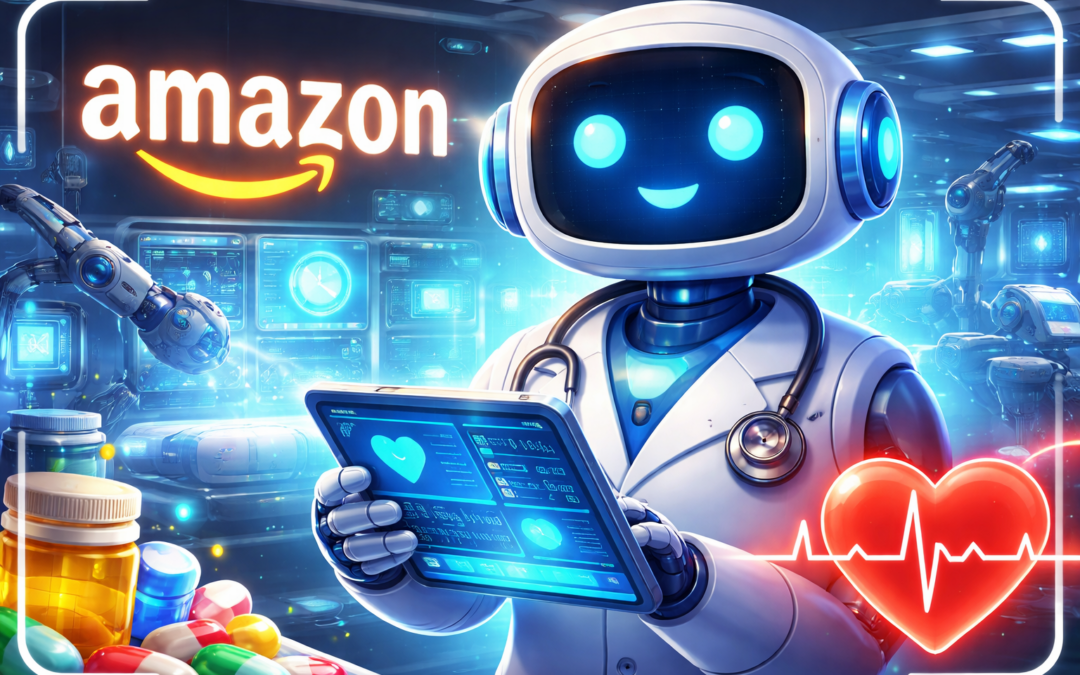
Amazon has made a pivotal move in the generative AI market by launching a healthcare-focused AI assistant directly within its website and app. Designed to facilitate medical product searches, answer health-related queries, and provide actionable information, this assistant marks Amazon’s most significant leap into healthcare technology to date. The integration promises to reshape patient interactions and unlock opportunities for developers and startups exploring real-world AI applications in healthcare.
Key Takeaways
- Amazon debuts an AI-powered healthcare assistant on its e-commerce platform and mobile app.
- The tool uses advanced language models to answer medical questions and assist with healthcare product navigation.
- This marks Amazon’s largest direct play in healthcare AI, intensifying competition with other tech giants.
- The rollout opens APIs and partnerships for third-party developers to build healthcare experiences on Amazon.
- Real-world implications for patient education, telehealth, and health product recommendations are significant.
Amazon’s Healthcare AI Assistant: What Sets It Apart?
The newly launched Amazon healthcare AI assistant sets itself apart by embedding directly into the world’s largest online marketplace. Users can now ask health-related questions, get personalized product suggestions, and receive guidance right where they shop. Unlike standalone apps, this approach blends seamless e-commerce with up-to-date generative AI.
“Amazon’s AI assistant brings real-time, personalized healthcare support to the point-of-sale—an unprecedented move among tech leaders.”
How Does the AI-Assistant Work?
Amazon’s tool leverages state-of-the-art large language models (LLMs) similar to those powering ChatGPT and Google’s Gemini. Through natural language understanding, the assistant interprets user intent, accesses a vast database of medical knowledge, and surfaces context-aware responses. Initial features address over-the-counter medications, device recommendations, telehealth options, and symptom searches. According to the Wall Street Journal, Amazon’s AI will not diagnose conditions but instead streamline access to health information and transactional actions.
Developer and Startup Implications
For developers and AI startups, Amazon’s healthcare AI assistant introduces a powerful platform for building health-centric applications that reach hundreds of millions of users. Amazon opens APIs, encouraging partners to innovate around wellness tracking, appointment booking, and personalized medicine. This move will likely accelerate AI health tool ecosystems, similar to the way Alexa skill stores multiplied after its initial launch.
“The fusion of generative AI and e-commerce paves the way for startups to rethink digital health engagement—right at the point of consumer decision.”
Competitive Landscape and Broader AI Trends
Amazon’s announcement follows recent AI healthcare moves from Google and Microsoft, both of which have piloted clinical tools and patient-facing chatbots. However, by placing generative AI directly into its retail flows, Amazon sets a new benchmark for consumer-facing healthcare applications. This deepens the competition for user trust and regulatory confidence in AI-powered health tools.
Experts from Reuters note that Amazon uniquely blends shopping, telehealth, and AI—enabling an all-in-one ecosystem. Such convergence is likely to fast-track patient adoption and redefine customer expectations for health information access.
Future Outlook: What’s Next for Generative AI in Healthcare?
The launch underscores growing momentum in deploying LLMs for real-world healthcare scenarios. As Amazon and its competitors iterate on safety, privacy, and regulatory compliance, the AI-driven health assistant could evolve to offer proactive wellness monitoring, deeper personalization, and integrated digital care.
Developers, AI professionals, and digital health entrepreneurs now face a rapidly changing landscape: solutions must be more transparent, trustworthy, and adaptive. The true winners will deliver responsible generative AI that enhances, rather than replaces, human care.
Source: TechCrunch