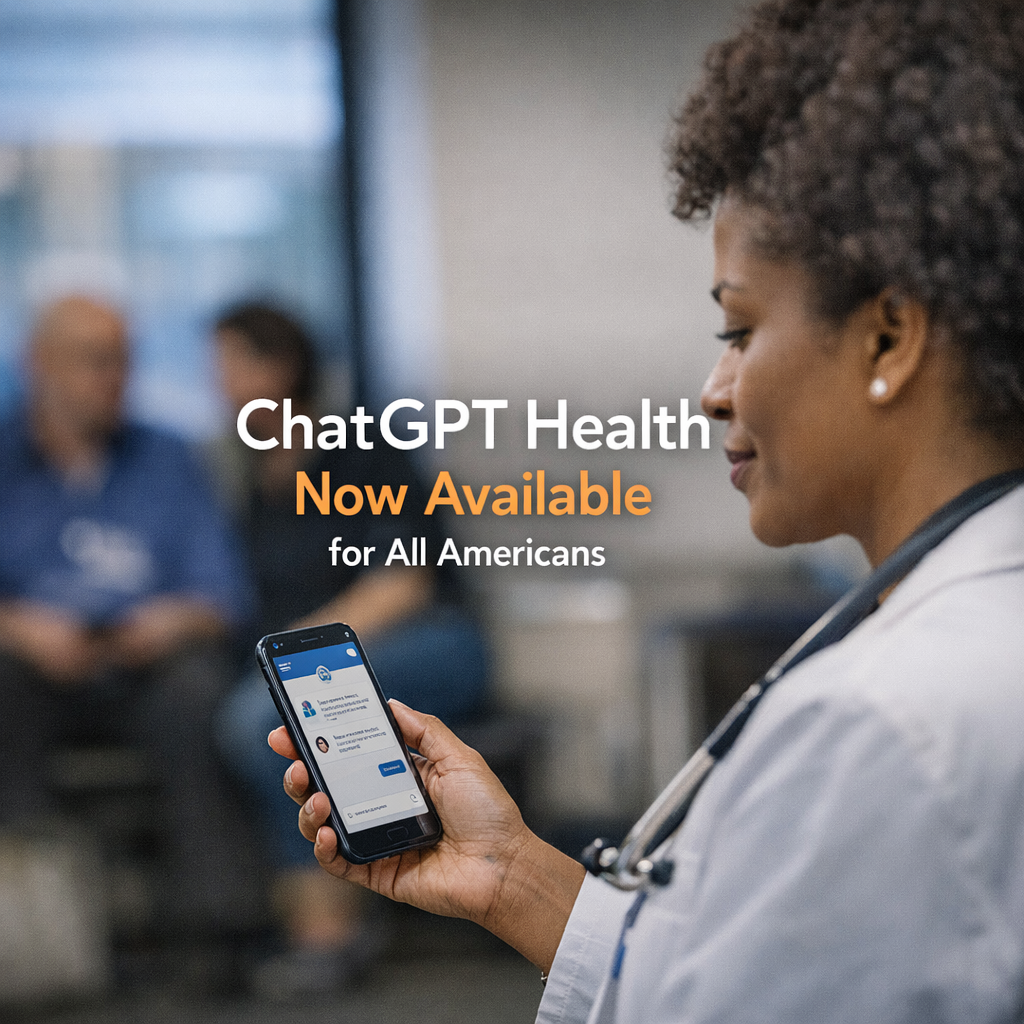
Healthcare’s digital landscape is shifting rapidly, and OpenAI just added fuel to the fire by unveiling ChatGPT Health to every U.S. user. As generative AI stakes its claim in medicine, this move cracks open new frontiers for patient engagement, data-driven interactions, and rapid knowledge delivery—setting a high bar for rival LLM-based solutions. For AI developers, innovators, and health tech startups, OpenAI’s latest expansion isn’t just product news—it’s a signal that the generative AI arms race in healthcare is accelerating.
- OpenAI launches ChatGPT Health for all U.S. users, marking a pivotal moment for AI-powered medical assistance.
- The product leverages GPT-4’s latest model advancements for more reliable, context-sensitive healthcare answers.
- Stringent privacy controls and regulatory compliance are built in, shifting the trust equation for users and startups alike.
- This rollout intensifies the race among LLM providers and raises the bar for AI safety, accuracy, and ethical standards in health tech.
Key Takeaways
OpenAI’s new ChatGPT Health reflects two critical trends: the mainstreaming of LLMs in highly regulated sectors, and the rising expectations for privacy, accuracy, and explainability. The product’s availability to all U.S. users goes beyond technical progress—it redefines who can access medical insights, how data is processed, and how quickly AI-based care can enter workflows.
The debut of ChatGPT Health signals that AI is shaking up medicine not as a distant promise, but as a practical tool entering everyday care—raising new questions about trust, liability, and innovation speed.
OpenAI’s Push Into Mainstream Health Assistance
Until recently, AI-driven medical chatbots were largely restricted to pilots or tightly regulated partnerships. ChatGPT Health smashes that barrier, vaulting into mass availability for millions of Americans overnight. This service, powered by OpenAI’s latest LLM versions, delivers health information on-demand, with outputs tuned for medical accuracy and readability.
Unlike general-purpose chatbots, ChatGPT Health integrates healthcare-specific RAG (retrieval-augmented generation), scoping its answers to vetted medical sources including Mayo Clinic, MedlinePlus, and others. Its ability to combine broad medical knowledge with tailored responses marks a departure from older symptom checkers or FAQ bots.
Bringing generative AI to U.S. healthcare at scale creates a proving ground for how LLMs handle sensitive, high-stakes information in the wild.
Privacy Controls and Trust: A New Standard?
For developers and startups, the privacy features baked into ChatGPT Health deserve scrutiny. User queries and outputs tied to health are now shielded by elevated data protections. OpenAI asserts compliance with frameworks such as HIPAA, and keeps health information isolated from training data—distinguishing this offering from prior general-use deployments.
This shift ripples through the entire digital health ecosystem. Companies building on OpenAI’s platform or competing with their own LLMs must address not just raw performance, but compliance and transparency. Failure to match these standards could shut out products from regulated enterprise clients and partner networks.
Privacy by design is no longer optional—it’s the baseline for any AI system entering healthcare workflows.
The New Race: Accuracy, Explanations, and Guardrails
OpenAI’s move puts new focus on minimizing harm and boosting answer fidelity. ChatGPT Health responses are clearly annotated with medical sources and contain alert banners for urgent issues. Whenever a situation demands clinical intervention, users are prompted to seek in-person care—reducing the risk of misplaced trust or dangerous self-diagnosis.
These features address ongoing concerns raised by experts at organizations such as Stanford HAI and the AMA: How will LLMs handle ambiguity, update rapidly as clinical guidelines change, or avoid hallucination-induced harm? OpenAI’s visible guardrails and explainability tools offer a template, but also highlight that the industry’s margin for error is razor-thin.
Whoever builds the most accurate, transparent medical LLM will shape not just healthcare chatbots, but the entire direction of patient-facing AI.
Implications for Developers and Startups
For engineers and founders, the bar for launching health-adjacent AI solutions just rose. OpenAI’s infrastructure opens doors for integration into digital health apps, telemedicine, clinical trial recruiting, and more. Yet, competition is fierce: Google’s MedLM (leveraged by HCA Healthcare and others), Microsoft’s investments in Nuance, and startups like Hippocratic AI are all trying to combine LLM power with clinical reliability.
AI teams entering the field must now contend with deeper safety audits, more granular permissions, and a user base that expects human-level clarity—raising both development complexity and opportunity size. Those willing to build atop these new standards may find partners eager to scale up safe, smart digital health tools across the U.S. market.
Health AI startups now face a landscape where compliance, user trust, and interoperability matter as much as novel algorithms or flashy demos.
Looking Ahead: The New Normal for AI in Healthcare
The wide release of ChatGPT Health establishes a new baseline for what AI-powered medicine looks like in practice. For patients, clinicians, and product builders, real-time, reliable generative AI is no longer a futuristic concept—it’s the foundation upon which the next decade’s health tech will rise. Expect intensifying competition, rapid model advancement, and fierce debate over standards, safety, and sovereignty in digital healthcare.
Source: TechCrunch