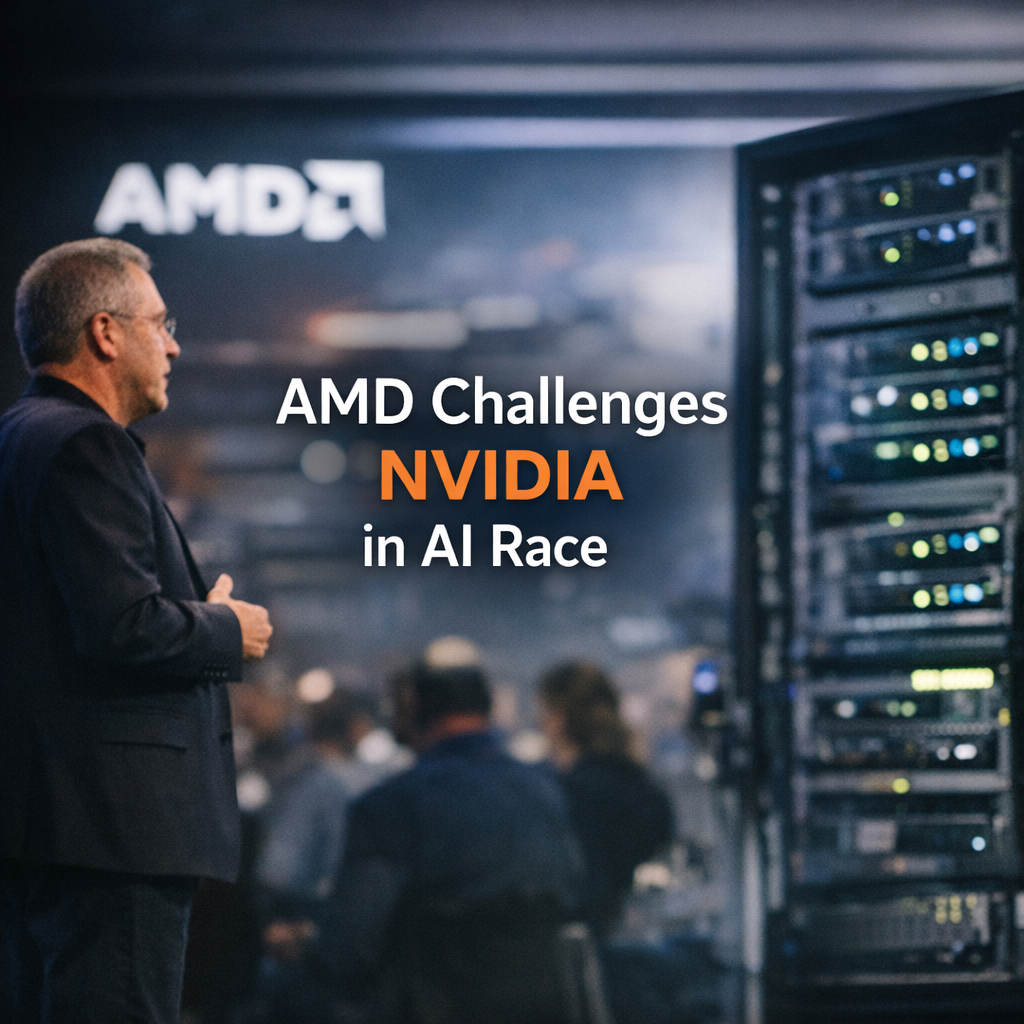
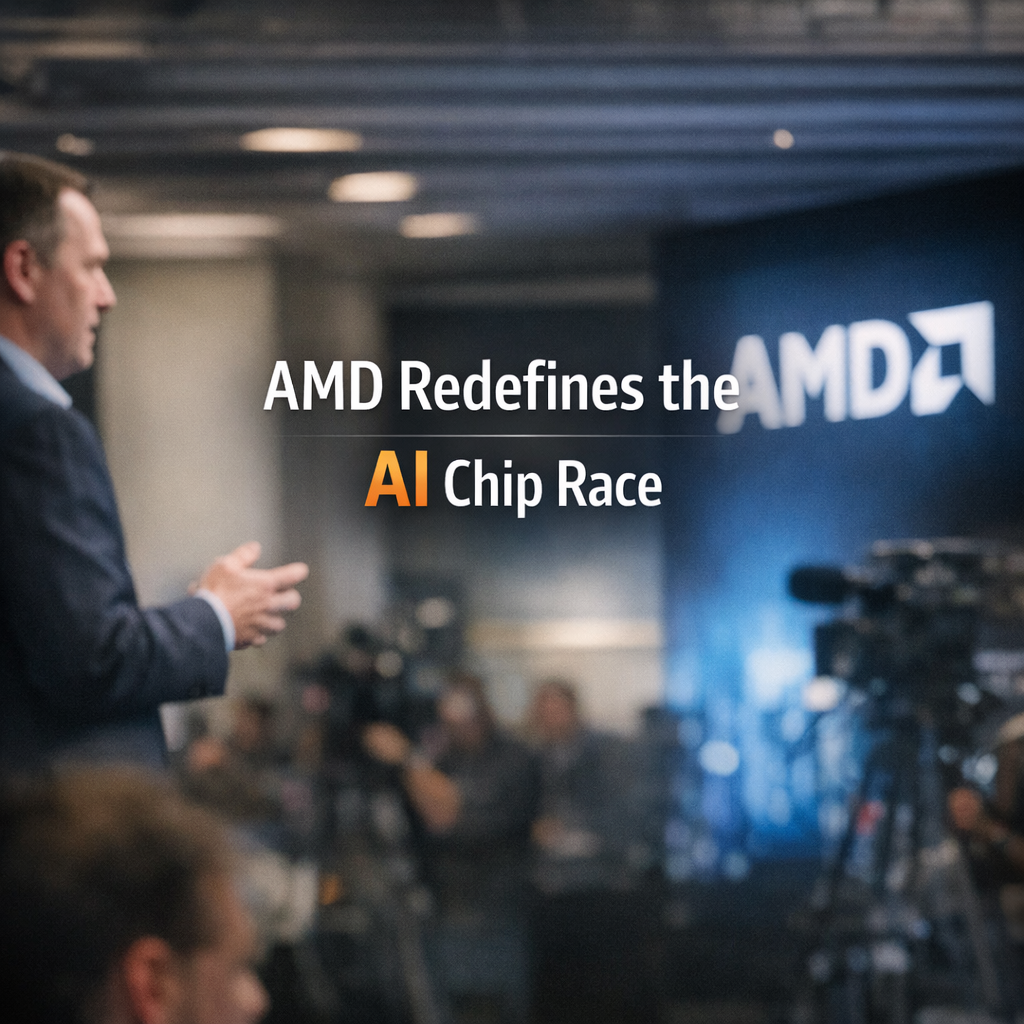
Chip wars in AI infrastructure just ratcheted up a notch. In a strategic move to challenge Nvidia’s entrenched dominance, AMD has announced its Helios AI rack-scale system—an integrated platform designed for large-scale deployment of AI workloads. With generative AI straining the limits of existing data center architecture, the Helios system’s focus on hyperscale efficiency and model training promises to reverberate through cloud services, enterprise deployments, and the startup ecosystem alike. Here’s why developers, founders, and AI experts are watching this launch with intense interest.
- AMD debuts Helios, an AI system targeting Nvidia’s data center market share.
- Promises optimized performance for large language models (LLMs) and generative AI at rack scale.
- Industry collaboration: Microsoft and Meta already onboard as Helios partners.
- Potential shift in infrastructure cost, vendor choice, and cloud AI acceleration strategies.
Key Takeaways
AMD’s Helios rack-scale platform marks its most aggressive entry into generative AI infrastructure, addressing compute bottlenecks and energy demands of model training. By aligning with major cloud providers, Helios raises the stakes for hyperscale deployments while offering startups an alternative to Nvidia’s proprietary stack.
“An open, high-performance AI hardware ecosystem could tilt the balance for both cloud vendors and AI innovators, injecting long-needed competition and flexibility into the market.”
AMD Helios: Designed for Next-Gen AI at Scale
The Helios system leverages AMD’s MI300X accelerators and ROCm (Radeon Open Compute) software to orchestrate massive clusters suitable for training and serving LLMs. In architectural terms, Helios wraps compute, interconnect, storage, and networking into a modular rack design—parallel to Nvidia’s HGX solutions but engineered with openness and interoperability as a core advantage.
By integrating hardware and optimized software under one roof, AMD aims to eliminate many of the friction points faced by AI teams adopting heterogeneous environments. The Helios racks target full-stack workloads, from model development to inference at scale, promising lower total cost of ownership and simplified integration in hyperscale data centers.
“Helios aims to remove barriers to entry for organizations deploying advanced AI, escaping the lock-in that has defined Nvidia’s ecosystem.”
Strategic Partnerships: Microsoft and Meta Signal Demand
Microsoft and Meta’s public commitment as Helios partners adds immediate credibility and market momentum. Both tech giants have been vocal about GPU shortages and the need for hardware diversity in their expansive generative AI programs. Early deployment by these hyperscalers could open the door for wider enterprise and research adoption, especially if the platform delivers on promised efficiency gains.
Additional reports from Reuters and AnandTech indicate that AMD is pushing for rapid volume manufacturing and close software-hardware co-design, two factors crucial for challenging Nvidia’s pace of innovation and delivery.
“Support from AI powerhouses like Microsoft and Meta signals that the hyperscale world is hungry for alternatives in the race to train ever-larger models.”
What This Means for Developers and AI Startups
For AI engineers and founders, Helios introduces a fresh calculus in hardware selection. If it delivers on AMD’s claims, expect reduced dependency on a single vendor and more aggressive pricing in cloud GPU markets. The open software stack, centered around ROCm, also presents a less restrictive environment for companies building proprietary models or seeking unique optimization routes.
Industry analysts at Omdia and The Next Platform note that supply chain flexibility and energy efficiency—both offered by the Helios system—have become top concerns for teams running multi-billion parameter models. In practical terms, this could mean faster access to compute and shorter timelines to prototype or scale generative AI applications.
“Developers and startups may finally have leverage to demand choice, transparency, and open interfaces at the AI infrastructure level.”
Outlook: A New Phase in AI Hardware Competition
AMD’s Helios move signals more than just a product launch—it ushers in a period of intensified competition in rack-scale AI infrastructure. As more cloud platforms and enterprises seek to diversify away from Nvidia and as demand for large-scale LLMs and generative AI tools outpaces global GPU supply, the winner will be those companies agile enough to adapt their stacks. Watch for increased software ecosystem investment, a focus on open standards, and renewed bargaining power for buyers across the AI stack.
“With Helios, the age of AI hardware lock-in is entering its twilight, promising greater innovation and cost-efficiency for the broad AI ecosystem.”
Source: TechCrunch