Google’s new “Create My Widget” feature takes generative AI a step further by enabling users to design and deploy personalized widgets using conversational prompts and code suggestions. This innovation signals a seismic shift in how developers, startups, and AI professionals approach UI creation and rapid prototyping — dramatically reducing traditional coding overhead and raising the bar for low-code automation platforms.
Key Takeaways
- Google unveiled “Create My Widget,” letting users build custom widgets through conversational AI and dynamic code generation.
- The tool leverages advancements in large language models (LLMs) to deliver instant, context-aware UI components.
- This approach promises to boost productivity for developers and empower non-coders, putting advanced widget creation within broader reach.
- Early industry response indicates the potential for disruption across no-code, low-code, and frontend tooling landscapes.
- Security, extensibility, and integration with Google Workspace remain top priorities highlighted in Google’s early showcase.
Google’s Vision: AI-First Widget Generation
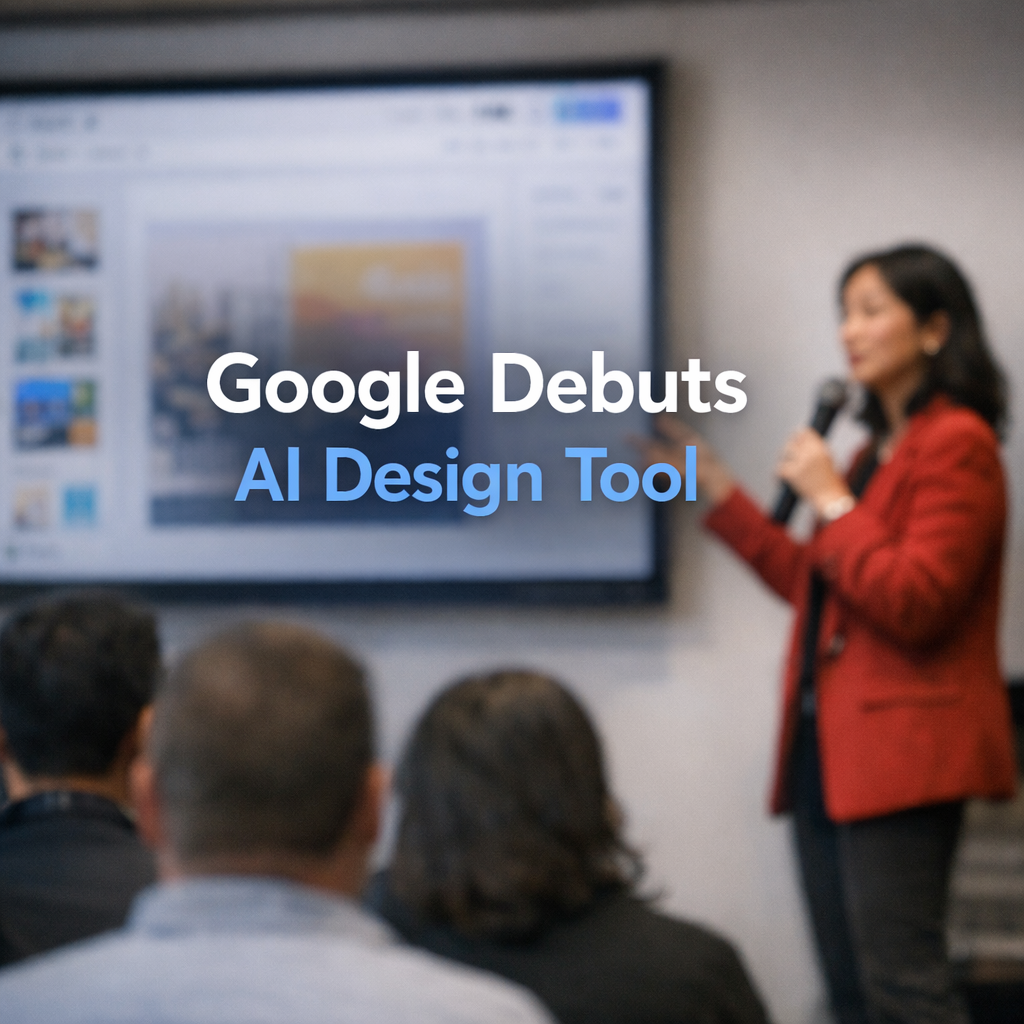
At Google I/O 2026, the company announced “Create My Widget” as a generative AI tool directly integrated into Google Workspace and Chrome. Users describe the widget’s purpose, and Google’s AI crafts code to spin up interactive elements — ranging from dashboards to project trackers — without switching to external IDEs or plugin marketplaces.
This AI-powered workflow lowers the technical barrier for frontend automation — a leap forward for startups, productivity hackers, and business analysts alike.
Immediate Implications for Developers and Startups
The rollout of “Create My Widget” signals more than just a feature upgrade. It spotlights a new paradigm where:
- Developers: Can focus on backend logic and data modeling, letting AI handle repetitive UI component scaffolding.
- Startups: Cut time-to-market by spinning up MVPs and tailored dashboards without the overhead of manually coding boilerplate interfaces.
- AI professionals: Gain a real-world testbed to benchmark LLM-driven code suggestions, collaborating with end-users to train more accurate, context-aware models.
Google’s integration of generative code into everyday workflows could redefine what “full stack” means for modern application builders.
Comparison with Competing Tools
Several platforms — like Microsoft’s Power Platform, Retool, and Airtable — have offered AI-driven design assistants in the low-code space. However, most still require some degree of scripting or visual logic building. Google’s approach stands out by:
- Tightly coupling conversational AI with live, in-context coding
- Enabling direct deployment to Workspace, Chrome, or web
- Leveraging deep LLMs’ UI code understanding for higher reliability and fewer hallucinations
According to The Verge and Engadget, industry observers see this move as a direct response to developer demand for more ‘AI-native product design’ tools.
Risks and Open Questions
While promising, experts stress the need to audit generated widgets for:
- Security — Especially for components that access sensitive personal or business data.
- Performance — Will AI-generated code be as robust and maintainable as handcrafted solutions?
- Extensibility — Can teams fully customize and export the code, or are they locked into Google’s ecosystem?
Google highlighted security guardrails and compatibility checks as priorities, though deeper API access, plugin support, and cross-ecosystem export options will be critical for long-term developer adoption.
Bottom Line: A Milestone for LLM-Powered App Creation
With “Create My Widget,” Google stakes a leading position in real-world LLM applications for UI generation — bridging productivity needs and AI innovation. Industry competition will likely intensify, forcing all players to prioritize security, transparency, and developer freedom as AI coding moves from experimental phase into core tech stack territory.
Expect aggressive integration of generative AI workflows into mainstream tools within the next 12 months, making rapid, conversational coding a new norm for tech teams and citizen developers.
Source: TechCrunch