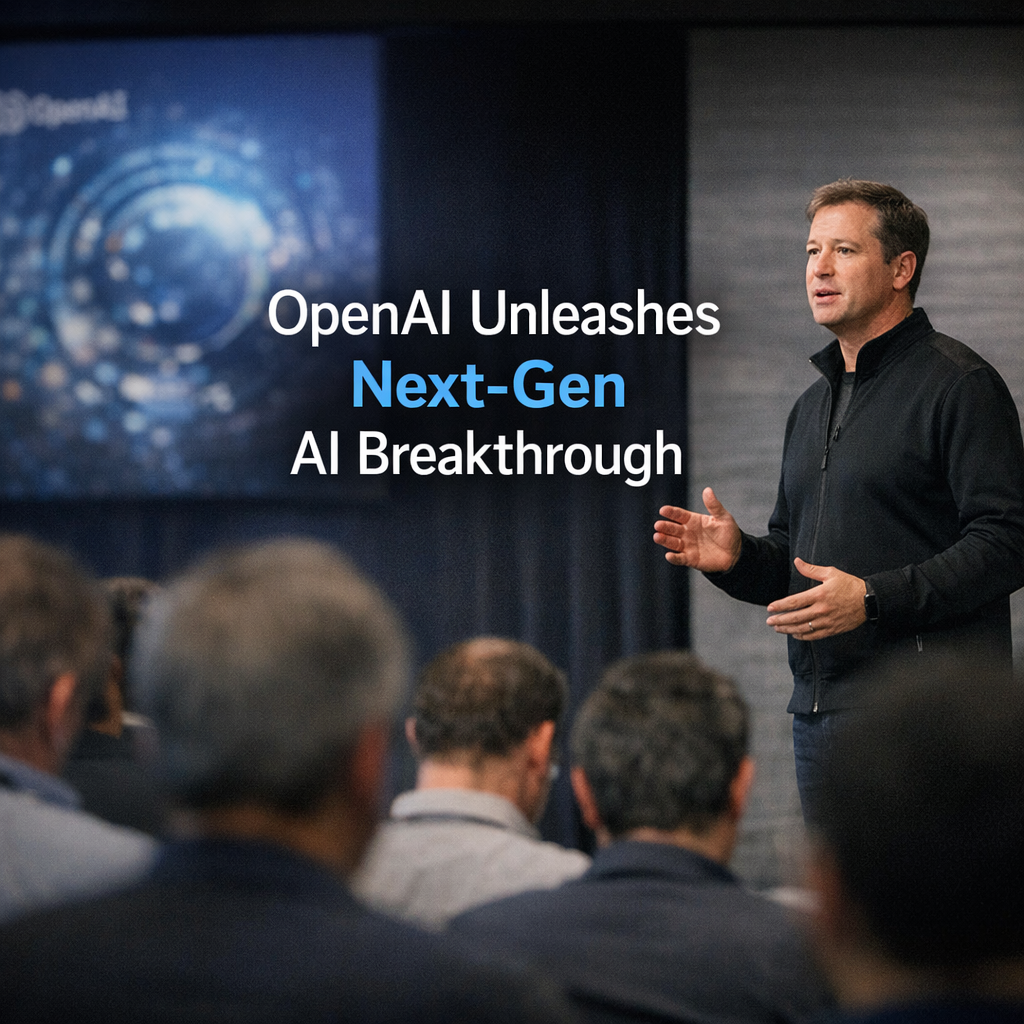
OpenAI has formally entered the healthcare sector, signaling a transformative shift for both clinical workflows and patient outcomes by integrating generative AI into real-world settings. The recent announcement highlights partnerships, new product offerings, and emerging best practices that will impact startups, enterprise developers, and healthcare professionals leveraging large language models (LLMs) for high-stakes scenarios.
Key Takeaways
- OpenAI officially launched a healthcare division, collaborating with providers and tech companies to accelerate AI adoption in clinical and operational contexts.
- Prominent organizations like Microsoft, Color Health, and Mayo Clinic have begun piloting or deploying OpenAI tools, including GPT-4 and DALL·E, across diagnostic, administrative, and patient engagement workflows.
- This move intensifies the race among tech giants and AI leaders to claim major ground in the $4 trillion global healthcare market, raising the stakes for startups and developers building specialized AI solutions.
What OpenAI’s Healthcare Move Means
OpenAI’s entry into the healthcare sector represents a marked evolution in how generative AI—especially LLMs like GPT-4—can support high-impact tasks from patient documentation to virtual health assistants.
OpenAI’s formal pivot brings unprecedented AI capabilities to providers, researchers, and health tech innovators, accelerating practical deployments that could reshape clinical productivity and patient engagement.
Industry leaders such as Microsoft’s Azure OpenAI Service and the Mayo Clinic have already demonstrated real-world LLM applications—triaging requests, analyzing clinical notes, and powering conversational AI agents—all while trialing robust data governance and compliance architectures.
Implications for Developers and Startups
For developers and healthtech startups, the ripple effects are immediate:
- OpenAI is lowering technical barriers, offering GPT-4 and DALL·E APIs tailored for sensitive, regulated contexts, enabling builders to rapidly test and deploy compliant generative AI solutions.
-
Early movers can secure competitive advantage by integrating medical LLMs into EHR tools, telehealth platforms, and triage bots—especially as major healthcare systems signal readiness for AI at scale.
- HIPAA support and new privacy features boost confidence among enterprise partners, allowing for broader data experimentation without compromising compliance.
- OpenAI’s APIs foster multi-modal integration, allowing developers to combine text, vision, and code-based workflows within clinical toolchains.
Challenges and Strategic Considerations
OpenAI’s healthcare ambitions also spotlight challenges for AI professionals and enterprise architects:
- Models must address hallucinations, data drift, and clinical relevance. Industry analysts point out that responsible evaluation and “human-in-the-loop” frameworks will remain essential—particularly in diagnostic and patient-facing environments.
- Startups must differentiate through vertical expertise, data partnerships, and user-centric design as giants like Google and Amazon expand their own healthcare AI offerings.
-
Trust, safety, and transparent risk communication should become table stakes for anyone deploying generative AI under medical regulation.
What’s Next for AI in Healthcare?
The stakes could not be higher. As OpenAI, Microsoft, and others scale deployments, independent validation and transparent outcomes measurement will shape which tools win broad clinical adoption. OpenAI’s new healthcare division demonstrates a pivotal “market readiness” moment for LLMs in high-compliance sectors. For developers and AI professionals, sustained opportunity lies in mastering privacy engineering, clinical validation, and product-market fit in healthcare’s complex landscape.
OpenAI’s healthcare initiative brings generative AI out of the lab and directly into the hands of care teams, making 2024 a defining year for applied LLMs in medicine.
Source: OpenAI