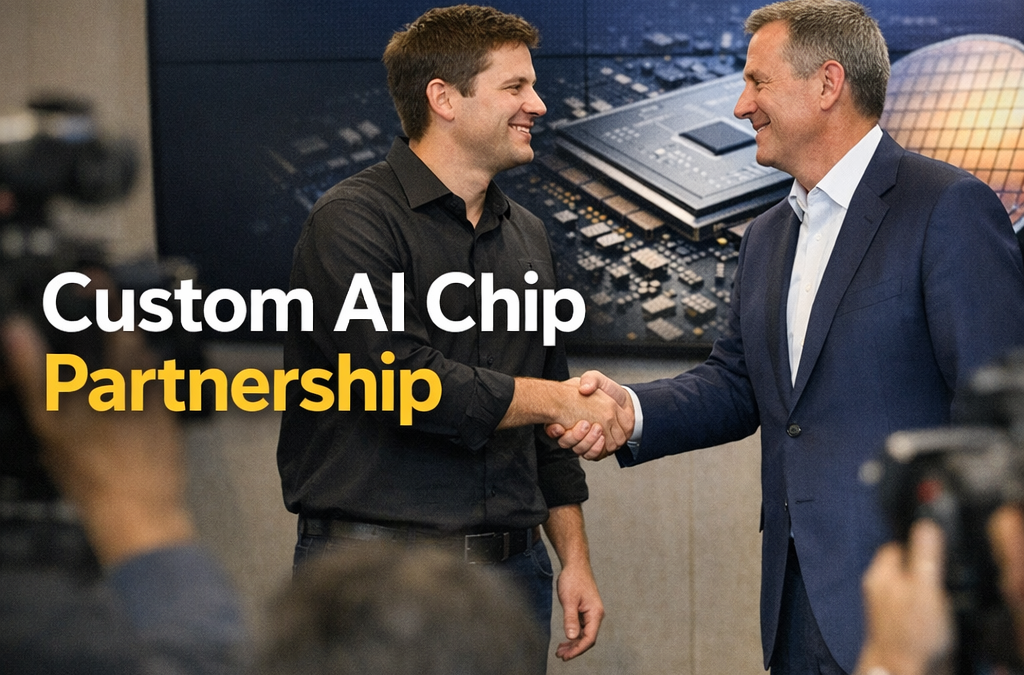
- Meta signs a $14 billion, multi-year deal with CoreWeave to secure cloud infrastructure for large-scale AI workloads.
- The agreement ensures Meta can access powerful Nvidia-powered GPUs critical to training and deploying generative AI models like LLMs.
- This high-value partnership signals intensifying competition for limited AI compute resources among global tech giants.
- Startups face increased challenge sourcing cloud GPU capacity as hyperscalers prioritize strategic alliances.
- CoreWeave’s rise showcases how specialized AI cloud providers are reshaping the infrastructure landscape.
Meta’s latest $14 billion cloud infrastructure agreement with CoreWeave underscores the escalating race among tech giants for AI compute power, especially Nvidia GPUs.
As leading companies double down on generative AI development, the capacity to access robust, low-latency GPU clusters has become a new competitive frontier — one with far-reaching implications for developers, startups, and the broader AI ecosystem.
Key Takeaways
- Meta secures access to CoreWeave’s scalable, Nvidia-powered GPU clusters, bolstering its ambitions in LLMs and cutting-edge AI applications.
- The $14 billion deal signals record-breaking demand for advanced AI-ready infrastructure.
- Specialty AI clouds like CoreWeave gain leverage, challenging legacy hyperscalers and altering cloud market dynamics.
- Smaller players may find limited access to vital GPU resources, pushing ecosystem fragmentation and spurring innovation in efficiency.
Why Meta Chose CoreWeave
Competition for Nvidia GPUs remains fierce, with supply chains stretched and demand rising due to the surge in large language model (LLM) training.
According to Bloomberg and Reuters, Meta’s partnership with CoreWeave ensures priority access to CoreWeave’s Nvidia H100 GPU inventory — a game-changer for powering Meta’s AI initiatives, including advancements in generative AI.
This deal follows CoreWeave’s recent $19 billion valuation, making it a serious contender against established cloud giants.
The scramble for AI compute has become more about relationships and pre-purchased capacity than open competition.
Implications for Developers and Startups
This mega-deal highlights a troubling shift: as tech giants like Meta, Microsoft, and OpenAI cut multi-billion-dollar cloud deals, access to top-tier AI compute resources tightens for emerging startups and independent developers.
Expect to see:
- Startups forced to innovate with smaller, more efficient models (e.g., open-source LLMs and quantization techniques).
- A rise in demand for alternative cloud providers or on-premise AI hardware.
- Automation tools to optimize scarce GPU utilization and improve training latency.
For AI professionals, hardware constraints now shape not just model architecture but strategic decisions on project feasibility.
The AI Cloud Landscape: Change in Power
CoreWeave was once a niche player, focused on specialized GPU workloads ignored by broader clouds. Now, with hyperscalers straining to meet demand, CoreWeave has leveraged its agility and focus on cutting-edge Nvidia hardware to broker deals with the world’s most valuable firms.
This trend is rippling across the industry:
- Public clouds like AWS, Google Cloud, and Azure face new, focused competitors ready to carve out the premium AI segment.
- Cloud pricing and access will increasingly favor those with the capital to pre-buy compute at remarkable scale.
- Bespoke AI clouds might become the norm for enterprises needing tailor-made infrastructure for massive generative AI workloads.
What Lies Ahead
With deals like Meta’s, AI infrastructure has become a strategic asset — not just for research labs or autonomous vehicle testing but for every digital business racing to build, deploy, and own the next-generation AI experience.
For developers and startups, staying ahead may require shifting tactics: working closer to the metal, using smarter data pipelines, and lobbying for fairer access to the building blocks of generative AI.
Companies with compute—and the ability to scale it globally—will shape the AI ecosystem for years to come.
Source: Reuters