The accelerating adoption of artificial intelligence and large language models (LLMs) is reshaping technology and business.
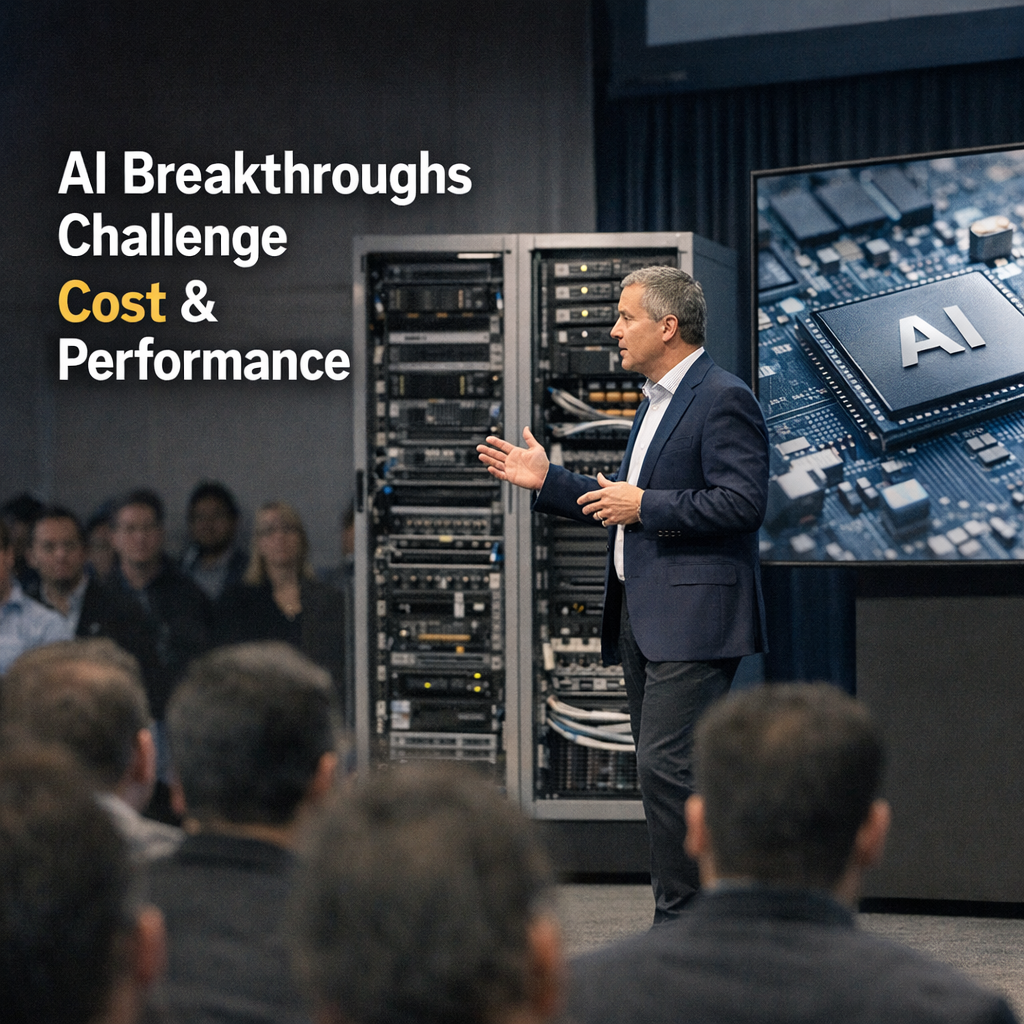
However, according to a new Deutsche Bank analysis, this momentum risks hitting a wall: Infrastructure readiness lags behind demand, posing a significant challenge for the AI ecosystem.
Additional reporting from Bloomberg and Fortune underscores the magnitude of the infrastructure crunch now confronting the space.
- The global boom in AI, especially generative AI, faces a projected $800 billion shortfall in necessary IT infrastructure by 2027.
- Data center capacity, GPUs, power, and water supply remain critical bottlenecks hampering AI adoption at scale.
- Addressing infrastructure gaps is vital for startups, enterprises, and cloud providers seeking a competitive advantage in AI.
Key Takeaways
- AI infrastructure—especially data centers and GPUs—cannot meet current and projected demand for generative AI.
- Power and water supply for data centers present major limitations, affecting everything from LLM training to daily AI-powered applications.
- Rapid investment in hardware, more efficient chips, and sustainable data center solutions is now a strategic priority across the industry.
The $800B AI Infrastructure Gap: Facts & Drivers
Deutsche Bank reports that, by 2027, a global funding gap of $800 billion could prevent companies from realizing AI’s full benefits.
Demand for NVIDIA GPUs, fast networking equipment, and advanced data center capacity has outpaced supply—driven by sharp increases in LLM training, generative AI, and real-time inference workloads.
“AI runs on hardware and energy: Without transformative investment in compute power and green infrastructure, the AI revolution could stall.”
As vendors scramble to secure next-gen chips and add capacity, chronic constraints in electrical power and even water—used for cooling data centers—have forced delays and cost overruns.
According to Fortune, hyperscalers such as Microsoft and Google have already postponed critical AI projects due to resource shortages.
Implications for Developers, Startups, and AI Professionals
- Developers must contend with GPU scarcity, service throttling, and potential price hikes for cloud-based LLMs and ML training services. Efficient code and workload optimization are no longer optional—they are necessary for delivering production AI solutions.
- Startups building generative AI tools face stiffer competition to access compute, potentially driving up costs or limiting model customization. Strategic partnerships with well-capitalized cloud providers or chip vendors may be critical.
- Enterprises and cloud providers must accelerate investments in sustainable data center design, experiment with alternative AI accelerator chips, and lobby for favorable public infrastructure policies.
The ability to scale AI models securely now depends as much on hardware pipelines as on breakthrough algorithms.
Strategic Move: Rethinking AI Deployment and Scaling
Future adoption will depend on diverse strategies: improving energy efficiency through software advancements, optimizing AI workloads, and experimenting with edge AI deployments to reduce central data center loads.
- Resource-aware design becomes essential—smaller, task-specific models or quantized models can cut costs and reduce infrastructure strain.
- Collaboration with governments and utilities to secure green energy and modernized power infrastructure will differentiate global market leaders.
Expect to see next-level investments in alternative compute architectures, smarter orchestration (like containerized AI deployments), and moves to diversify chip suppliers as global demand surges.
Conclusion
The AI boom’s infrastructure gap represents both a critical risk and a prime opportunity. Those who solve the challenges of AI compute, data center sustainability, and efficient deployment will define the next era of machine intelligence.
Stakeholders at every level—developers, CTOs, cloud leaders—must adapt strategies now or risk falling behind in the race to scalable AI.
Source: AI Magazine