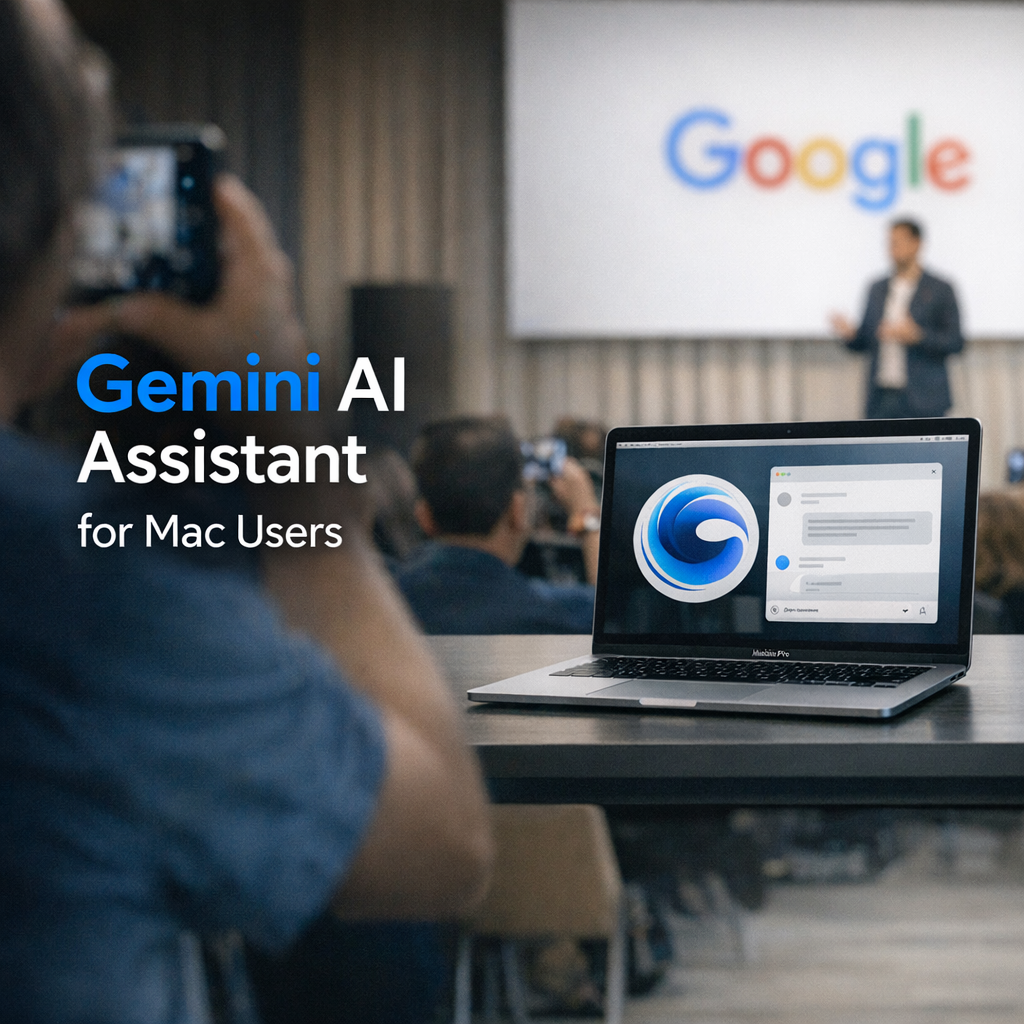
Google has launched Gemini for Government, a near-free platform offering US agencies powerful generative AI capabilities. This move signals Google’s bold strategy to drive AI adoption in the public sector and intensifies competition in the AI-for-government market, particularly against Microsoft and Amazon.
Key Takeaways
- Google introduces Gemini for Government, targeting US agencies with generative AI tools at extremely low cost.
- Service competes directly with Microsoft Azure OpenAI Service and Amazon Bedrock, sparking intense industry rivalry.
- Deployment leverages Google Cloud’s secure infrastructure, supporting strict compliance and security requirements of federal agencies.
- The offering dramatically lowers the barrier for government agencies to experiment with and adopt large language models (LLMs) and other generative AI features.
- This initiative could accelerate real-world government adoption of AI, with major implications for security, procurement, and digital transformation.
Google Gemini for Government: What Sets It Apart?
Google’s Gemini for Government platform leverages its most advanced LLMs to deliver text and document analysis, code generation, summarization, and other generative AI functionalities to US government agencies. It stands out for being offered “almost for free” for at least the initial period, making AI pilot programs and proofs-of-concept far more accessible to bureaucratic organizations, which often face budget and procurement hurdles.
“Google’s ultra-low pricing for Gemini in government settings could become a decisive catalyst for widespread generative AI experimentation within US federal agencies.”
Competitive Dynamics: Google vs. Microsoft and Amazon
This launch marks a direct challenge to AI cloud offerings from Microsoft (Azure’s OpenAI Service) and Amazon (Bedrock). Both rivals have aggressively targeted US government clients by boasting robust AI compute, compliance, and security. By offering Gemini for Government at a fraction of typical commercial pricing, Google seeks to gain a strategic foothold in a lucrative and influential sector.
“The race to power government AI workloads is intensifying, and price competition is emerging as a critical differentiator.”
Security and Compliance: Meeting Federal Standards
Google confirms Gemini for Government operates within FedRAMP-authorized Google Cloud regions. This ensures data isolation, strict compliance, and end-to-end encryption—non-negotiable requirements for US government clients. With demands for AI-driven insights growing in law enforcement, defense, and regulatory domains, rigorous security protocols will be essential for vendor selection.
“Government AI deployments hinge on ironclad security, and compliant cloud platforms are now table stakes.”
Implications for Developers, Startups, and AI Professionals
With Gemini for Government’s generous terms, US agencies can now rapidly prototype use cases—such as regulatory document parsing, fraud detection, case management automation, or secure chatbots—via APIs and custom integrations. Open access to state-of-the-art generative AI paves the way for government contractors, civic tech startups, and consultancy firms to expand their AI solution portfolios.
- Developers can leverage Gemini’s API endpoints within compliant cloud environments, offering faster deployment cycles and lower procurement friction.
- Startups can create value-added applications targeting government agencies or related contractors, taking advantage of predictable, low AI infrastructure costs.
- AI engineers and data scientists will see a surge in demand for expertise around model fine-tuning, federal security compliance, and use-case validation.
“The government sector’s embrace of generative AI holds immense potential for scaling digital services and accelerating AI literacy across critical public domains.”
Looking Ahead: Will Other Vendors Match Google’s Pricing?
As Google disrupts government AI pricing, the pressure mounts for Microsoft and Amazon to revisit their own cost structures for generative AI services. If history is a guide, a race to zero margins could ensue in the public sector, making AI experimentation and implementation even more attainable.
The broader adoption of LLMs and generative AI in government may also trigger new debates about responsible use, data privacy, and ethical guidelines—demanding vigilance from AI solution providers and policymakers alike.
Source: The News
Additional reporting from:
TechCrunch,
CRN