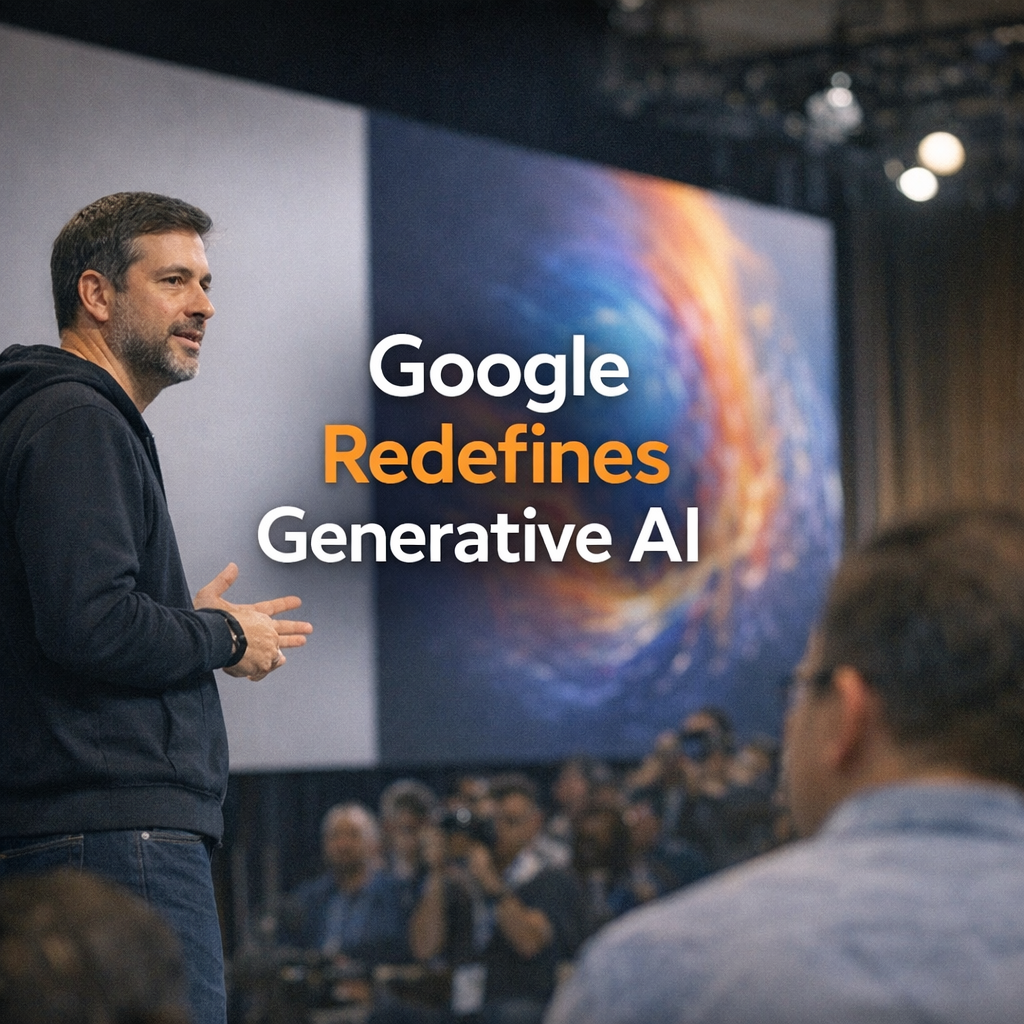
Google’s latest announcements at Google I/O 2026 underscore a pivotal shift toward agentic AI as the company looks to protect its core search business. As generative AI and LLMs evolve, Google’s strategy promises transformative impacts on the developer ecosystem, startup innovation, and everyday AI integration.
Key Takeaways
- Google revealed a decisive pivot to agentic AI to maintain search leadership against rising generative AI competitors.
- New AI agent tools aim to deliver highly contextual, proactive, and personalized user experiences.
- Developers and startups gain unprecedented integration opportunities via expanded APIs and workflows.
- The agentic AI initiative positions Google to redefine human-machine interaction and automation in digital services.
Agentic AI: The Next Phase in Human-Machine Collaboration
Google’s embrace of agentic AI marks a significant evolution beyond search and conversational chatbots. Agentic AI systems proactively perform multistep tasks, make decisions based on personalized context, and orchestrate workflows across applications—signaling a move far beyond reactive query-answering.
“Agentic AI agents will increasingly anticipate, act, and deliver continuity of service across the user’s digital life, challenging the core utility of traditional search engines.”
Strategic Implications for AI Professionals and Startups
This paradigm shift expands opportunities for developers, AI professionals, and startups to build domain-specific agents, seamless SaaS integrations, and vertical automation—leveraging Google’s LLM-driven APIs unveiled at I/O 2026.
For developers: Google’s enhanced toolkits and API libraries facilitate orchestration of agentic workflows, connecting products across consumer and enterprise ecosystems.
For startups: The evolving AI stack lowers barriers to market entry, enabling rapid prototyping of intelligent agents and focused solutions within healthcare, e-commerce, and productivity verticals.
Competitive Landscape: Google vs. OpenAI, Microsoft, and Others
Industry reactions, as reported by The Verge and TechCrunch, indicate that Google’s push into agentic AI responds directly to the threat posed by autonomous agents in products like OpenAI’s ChatGPT, Microsoft’s Copilot, and the emerging Perplexity platform. Google reasserts its commitment to privacy, security, and ethical guardrails as it accelerates the rollout of proactive, contextually aware AI agents.
“Developers and enterprises now face a watershed moment to harness Google’s AI platforms and shape the future of digital intelligence.”
What’s Next?
With agentic AI moving from prototype to mainstream at Google, the next twelve months will catalyze an ecosystem of intelligent apps and services. The implications span personalized recommendation engines, automated task management, and dynamic user experiences that bridge digital touchpoints.
Watch for increased cross-platform agent interoperability, along with robust discussions around user trust, data stewardship, and open standards in the coming quarters.
Source: Forbes
Additional Sources: The Verge, TechCrunch