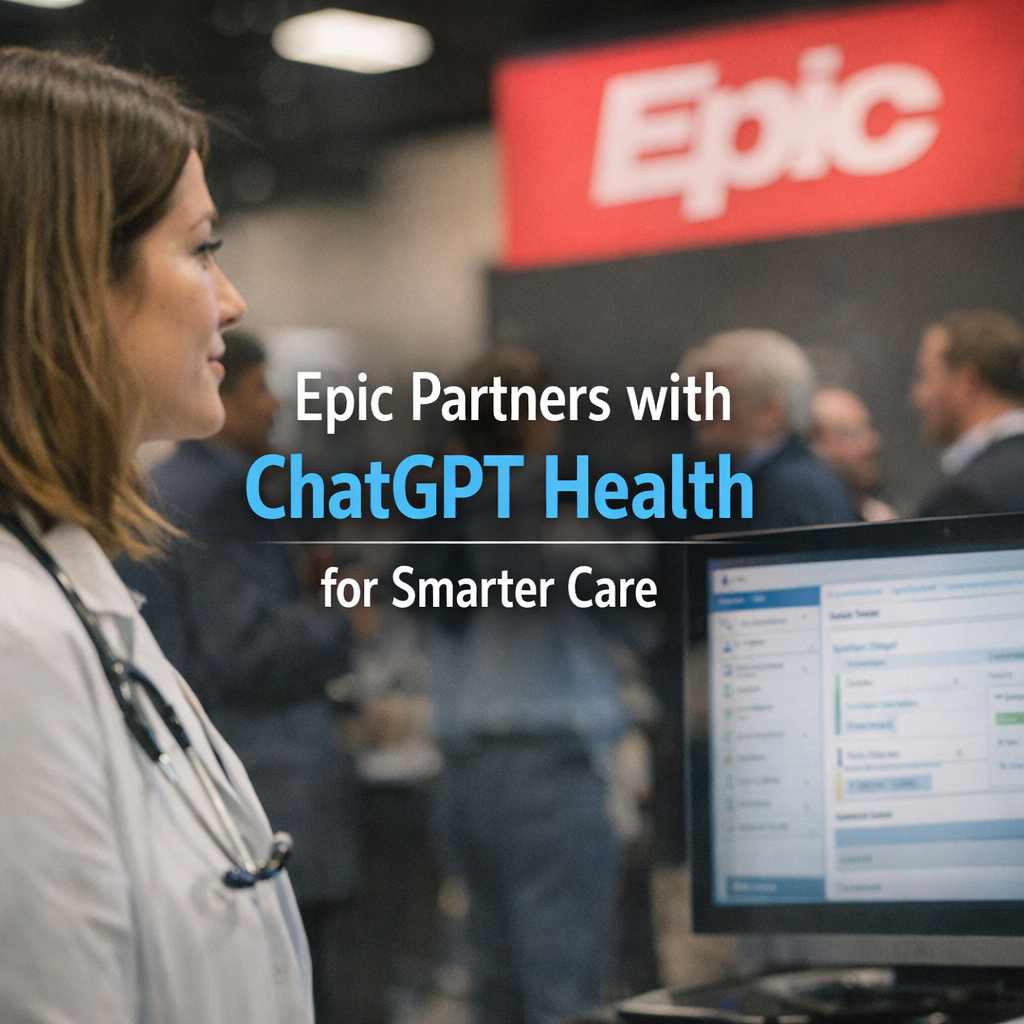
Healthcare technology enters a new era as OpenAI’s ChatGPT Health version secures integration with Epic, the leading electronic health record (EHR) system. This major upgrade promises to accelerate clinician workflows, deepen generative AI involvement in patient care, and spark a wave of data-driven innovation for healthcare providers and AI developers alike.
- Epic EHR now connects directly with ChatGPT Health, letting clinicians import patient data into conversations securely.
- This integration marks a pivotal expansion for generative AI in real-world clinical environments.
- New workflows emerge for developers seeking to deploy, fine-tune, or build on LLMs inside healthcare ecosystems.
- Industry observers raise questions regarding security, data privacy, and regulatory compliance as AI interfaces with sensitive medical records.
- The partnership signals a competitive jolt across both healthcare software and AI platform sectors.
Key Takeaways
Epic and ChatGPT Health’s integration brings dynamic AI workflows to the heart of clinical practice. Providers can now use natural language prompts to retrieve, contextualize, and act on patient data in real time. This blurs lines between documentation, clinical decision support, and patient interaction, dramatically speeding up what had been labor-intensive tasks.
Embedded LLMs in EHRs are not just incremental upgrades—they rewrite rules for how clinicians interact with patient data and automate care pathways.
From an industry lens, this move accelerates mainstream AI adoption in medicine, creates new pressure on other EHR vendors, and opens the door for broader API or SDK-based integrations. Startups focused on healthcare AI face both new platform opportunities and increased competitive barriers.
From Chatbots to Clinical Workhorse: Epic’s Leap with Generative AI
OpenAI’s new health-focused ChatGPT upgrade delivers direct connectivity with Epic’s widely used EHR, enabling physicians to summon lab reports, medications, history, and more—using everyday language. Early pilot programs at Cleveland Clinic, UC San Diego Health, and Mount Sinai have demonstrated substantial reductions in time spent retrieving data and documenting notes. According to Becker’s Hospital Review, some users report up to 30% faster completion of common clinical tasks using the AI interface.
“The bridge between generative AI and structured patient data will define the next phase of digital health transformation.”
For developers, Epic’s decision to embrace OpenAI tools signals a massive shift: prime EHR “real estate” is no longer reserved for legacy tools, but open to agile, LLM-driven utilities. Expect a surge of demand for secure healthcare prompt engineering, rapid workflow prototyping, and tailor-made compliance solutions as more health systems follow suit.
New Frontiers … and New Friction: Privacy, Security, and Compliance at the Forefront
Direct access to protected health information (PHI) puts OpenAI and Epic under heightened scrutiny. Both companies claim robust encryption, audit trails, and granular access controls will safeguard patient privacy. Legal experts point out, however, that any LLM operation linked to regulated health data must rigorously comply with HIPAA and other jurisdictional standards. A Modern Healthcare overview notes that many hospital CIOs remain wary, arguing for staged rollouts, custom permissions frameworks, and ongoing human oversight.
“Integrating LLMs with live EHR data sets a high bar for trust—winning clinician confidence and regulatory approval is anything but guaranteed.”
AI professionals targeting healthcare markets must treat robust privacy engineering and transparent auditability as baseline requirements, not afterthoughts. Partnerships with security vendors or development of built-in explainability features may quickly shift from “nice-to-have” to essential go-to-market differentiators.
Implications for Developers and Technology Startups
The new Epic-ChatGPT Health integration changes the playbook for healthcare AI builders. Startups can leverage APIs and SDKs for custom task automation, documentation helpers, or intelligent clinical assistants, provided integration frameworks meet high privacy standards. However, incumbents may attempt to lock down platform access or introduce premium tiers, raising the bar for entry. FierceHealthcare notes that even as big health systems deploy LLMs, smaller vendors and innovators will need robust partnerships and credibility to establish footholds in complex provider environments.
“Every player in healthcare AI—from solo devs to public SaaS giants—must now assume LLM connectivity is table stakes, but differentiation will require domain depth and regulatory rigor.”
Epic’s Open Door: Ripple Effects Beyond Healthcare
This integration signals a far wider trend: mission-critical industries are not merely experimenting with AI—they are embedding LLMs at the core of core operations. Observers anticipate accelerated investment in verticalized LLM tools, deeper partnerships between foundation model providers and enterprise platforms, and more rapid regulatory evolution to keep pace with technical innovation.
The Road Ahead: AI at the Center of Clinical Decision-Making
The direct connection between Epic’s EHR and ChatGPT Health stands as a bellwether for what’s next in generative AI: context-rich workflows, interoperable data layers, and intelligent automation redefining legacy processes. For developers and innovators, these integrations unlock powerful new canvases, but demand an uncompromising commitment to privacy, safety, and measurable value for practitioners and patients.
AI’s next challenge is not proving capability, but earning trust inside the most critical moments in healthcare. Those who deliver both breakthrough automation and bulletproof compliance will set the pace for the industry’s AI transition.
Source: TechCrunch