Major moves in the AI sector often occur far from public view, but a recent legal victory has thrust Anthropic and governmental AI regulation into the spotlight. Developers, startup founders, and enterprise AI leaders now face newly clarified—yet still evolving—ground rules for handling supply chain risk, especially as generative AI tools permeate sensitive software ecosystems. With the Pentagon’s scrutiny and a high-stakes courtroom clash, this turning point carries deep industry consequences that merit close attention.
- Anthropic’s court triumph over the Pentagon resets the conversation on AI vendor risk management.
- The decision may influence how LLM providers are assessed in government contracts and beyond.
- This case highlights a coming wave of regulatory and compliance pressure across the AI supply chain.
- Startups and hyperscalers alike should recalibrate their policies in light of escalating government oversight.
Key Takeaways
Anthropic’s landmark court win challenges the Pentagon’s ability to flag AI vendors as supply chain risks without robust evidence. This outcome sets a pivotal precedent for generative AI companies seeking government contracts, shifts the risk calculus for LLM-centric startups, and signals heightened judicial scrutiny over regulatory designations. Such legal victories may embolden further AI vendor pushback against opaque blacklists and could trigger a wider reassessment of how AI supply dependencies are regulated.
“The legal system is starting to demand clear, evidence-based risk designations for LLM providers, forcing policymakers to rethink how they regulate generative AI in critical infrastructure.”
A Legal Watershed for AI Supply Chain Governance
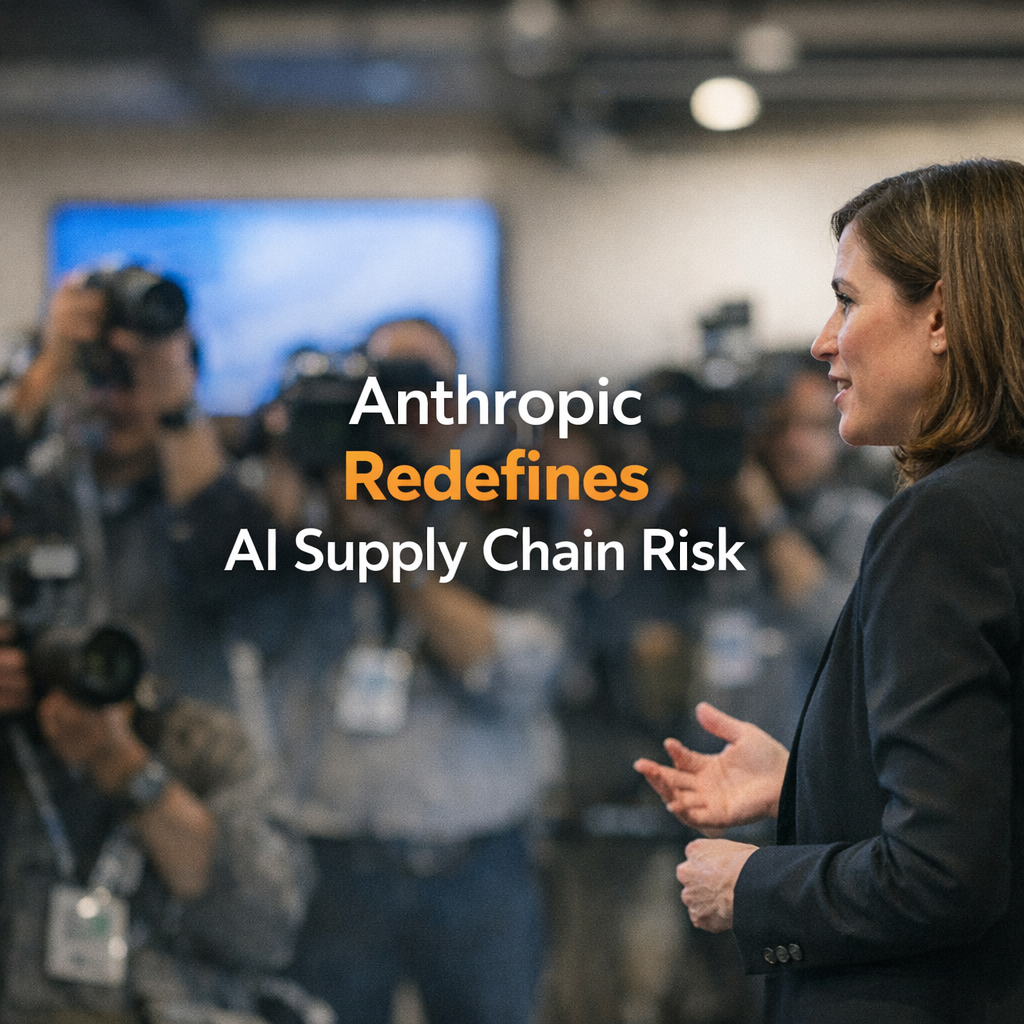
This case marks the first visible clash between a top-tier LLM startup and a pivotal agency over AI-related risk labeling. The Pentagon, citing supply chain security, had moved to classify Anthropic’s products as a potential risk factor. Anthropic challenged this decision, arguing the designation was unsubstantiated and threatened legitimate business without due process. The court sided with Anthropic, stressing that regulatory labels must be justified, not arbitrary.
Precedent for Government AI Procurement
Federal agencies increasingly look to large language models for applications ranging from document analysis to threat assessment. Anthropic’s court victory could alter how agencies vet AI vendors, with the spotlight on transparent criteria and procedural fairness. This development might slow blacklisting efforts based solely on broad compliance concerns, forcing agencies to rely on documented, specific supply chain evidence.
“Government contracts remain a critical growth channel for LLM companies—this ruling makes the pathway less obstructed and more predictable.”
Compliance Headwinds: Implications for Startups and Enterprises
Startups specializing in AI and generative models may find fresh leverage in government sales channels. The ruling sends a message: agencies must present detailed, defensible risk analyses before excluding suppliers from public sector contracts. However, this also raises the compliance bar for all players—documentation, transparency, and robust internal risk assessments will be essential to defensibility in both the public and private sectors.
Investors and Big Tech Face Regulatory Recalibration
Major cloud providers like Microsoft, Amazon, and Google are watching this case closely. All invest substantially in LLM infrastructure and enterprise-ready AI platforms. Analysts at Reuters and The Information note that federal standards around AI security and supply chain risk are set to be re-examined in the wake of this legal precedent. This could ripple into contract negotiations, product design, and cross-industry compliance frameworks.
“Expect a broad review of AI governance protocols—not just in the U.S., but globally—as regulatory agencies incorporate these judicial signals.”
What AI Professionals Need to Know Next
The aftershocks of this courtroom result will reach into vendor selection, incident response design, and M&A risk due diligence. Legal and compliance teams will need to bridge technical risks with administrative evidence, especially when engaging with critical infrastructure clients or the defense sector. On the technical side, richer supply chain mapping for LLM inputs, training data, and model provenance is set to become a top priority for developers and platform leads.
The Road Ahead: Catalyst for Policy and Industry Standards
The court’s decision may spark a new wave of standard-setting activity among regulatory bodies and industry consortia. As litigation drives the evolution of risk management practices, AI developers must prepare for dual pressures: assertive regulatory questioning and increased expectations for supply chain transparency. The refocused spotlight on evidence-based vendor risk also raises the bar for LLM startups seeking to establish credibility with enterprise and government buyers.
“Future AI deals—especially those involving sensitive sectors—will hinge on a vendor’s ability to document and defend their supply chain integrity.”
Looking Forward: A New Era for AI Compliance
Anthropic’s courtroom success represents an early but consequential inflection point in the maturing landscape of AI regulation. Legal precedents like this one signal the rise of more rigorous, evidence-driven oversight over the AI supply chain. Developers, founders, and enterprise leaders now face a mandate to build not just powerful LLM systems, but defensible and transparent AI platforms prepared to meet complex compliance demands worldwide.
Source: TechCrunch