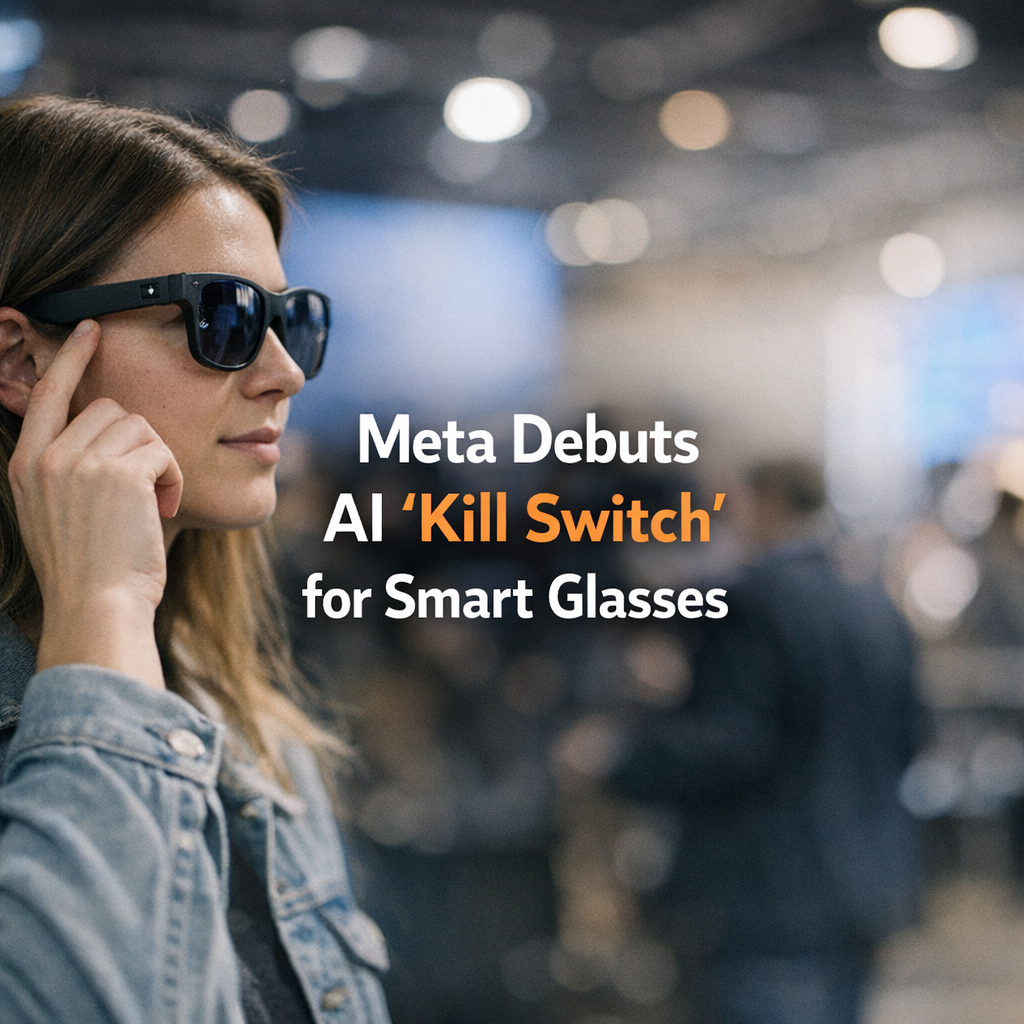
As generative AI powers more wearable technology, concerns around privacy and user control intensify. Meta, a major player in AI and wearable devices, is reportedly developing a hardware “kill switch” for its upcoming smart glasses—an innovation that could shift the conversation on trust, safety, and adoption for AI-driven wearables.
- Meta is building a physical AI shutoff feature for its next-gen smart glasses.
- This move responds to rising demands for transparent user controls over LLM-powered devices.
- Implications for privacy, developer design, and regulatory acceptance are significant.
- The announcement arrives as competitive pressure in generative AI wearables heats up globally.
Key Takeaways
Meta’s commitment to adding a hardware-level AI “kill switch” signals a pivotal shift in how tech giants approach user control in AI wearables. This proactive stance not only addresses privacy activists’ concerns but pressures rivals to rethink their device designs. The new feature will dramatically affect how developers build and test LLMs in consumer contexts, and could set a compliance benchmark as regulations tighten around AI-powered tools.
The addition of a physical AI switch marks a critical evolution for generative AI in wearables—enabling users to dictate when and how LLMs process their data in real-time.
From Controversy to Control: Meta’s Tactical Response
Public scrutiny has mounted around smart glasses capable of capturing audio, video, and ambient data—often powered by real-time large language models. Privacy organizations, including the Electronic Frontier Foundation and numerous European watchdogs, have voiced concern that previous hardware did not offer sufficient transparency or granular user input. Meta’s “kill switch,” which disables the onboard AI assistant at the hardware layer, directly tackles the “black box” criticism frequently hurled at generative AI systems.
This approach also anticipates likely regulatory requirements: the EU’s AI Act and similar drafts elsewhere emphasize user agency and clear deactivation options for always-listening AI. By engineering a hardware solution, Meta sidesteps possible vulnerabilities in purely software-based controls, increasing user confidence and legal defensibility.
Incorporating a tangible AI-off control could become the expectation—not the exception—for any LLM-powered device seeking mainstream adoption.
Implications for Developers and Startups
Meta’s move forces developers to accommodate more dynamic user states—AI on, AI off, or conditional activation—within their LLM applications. This complicates the design of multimodal contexts and requires robust state management to prevent unauthorized data collection or background inference. For startups innovating in generative AI wearables or IoT, adapting early to physical privacy controls may smooth regulatory review and bolster consumer trust.
Rivals including Google, Apple, and startups like Humane and Brilliant Labs now face a heightened standard. While previous smart glasses iterations iterated on form factor or app integrations, explicit hardware privacy controls demand rethinking both device architecture and cloud-AI interactions.
Setting a Precedent for Regulatory Alignment
The convergence of legislation and technology has never been more rapid. As generative AI gets embedded into devices people wear every day, pressure mounts to deliver absolute, easily accessible control. Meta’s kill switch concept preempts much of the regulatory tension anticipated by the AI Act, California’s proposed privacy bills, and similar legislation in Asia. Early adoption of such protections can help LLMs avoid becoming casualties of regulatory bottlenecks.
AI professionals who prioritize physical privacy toggles in product design differentiate themselves as trustworthy partners in an AI-critical marketplace.
Looking Ahead: Trust as a Competitive Edge in Generative AI Wearables
If Meta’s hardware kill switch achieves traction with users and regulators, the feature could become table stakes for all generative AI wearable devices. Companies slow to implement such controls may lose consumer confidence and risk regulatory intervention. As the ecosystem matures, transparent AI controls will distinguish trusted devices, streamline developer compliance, and expand the safe use of LLMs across personal and enterprise contexts.
Source: Social Media Today