With the rapid acceleration of generative AI, the balance between innovation and infrastructure demands has grown increasingly critical. NVIDIA’s latest suite of foundational language models—unveiled under the NIM NIMotron family—delivers both blazing speed and powerful new tools for enterprise developers, placing the GPU giant squarely at the center of today’s enterprise AI race. As LLM adoption outpaces even optimistic projections, every shift in deployment frameworks and model offerings can ripple across startups, cloud platforms, and AI engineering practices.
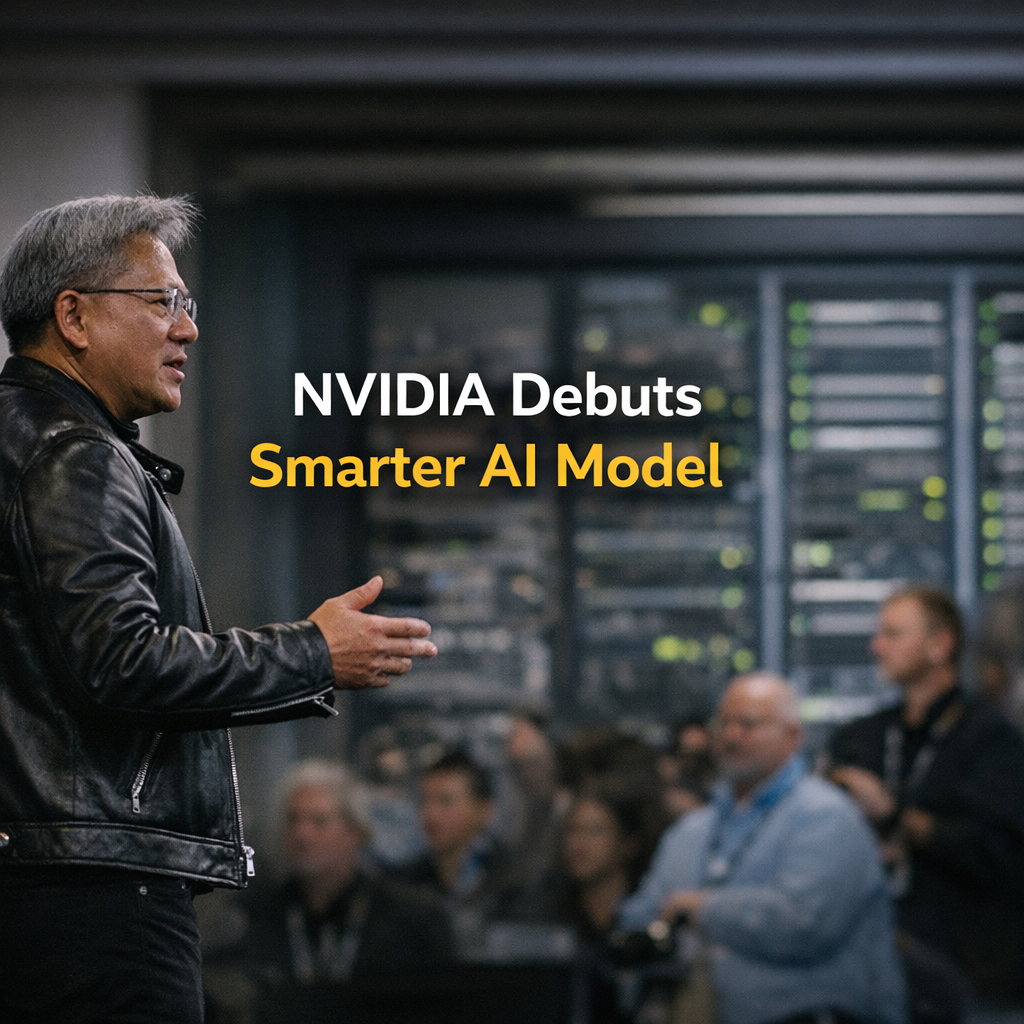
- NVIDIA launches Nemotron-4 340B, a family of powerful, open-sourced LLMs optimized for both training and inference.
- Nemotron models are fine-tuned for enterprise use cases, available via GitHub, Hugging Face, Google Cloud, and NVIDIA’s NGC platform.
- The Switchyard framework accelerates model evaluation and experimentation cycles with structured benchmarks and rapid A/B testing.
- Enterprises can deploy on RTX workstations, DGX servers, or major cloud platforms, expanding flexibility for developers at every scale.
- This launch positions NVIDIA as both infrastructure enabler and end-to-end AI solution provider, deepening its moat against growing competition.
Key Takeaways
NVIDIA’s Nemotron-4 340B models mark a pivotal advance in large language model accessibility, targeting the performance bottlenecks that limit enterprise deployment. By combining open license models and an inference-optimized framework, NVIDIA is betting on a new wave of in-house LLM applications and faster enterprise AI workflows.
“The arrival of open high-performance LLMs—tightly integrated with enterprise-grade hardware and cloud ecosystems—promises a step-change in how organizations experiment, deploy, and scale generative AI solutions.”
Nemotron-4 340B: Raising the Bar for Open LLMs
The Nemotron-4 340B family consists of several large language models, each with a staggering 340 billion parameters. These models include both base and instruction-tuned variants, as well as a reward model, catering specifically to enterprise and research needs. NVIDIA claims Nemotron-4 surpasses Llama-3 in benchmarks like MMLU, making it a new contender for best-performing openly available LLM.
Beyond raw power, Nemotron-4 offers open weights and a flexible license. Developers can experiment, fine-tune, or run inference workloads on their chosen hardware—a departure from the restrictions of many top LLMs. Early access has rolled out via GitHub, Hugging Face, Google Cloud, and NVIDIA’s own NGC catalog, maximizing reach and rapid adoption potential.
“With Nemotron-4, developers gain the freedom to innovate without vendor lock-in, dramatically shortening the cycle from experimentation to production deployment.”
Switchyard: Accelerating Model Experimentation and A/B Testing
NVIDIA also introduced Switchyard, a new framework specifically designed to streamline the evaluation and selection of LLMs. Developers often struggle to compare model performance, cost, and latency when evaluating dozens of models; Switchyard aims to eliminate this friction.
The tool offers robust benchmarking tools, structured logging, and the ability to rapidly switch between models for side-by-side A/B testing. For AI product teams, this translates to faster iteration cycles and more informed production choices. Switchyard supports both locally hosted and cloud-based deployments, making it attractive for teams running on everything from desktop RTX cards to enterprise-grade DGX clusters.
“As model landscapes diversify, rapid benchmarking becomes a strategic edge—Switchyard positions developers to move from trial to deployment faster than ever.”
RTX, DGX, and Cloud: Unified Deployment for Any Scale
One defining strength of NVIDIA’s launch is its consistent support across the compute spectrum. Nemotron-4 models are optimized for efficient inference on both RTX desktop GPUs and enterprise DGX nodes. This approach caters to startups with limited resources as well as Fortune 500s running massive in-house workloads.
Furthermore, by partnering with Google Cloud, Hugging Face, and distributing through the NVIDIA NGC catalog, the company ensures that organizations can deploy LLMs wherever their applications reside. This multiplatform strategy reinforces NVIDIA’s ecosystem-centric vision—and gives developers the confidence to invest in building on their stack.
“Seamless deployment across desktop, data center, and cloud environments signals a new era of LLM accessibility—removing the infrastructure barriers that slow innovation.”
NVIDIA’s Expanding Moat in Generative AI Infrastructure
This launch is not simply about supplying models or hardware; it’s a bid by NVIDIA to provide end-to-end solutions that cover the entirety of the AI lifecycle. By tightly integrating model development, experimentation, deployment infrastructure, and cloud partnerships, NVIDIA deepens its competitive moat. While rivals such as AMD and Intel invest in new AI chips and open source foundations like Meta’s Llama expand, NVIDIA maintains a head start by controlling not just the silicon, but also the software and model ecosystem atop it.
For AI startups and enterprises alike, this positions NVIDIA as a partner capable of meeting both current and emerging generative AI demands, with operational simplicity rarely seen in this fast-evolving industry.
“NVIDIA is staking out a role as more than a hardware supplier—it aims to be the default AI platform powering both today’s pilots and tomorrow’s full-scale deployments.”
What This Means for Developers and AI Teams
The convergence of open model weights, streamlined benchmarking, and versatile deployment marks a turning point for AI professionals. Developers now have fewer constraints to train and deploy powerful LLMs on their preferred platforms, while enterprises benefit from heightened agility and reduced vendor risk.
The future state of generative AI points to open ecosystems where hardware, models, and frameworks move in lockstep, enabling rapid cycles of experimentation and solution delivery. Teams who understand—and leverage—these new building blocks will likely set the pace for AI innovation across industries.
Source: NVIDIA Blog