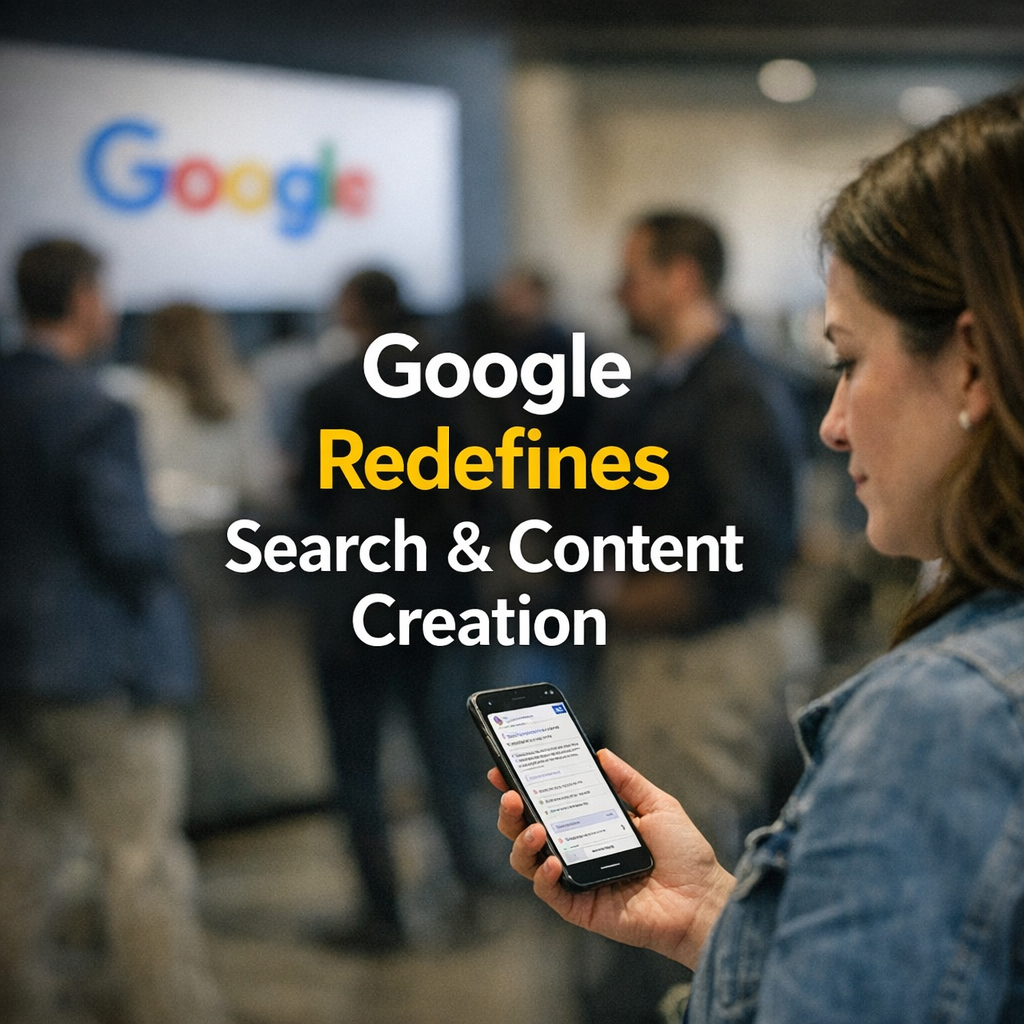
As generative AI tools redefine how humans interact with technology, Google’s latest rollout of its AI Overviews feature has ignited heated debate among developers, founders, and industry experts. By serving AI-generated answers above web links in search results, Google aims to transform information retrieval — yet this bold move has already triggered controversy over accuracy, SEO, and the future role of content creators. In an arena where search dominance, misinformation, and LLM reliability collide, what does this shakeup really spell for the broader AI ecosystem?
- Google’s AI Overviews surface generated answers ahead of traditional search results, altering the web traffic equation
- Inaccuracies and bizarre answers have appeared, highlighting LLM limitations and changing trust dynamics
- Publishers and developers face new challenges as their content plays a supporting role to AI outputs
- This shift signals a new era in search, with unforeseen repercussions for discovery, revenue, and user expectations
Key Takeaways
Google’s AI Overviews mark a pivotal shift in how users discover information online. By relying on large language models to synthesize responses directly within search, Google reorders the incentives and expectations for content, accuracy, and platform trust. Incidents of unreliable answers have raised the stakes for ensuring LLMs respect nuance and factuality — and have magnified the scrutiny on AI’s role as a content gatekeeper.
When generative AI becomes the gateway to knowledge, precision and publisher equity are no longer side issues — they stand at the center of the digital information economy.
AI Overviews: Reimagining Search — and Its Risks
Launched in the US this May, Google’s AI Overviews display an AI-written summary at the very top of search results, often summarizing material before any organic links appear. For developers and publishers, this means their efforts increasingly serve as fodder for Google’s language models — shifting value away from direct traffic and undermining traditional SEO strategies.
The technology draws on data from Google’s Gemini LLM, but as recent headlines show, even state-of-the-art LLMs are prone to error. Users have shared examples of Overviews that recommend eating rocks, putting glue on pizza, or medical advice that is outright dangerous. Google has since rolled back some triggers and announced reinforcement of guardrails, but questions remain about how AI-generated answers will manage misinformation and the delicate context of certain queries.
By stepping between users and web content, AI-generated overviews recast trust as a technical challenge rather than a purely editorial one.
The SEO and Publisher Dilemma
This paradigm shift threatens established business models across the web. Publishers rely on search traffic and ad impressions for revenue, but when answers appear directly on Google, fewer users click through. Some news organizations and content creators worry they are training Google’s LLMs — only to lose visibility and revenue in return.
For AI professionals and startups, this trend increases demand for tools that can validate LLM outputs, detect hallucinations, and provide clearer attributions. Expect to see renewed interest in methods for citation tracing and factual consistency checks within generative AI stacks.
Any company building on top of LLMs must prioritize reliability — a single viral error can cause reputational damage, user distrust, and regulatory scrutiny overnight.
Implications for LLM Development and Product Strategy
Google’s public rollout of advanced AI search features highlights the operational and reputational hazards of deploying large models at scale. Developers working with, or competing against, Gemini, GPT-4, or similar LLMs now face intensified pressure to mitigate hallucinations in real-time settings. Reinforcement learning from user feedback (RLHF), more rigorous output validation, and explainability features become essential as users expect instant, accurate responses.
For startups hoping to differentiate, this moment opens opportunities in vertical search, trustworthy summarization, and hybrid architectures that blend AI and vetted human curation. As regulatory scrutiny sharpens, businesses that can prove both performance and safety may gain a strategic edge.
The move to AI-first search demands robust solutions that go far beyond clever prompting; true product viability now depends on transparency, auditability, and cross-disciplinary collaboration.
Looking Ahead: The Search Wars Reset
The rise of AI-powered search represents a fundamental disruption to the way users, businesses, and technologists interact with information online. As generative AI matures, industry leaders must reconcile the tension between automation and accountability — ensuring new tools empower users while safeguarding quality and equity across the knowledge web. With LLMs now dictating what millions see first, the question is no longer how fast AI can summarize content, but how responsibly and equitably it can curate the world’s information.
Source: BBC News