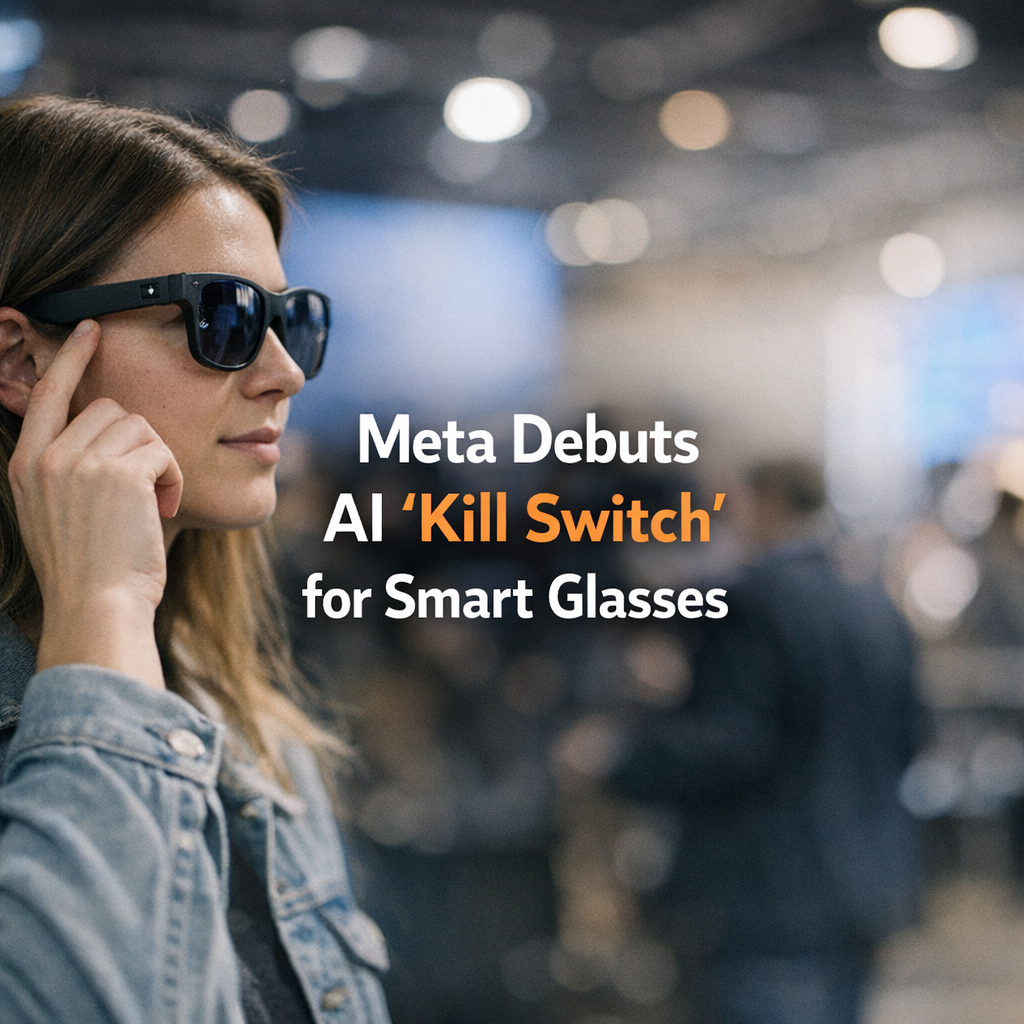
Meta is intensifying its push into wearable AI by reportedly developing an AI-powered pendant. With this move, the company aims to challenge competitors already experimenting with generative AI devices. Below are the essential facts and implications from the latest reports and industry analysis.
Key Takeaways
- Meta is developing an AI pendant device focused on on-the-go interaction with LLMs and generative AI features.
- The pendant’s design aims to offer hands-free assistance, competing with startups like Humane (AI Pin) and Rabbit (R1).
- This move signifies Meta’s intention to diversify beyond current AI models and form factors, enhancing its consumer hardware portfolio.
- AI wearables represent a growing opportunity for developers and startups seeking real-world generative AI integrations.
AI Pendants: Next Phase of User-Centric Generative AI?
Meta’s reported AI pendant (TechCrunch, May 2026) signals the company’s readiness to catch up in the burgeoning segment of AI wearables. According to additional reporting from Bloomberg and The Verge, the device is being built to function as a personal assistant, using cutting-edge language models for real-time responses, note-taking, and information retrieval.
Meta’s AI pendant could change the way users access generative AI, bringing LLM features closer to daily life through discreet hardware.
Technical Implications for Developers and Startups
The rise of AI-powered wearables aligns with trends in custom LLM applications and context-aware generative agents. Developers now face a major opportunity: porting and optimizing AI models for limited hardware, battery, and privacy constraints. Meta’s pendant, if given access to its vast AI ecosystem (including Llama models and Meta AI Assistant), may unlock competitive APIs and edge-AI frameworks for third-party integration.
For startups, rapid innovation in wearables (following Humane’s $700 AI Pin and Rabbit’s R1) suggests both hardware and software layers are in play, with emphasis on open platform compatibility and personalized experiences.
Competition in AI hardware will be driven by developers delivering seamless LLM interactions, not just by device design or miniaturization.
Strategic Impact for Meta and the Broader AI Landscape
Meta’s foray into AI wearables reflects the broadening ambition of big tech to control not just software but also the full hardware experience of generative AI. The pendant’s success will hinge on usability, robust voice interfaces, and privacy assurances amid growing regulatory and consumer scrutiny.
Analyst consensus suggests that while Meta lags behind in consumer hardware compared to Apple or established AI device startups, its massive LLM research and social ecosystem could help leapfrog competitors if integration is frictionless.
Expect Meta to leverage its Llama family and social platforms to position the pendant not just as a tool, but as a networked generative AI companion.
What’s Next?
While release specifics remain undisclosed, industry sources indicate Meta is finalizing prototyping phases and gathering feedback from select testers. AI professionals should monitor SDK releases, ecosystem incentives, and the evolution of on-device inference for novel product ideas and platform extensions.
The generative AI hardware race is no longer theoretical—practitioners who enable transformative, low-friction experiences stand to shape the next wave of digital-human interaction models.
Source: TechCrunch