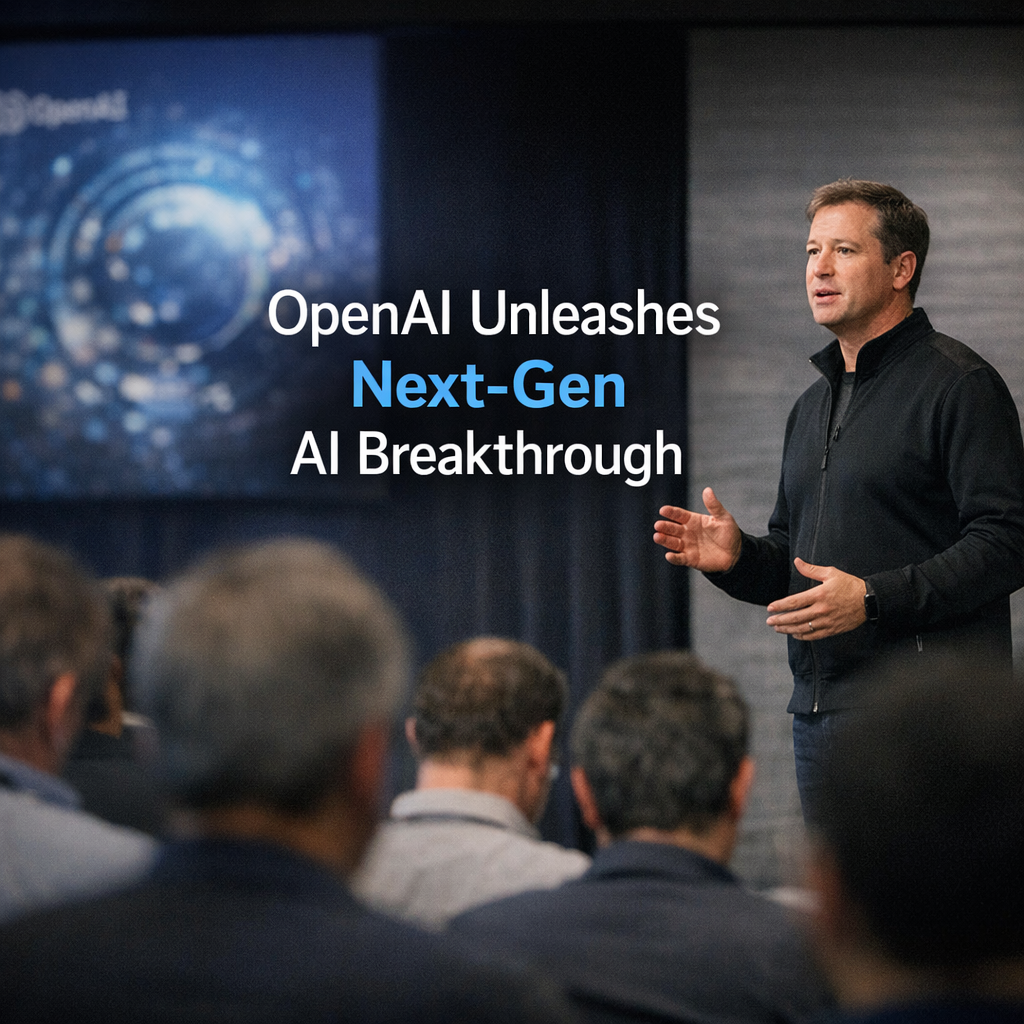
OpenAI has made another high-profile addition to its team, attracting Peter Steinberger, best known as the founder of Openclaw (formerly PSPDFKit), to help accelerate its push in developer tools and cutting-edge AI products. This move comes amid increasing competition in the generative AI space and signals OpenAI’s intent to double down on tools that empower both enterprises and developers.
Key Takeaways
- Peter Steinberger, founder of Openclaw and PSPDFKit, has joined OpenAI to advance AI developer tools and product infrastructure.
- This hire comes as OpenAI looks to strengthen its capability in building robust APIs and SDKs for the AI ecosystem.
- The move highlights the growing convergence between leading independent tool builders and core AI research labs.
- OpenAI’s recruitment strategy illustrates mounting competition for experienced developer-focused talent in generative AI.
- Implications include faster innovation for third-party developers and startups leveraging LLM APIs for real-world applications.
Strategic Hire Targets Developer Ecosystem Growth
OpenAI’s decision to bring Peter Steinberger onboard follows industry trends where developer experience and tooling critically shape the adoption of AI platforms. Steinberger led Openclaw—renamed from PSPDFKit—which provided mission-critical SDKs to thousands of enterprises and independent developers. His expertise lies in “making complex technology accessible and stable for software creators,” a skill set OpenAI urgently needs as it seeks to maintain leadership in LLM API adoption.
“OpenAI’s focus on developer tooling signals a new era: AI adoption depends as much on ease of integration as on model capabilities.”
Implications for Developers, Startups, and AI Professionals
- Developers: Expect enhanced SDKs, documentation, and integrations for the OpenAI API and related platforms. This will accelerate generative AI experimentations and deployments.
- Startups: Lower integration friction can reduce development cycles for products built atop LLMs such as GPT-4, DALL-E, and Whisper, allowing startups to go to market faster.
- AI Professionals: Increased robustness in tools means more reliable real-world applications, greater trust in AI APIs, and the possibility to focus on building differentiated user experiences rather than foundational plumbing.
“The arms race in the generative AI space now firmly extends beyond model innovation to developer experience and integration excellence.”
Industry Context and Competitive Landscape
Sources such as VentureBeat and industry commentary on X/Twitter emphasize that as LLMs become commodified, companies like OpenAI must differentiate through APIs, partnership ecosystems, and robust developer support—domains where leaders like Steinberger bring proven results. Google recently expanded its Vertex AI and Anthropic is similarly investing in developer tools, underscoring the competitive pressures across the AI sector.
According to The Verge, Steinberger’s move comes as OpenAI rolls out new capabilities in its platform—including tool integrations for enterprise workflows, workflow automation, and developer-facing plugins. OpenAI’s embrace of engineering leaders who ship real-world APIs reflects an understanding that real value stems from access, reliability, and velocity of development.
Conclusion: Faster, Broader Adoption on the Horizon
OpenAI’s hiring of Peter Steinberger sends a clear message: investment in developer experience remains key to unlocking large-scale generative AI adoption. The move benefits everyone building in the AI ecosystem—developers gain better tooling, startups innovate faster, and AI professionals can prototype production-grade solutions with greater confidence. Watch for rapid advances in OpenAI’s developer APIs and integrations, setting the pace for the next wave of AI-driven products.
Source: TechCrunch